This post contains affiliate links. If you buy through them, I may earn a commission at no extra cost to you.
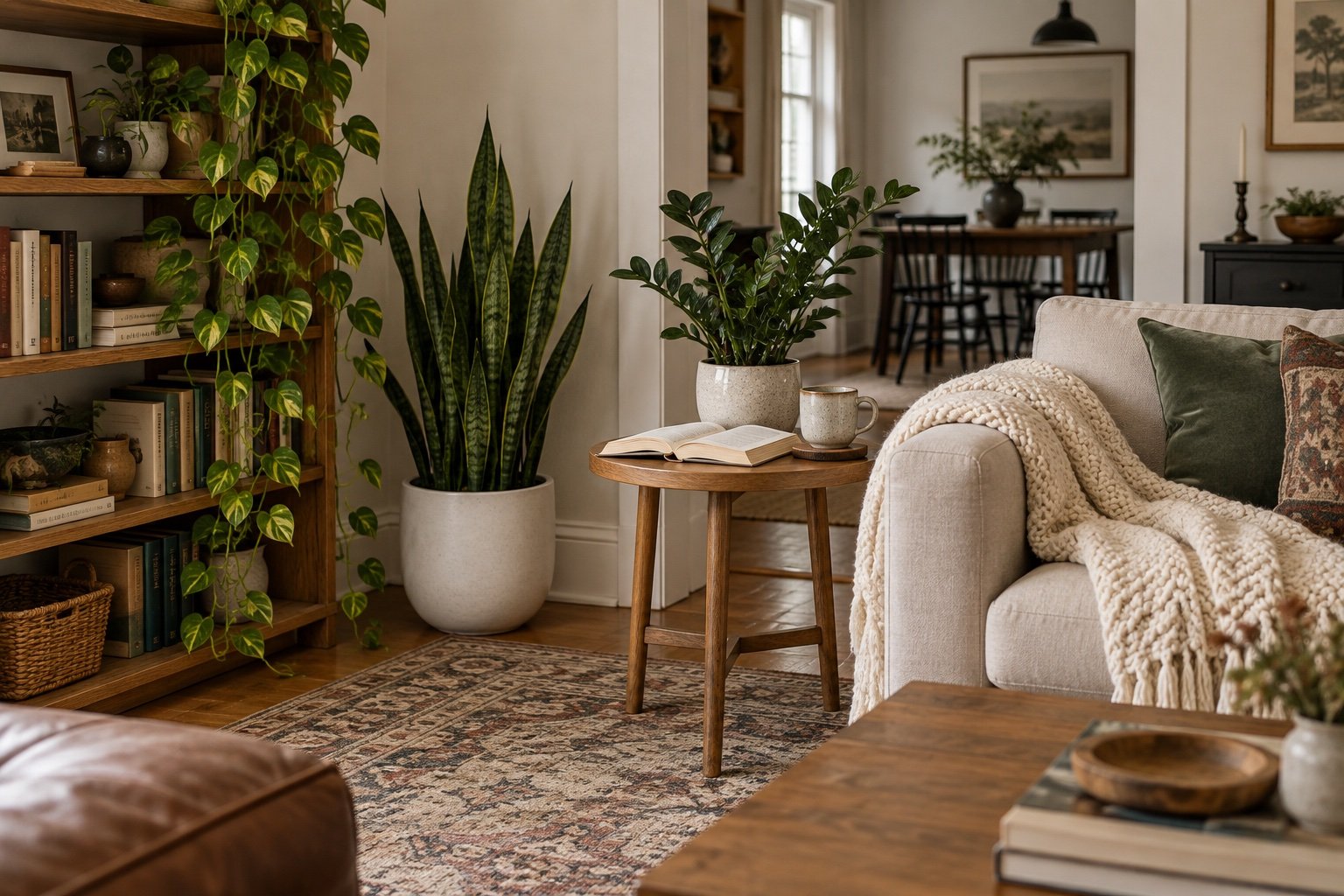
Most houseplants do not die from neglect in winter. They die from kindness: the same watering schedule as July, in a room that now gets nine hours of weak daylight. Low light houseplants are the fix, but only if you pick the right ones and stop treating them like summer plants. Here are the nine that handle short days best, where to put them, and the three changes that matter once the heat comes on.
Low light is not no light
Every plant on this list still needs some daylight. “Low light” means a spot that gets bright, indirect light for part of the day, not a windowless closet. A north-facing window, or a room where the window is across the room from the plant, is the classic low-light spot.
Here is the pocket test. At noon, with the lamps off, can you read a book comfortably where the plant would sit? If yes, a low-light plant will live there. If you would reach for the lamp, the plant needs a grow light, or a different spot.
- Distance matters more than direction. Light drops off fast as you move away from glass. A plant 3 feet from a north window gets far more than one 8 feet back, so in winter, move pots a foot or two closer.
- Sheer curtains are fine. Heavy drapes closed all day are not.
- Wipe the leaves. A month of dust can block a real share of the light a leaf receives. A damp cloth every few weeks is free light.
1. Snake plant
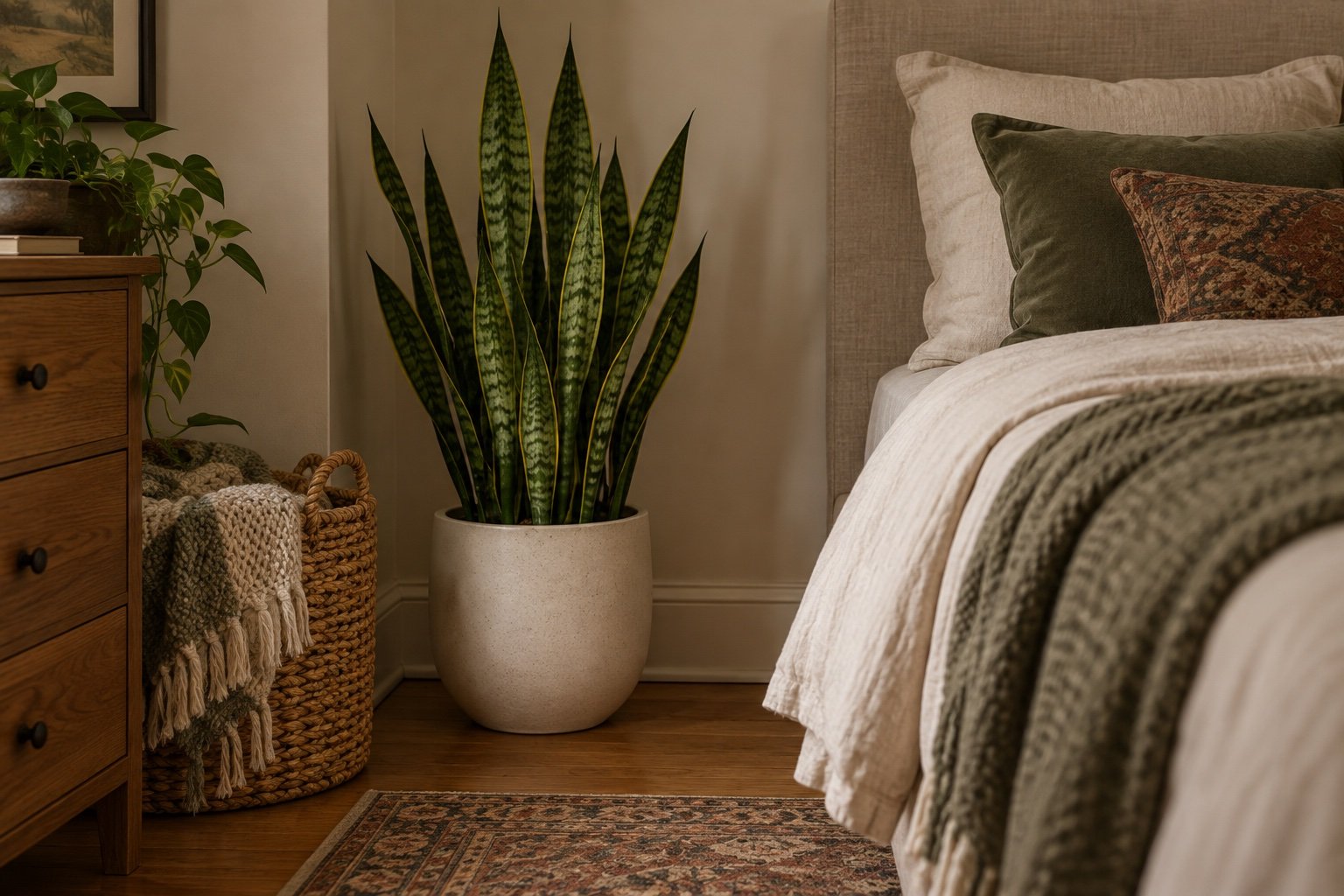
The snake plant is the one to start with. Its stiff, upright leaves store water, so it shrugs off dim corners and skipped waterings. In winter, it can go three to four weeks between drinks, sometimes longer. The usual way to kill one is root rot from watering too often, never from forgetting.
It also solves a styling problem: height without spread. A tall one fills a bare bedroom corner in a footprint the size of a dinner plate.
2. ZZ plant
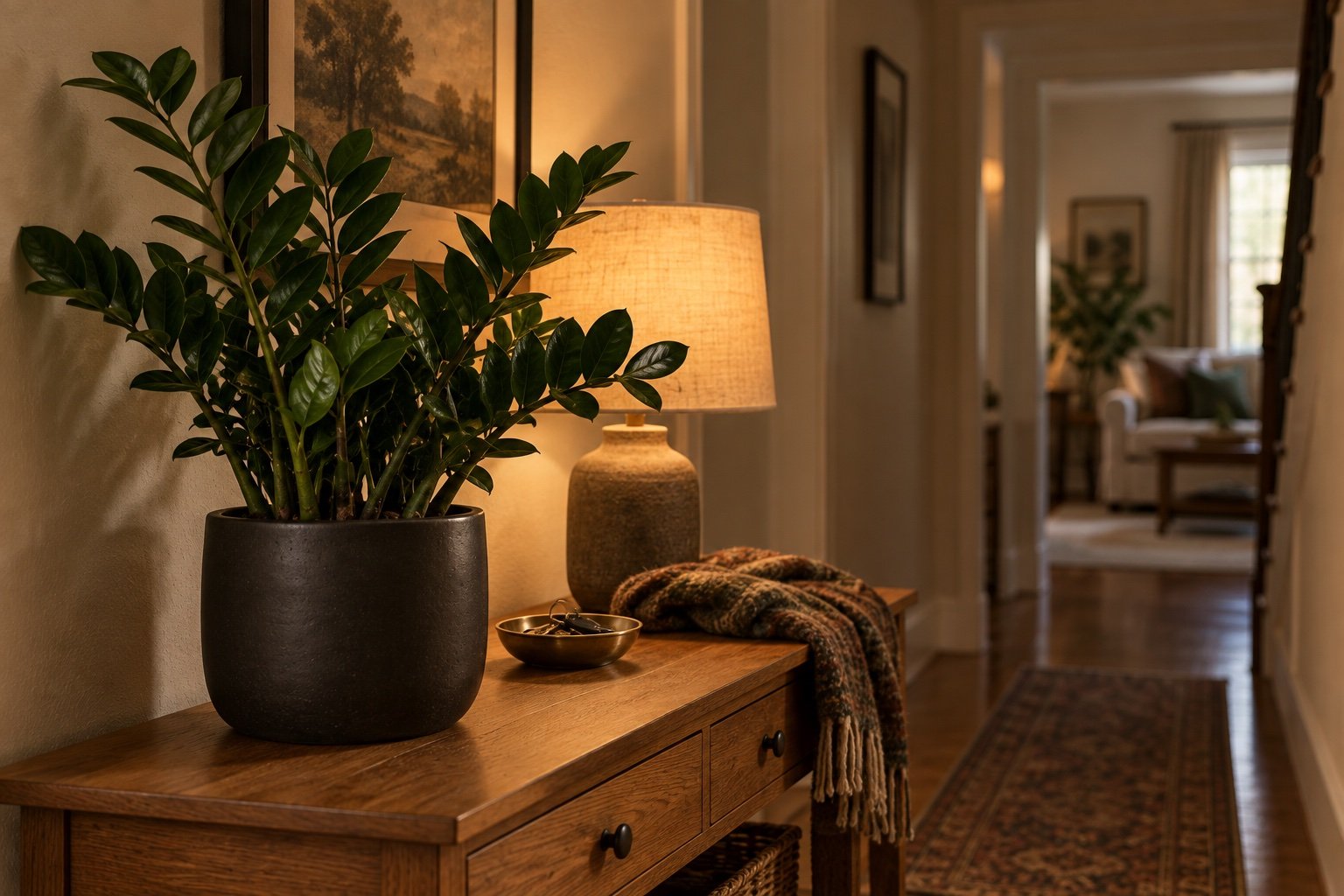
If you have a hallway, an entry, or an office with a window at the far end, this is your plant. The ZZ grows from thick underground rhizomes that hold water for weeks, and its glossy leaves look polished even in poor light. Growth slows to almost nothing in winter. That is normal, not a sign of trouble.
Water when the soil is dry all the way down, roughly once a month from November to February.
3. Pothos
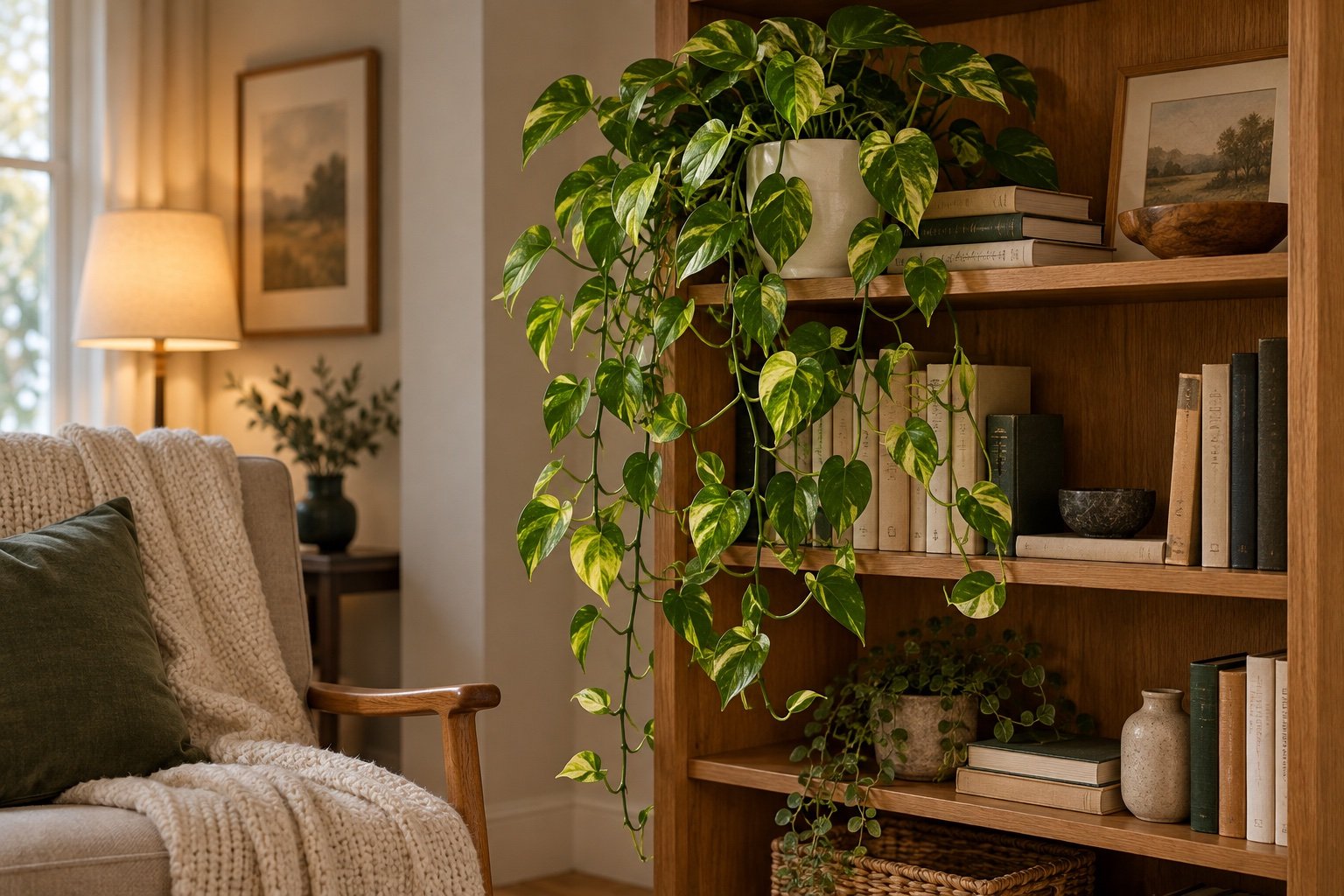
Pothos is the plant people give up on too early and then find thriving at a friend’s house in the worst corner of the apartment. It tolerates low light, tells you when it is thirsty (the leaves soften and droop slightly), and bounces back within a day of watering.
The trade-off: in low light, a variegated golden pothos loses some of its yellow and grows longer gaps between leaves. If you want a fuller plant, give it a top shelf near the window and trim the longest vines in spring. Styled on a bookshelf, one trailing pot is enough. Our bookshelf styling guide explains why one green element per shelf section reads better than three.
4. Cast iron plant
The name is honest. The cast iron plant was the parlor plant of Victorian homes lit by gas lamps, and it handles cool rooms, drafts, and deep shade better than anything else here. It grows slowly, so buy the size you want rather than waiting for it.
It is also one of only two plants on this list (the other is the zebra haworthia) that the ASPCA lists as non-toxic to cats and dogs, which makes it the default choice for a home with pets that chew.
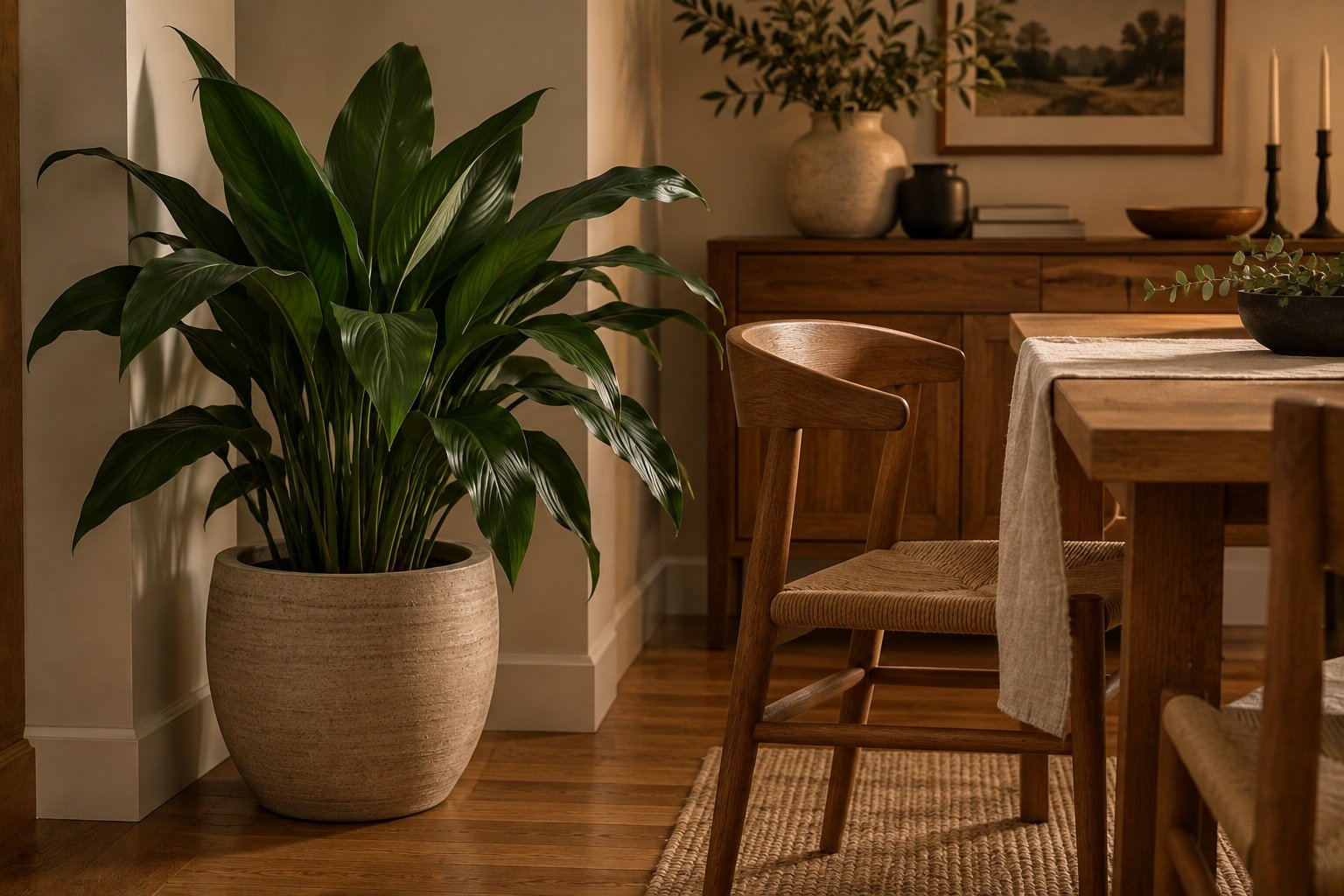
5. Heartleaf philodendron
Softer and greener than pothos, with true heart-shaped leaves and a habit of trailing politely. It does well on a kitchen shelf or a high cabinet where the light is indirect and the air is a little more humid from cooking.
Rule of thumb: water when the top inch of soil is dry. In a warm kitchen, that might still be weekly in winter. In a cold guest room, every two to three weeks.
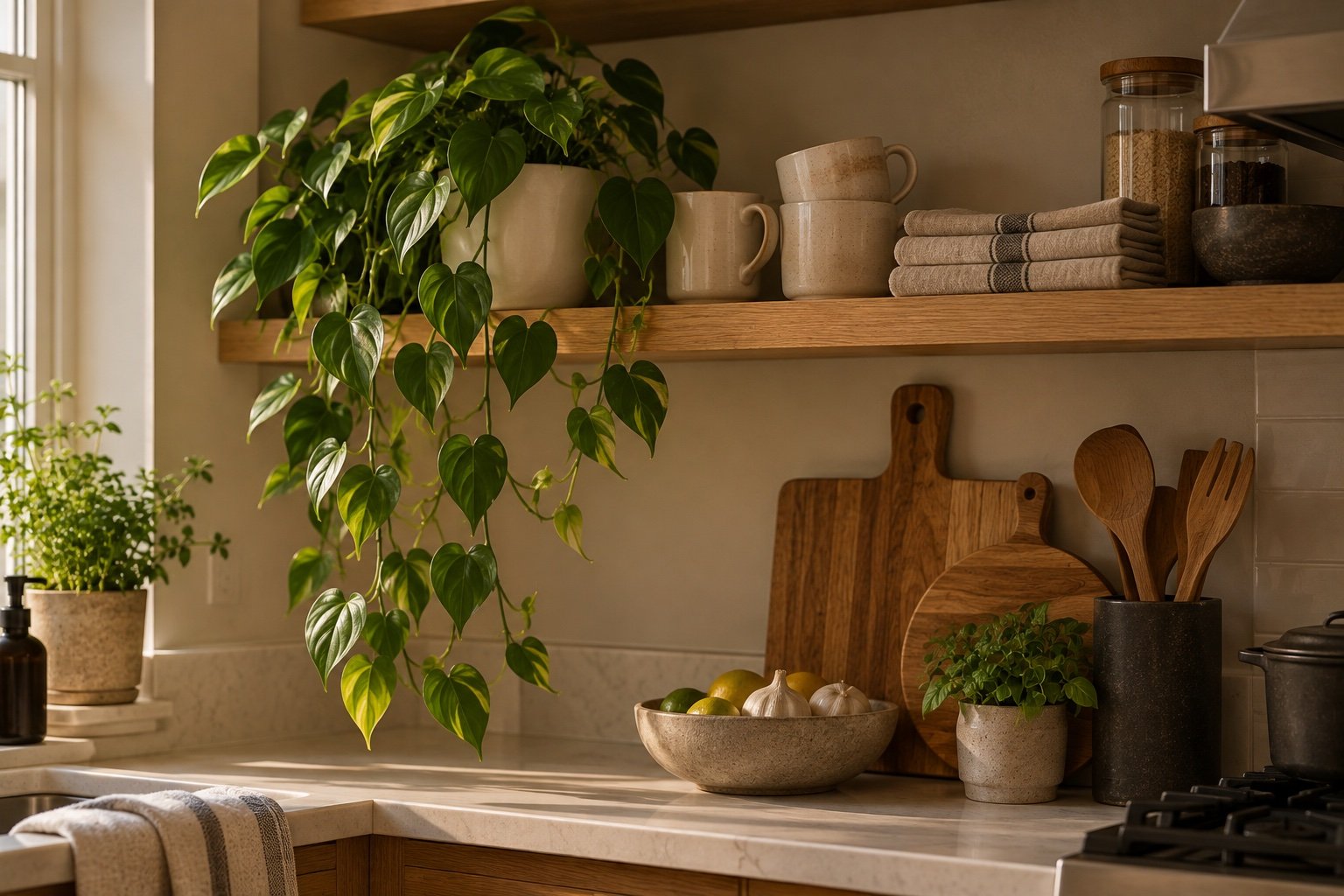
6. Chinese evergreen
The Aglaonema is the best-looking plant for a desk. Its broad, patterned leaves add color without flowers, and it is happy under a mix of weak daylight and a desk lamp. Darker green varieties handle low light better than the pink and red ones, which need a brighter spot to keep their color.
Its one complaint is cold. Keep it above 60°F and away from a door that opens to the outside all winter.
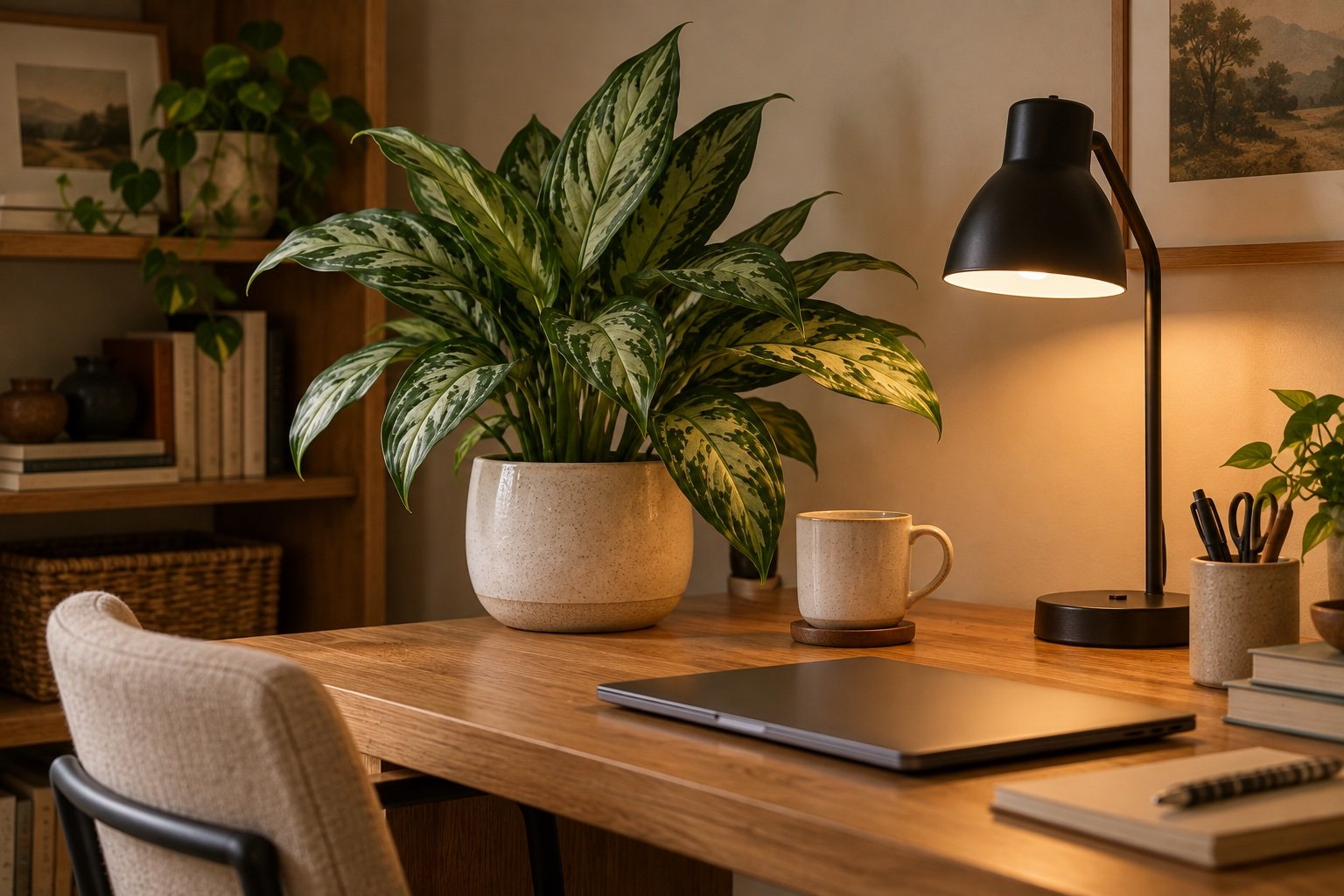
7. Peace lily
The peace lily is the most dramatic plant here, in both senses. It flowers in moderate indoor light, and when it is thirsty, the whole plant collapses as if it has given up. Water it and it stands back up within hours. That makes it a good teacher: it tells you exactly when to water.
A bathroom with a frosted window suits it well, since it likes the humidity. It will flower less in low light, but the leaves stay full and glossy.
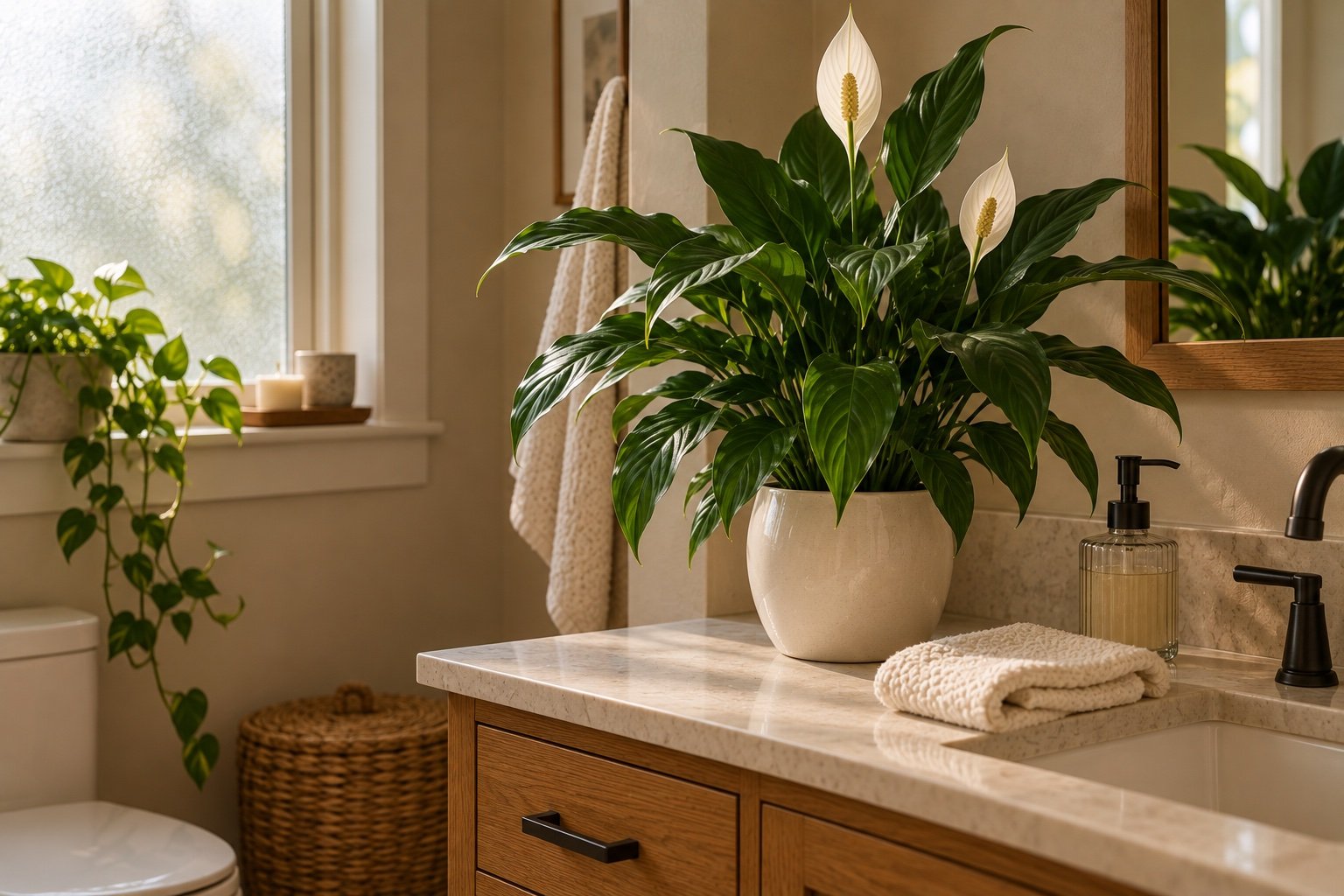
8. Lucky bamboo
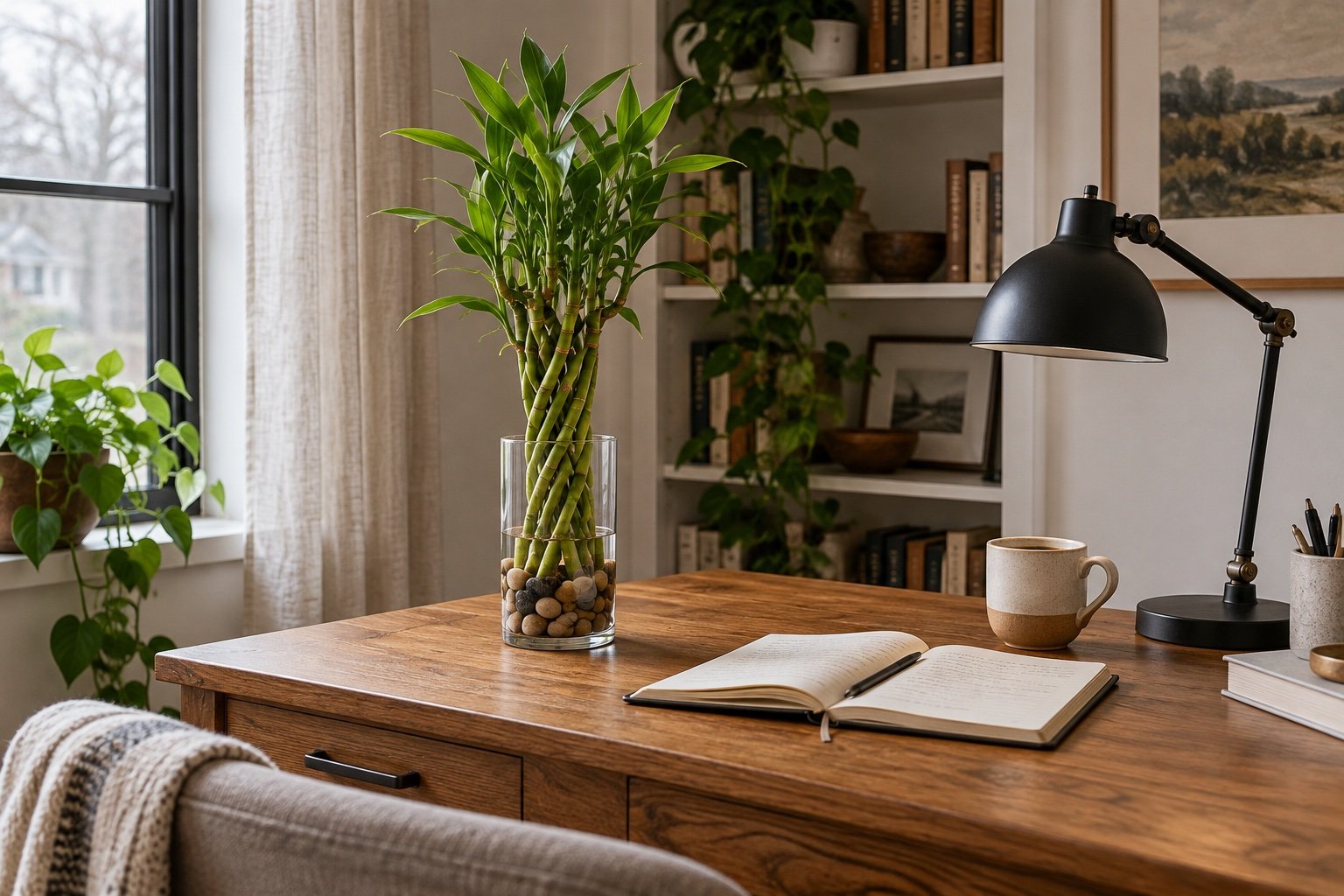
Lucky bamboo is not bamboo at all. It is a dracaena that grows happily in a vase of water, and it is the easiest way to put something green on a desk or a dresser far from the window. It is sold with the stalks trained into shapes: braided, twisted into a spiral, or stacked in tiers. A lucky bamboo in a glass vase with pebbles is the classic, and the glass lets you see when the water needs topping up. New growth comes out of the top straight, so trim it if you want to keep the shape tidy.
Low light suits it. Direct sun scorches the leaves, so a desk across the room from a north or east window is ideal. Keep the roots covered with water and change it every one to two weeks. Use filtered or distilled water if you can: the chlorine and fluoride in tap water are the usual reason the leaf tips turn yellow. Skip fertilizer in winter, as with everything else here.
9. Zebra haworthia
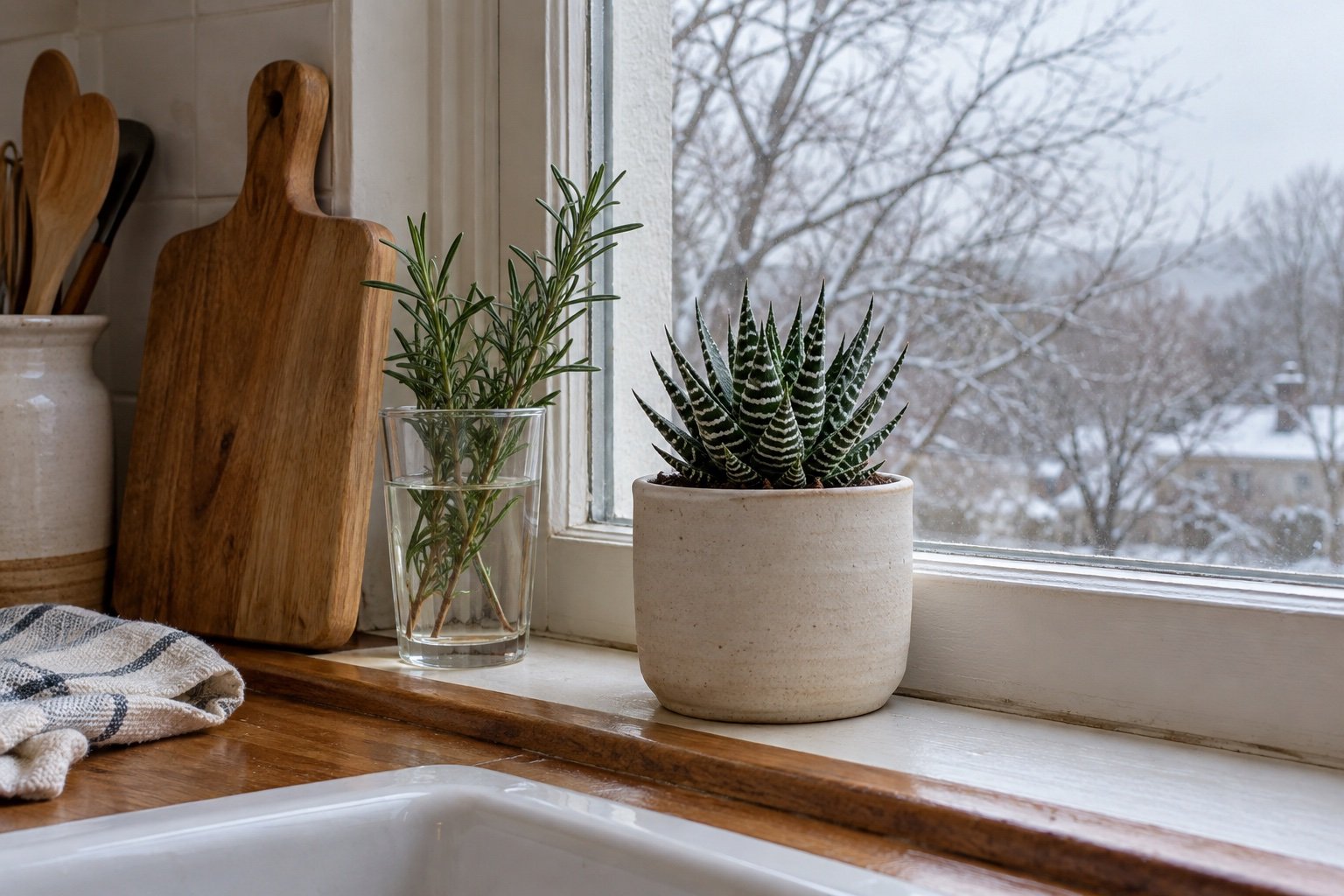
Most succulents are a bad idea in low light. They need hours of sun, and in a dim winter room they stretch, lean toward the window, and fade. The zebra haworthia is the exception worth knowing: a small, slow rosette of dark leaves striped in white that tolerates far less light than an echeveria or a jade.
The catch is placement. Low light for a haworthia means the windowsill itself, pressed close to the glass of a north or east window, not a shelf across the room. Water only when the soil is completely dry, which in winter can mean once a month, and use a gritty cactus mix in a pot with a drainage hole. It is also non-toxic to cats and dogs, according to the ASPCA.
Winter care: the three changes that matter
Most winter plant losses come from the same three mistakes. Fix these and the plants above will coast to spring.
Water less, and check before you pour. Plants grow slowly in short days and use far less water. Cut back to roughly half of your summer frequency, and check the soil before every watering instead of following the calendar.
A simple soil moisture meter takes the guessing out of it: push it down to the root zone, and if the dial reads wet, walk away.
Pots matter too. A ceramic planter with a drainage hole and saucer lets extra water escape instead of sitting around the roots.
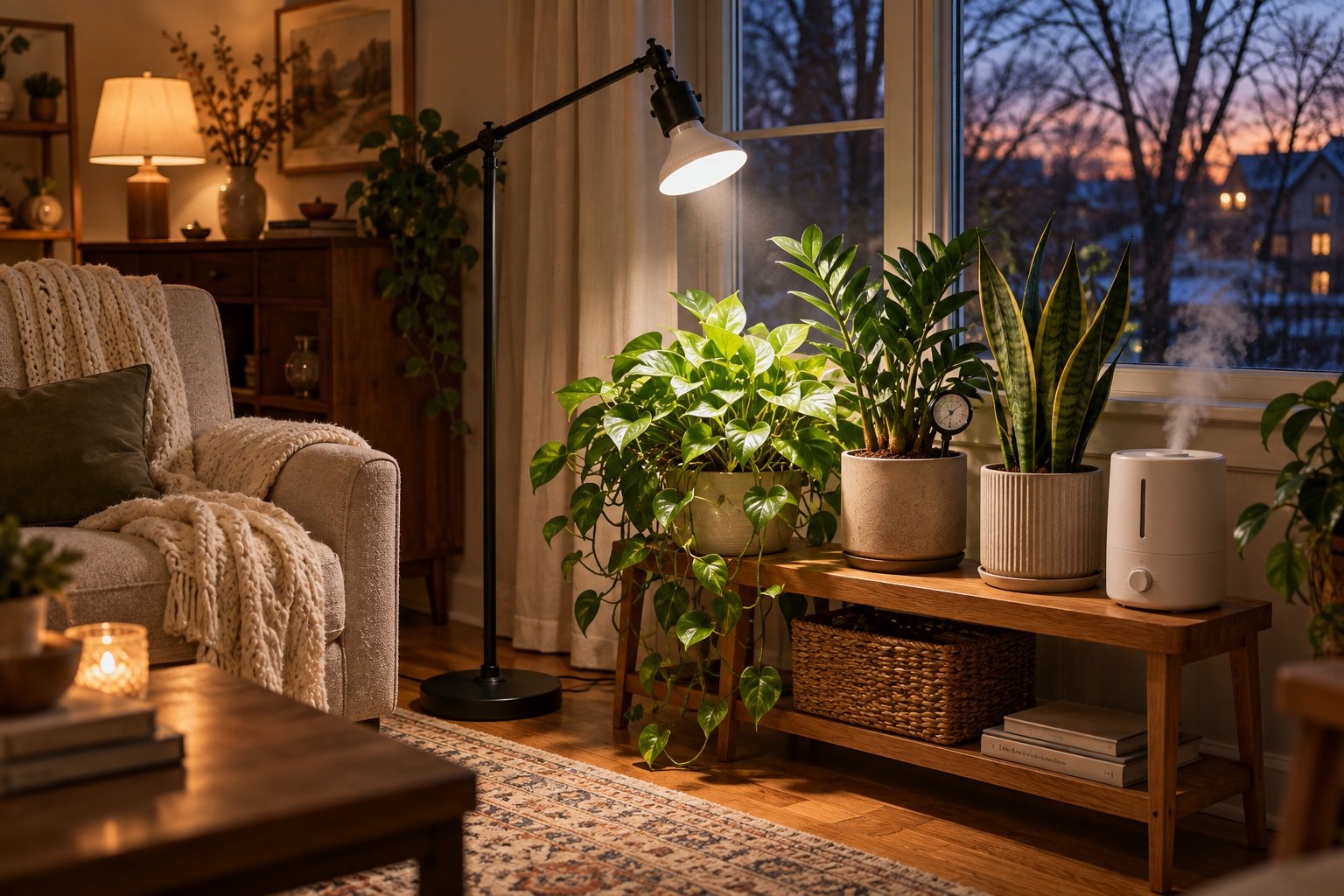
Add humidity where the heat is on. Forced-air heating can drop indoor humidity to 20 to 30 percent, while most of these tropical plants prefer 40 to 60. Grouping plants together helps a little.
A small cool-mist humidifier in the room helps a lot, and your skin will notice too.
Add light, not fertilizer. Feeding a plant that is barely growing just builds up salts in the soil. Skip fertilizer from November to February.
If a spot is truly too dark, swap the bulb in a floor lamp you already own for a full-spectrum LED grow light bulb and put the lamp on a smart plug set to 10 to 12 hours a day. Unlike the purple panels, it looks like an ordinary lamp.
For everything else in the room, the warm lighting guide covers the bulbs people actually want to sit under.
Where to start
Pick one spot, run the noon reading test, and buy one plant for it: a snake plant if you forget to water, a pothos if you like to fuss, a cast iron plant if you have pets, a lucky bamboo if you want something green on your desk and forget about soil. Live with it through January before adding a second. A note on pets: apart from the cast iron plant and the zebra haworthia, every plant here is toxic to cats and dogs if chewed, lucky bamboo included, so put trailing ones up high.
In winter, the best thing you can do for a houseplant is usually nothing.
Keep Reading
📖 Warm Lighting 101: The Three-Light Rule Every Room Needs
📖 Bookshelf Styling: Why the Rule of Three Actually Works
📖 How to Create a Reading Nook in Any Corner