This post contains affiliate links. If you buy through them, I may earn a commission at no extra cost to you.
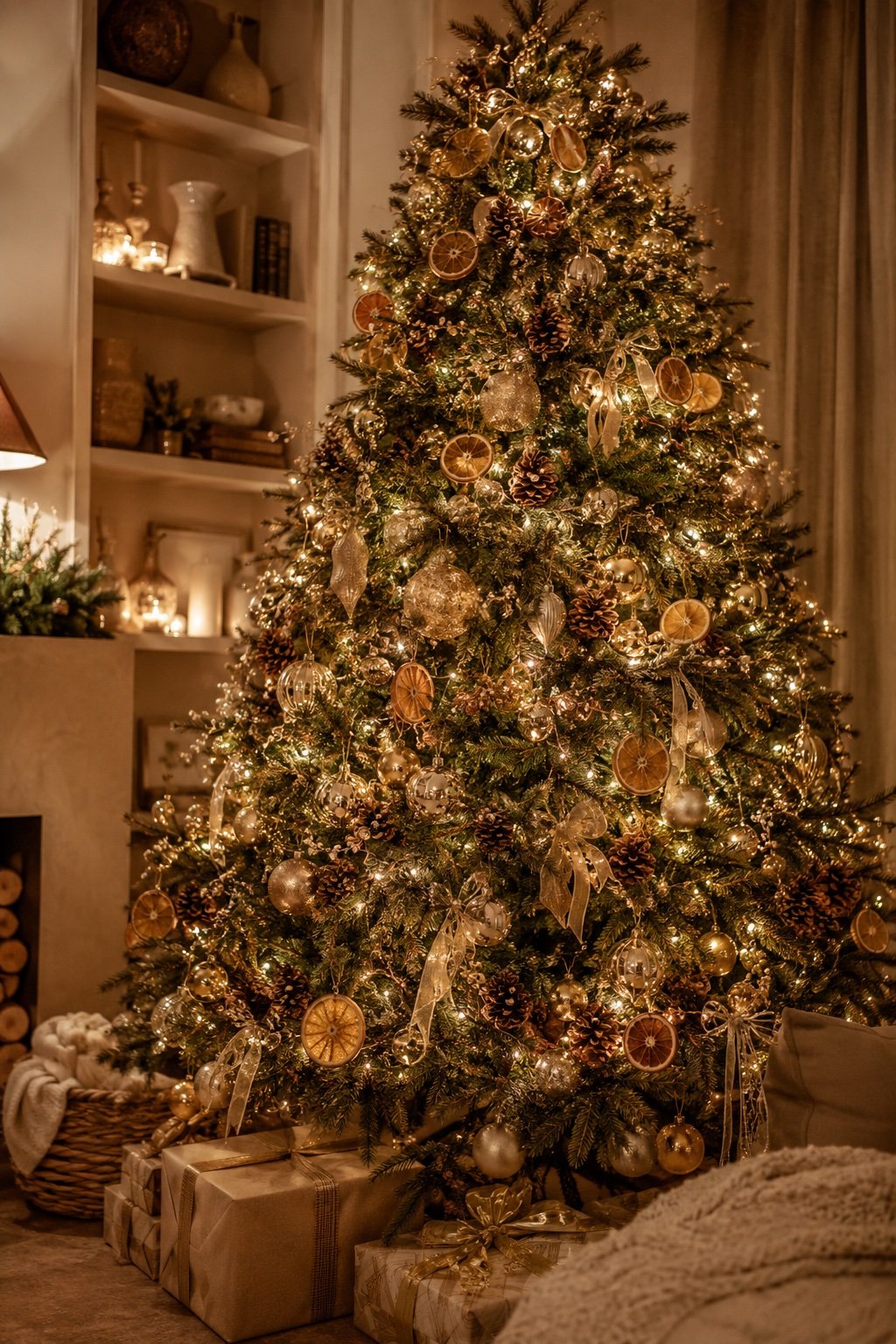
A Christmas tree in warm neutrals is not an undecorated tree, and it is not a cold, all-white one either. It is a tree that reads as candlelight and greenery and old brass instead of primary red and green, and it fits into a home that is decorated in warm tones the rest of the year instead of fighting with it for a month. Done well, it looks like it belongs in your living room, not like the seasonal aisle moved in.
Here is how to build one, layer by layer, whether your tree is real, fake, green, or flocked.
Start with the lights, and use a lot of warm ones
The lights are the foundation, and they are where most trees go wrong. Two rules carry the whole look:
Shop the idea
Warm-white LED tree lights
A 66-foot strand of 200 warm-white LEDs on green wire, the foundation layer. Most trees need several.
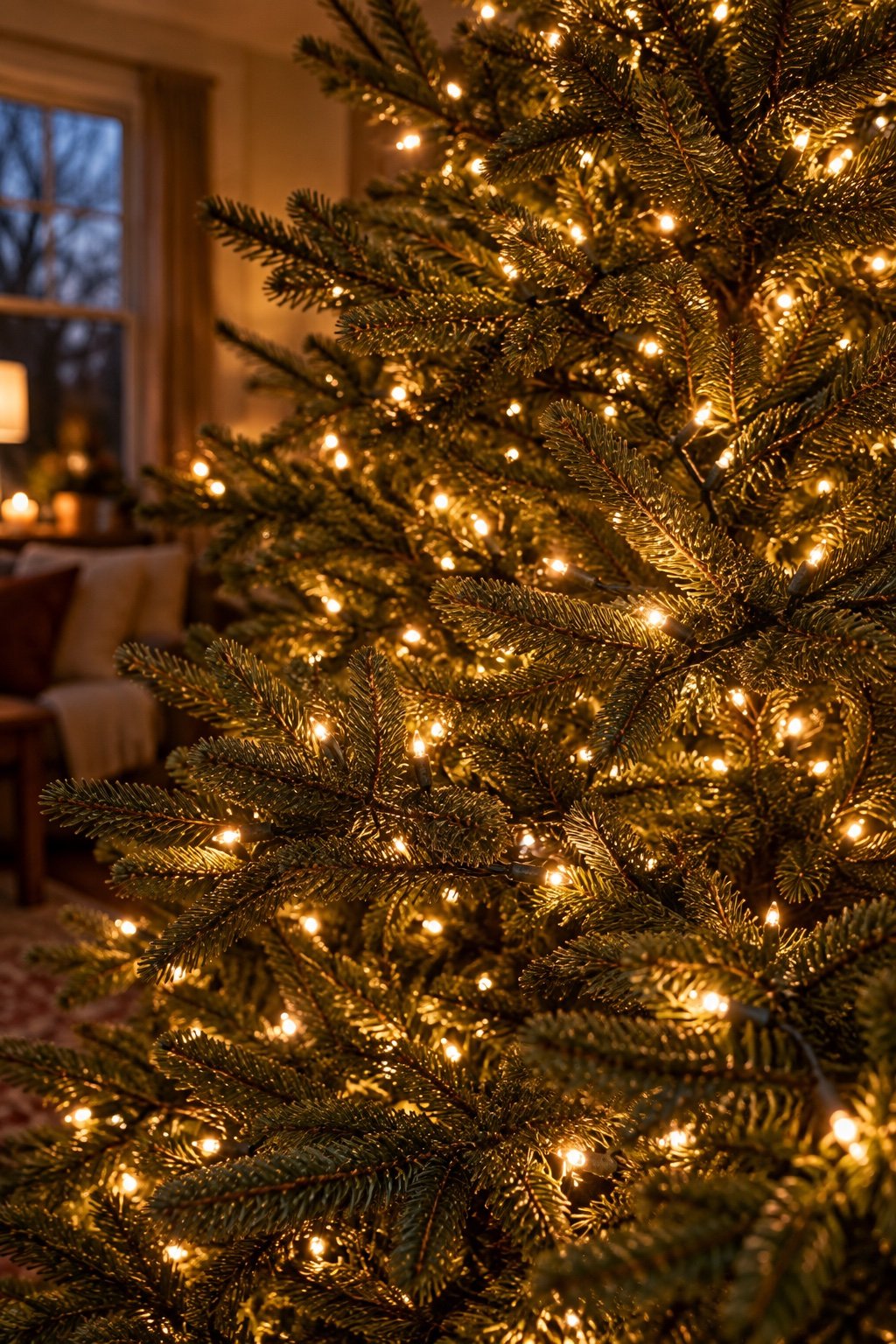
- Warm white only. Not cool white, not multicolor, not the blue-white ones that come on many pre-lit trees. Warm white light is the entire mood, and it is what makes everything else on the tree look like it glows.
- Twice as many as you think. The rule of thumb is 100 lights per foot of tree, and most people use half that. A seven-foot tree wants around 700 lights. A densely lit tree looks expensive and warm; a sparsely lit one looks sad no matter what you hang on it.
Wrap them front to back around each branch, not just around the outside of the tree, so the light comes from within the depth of the branches rather than sitting on the surface. If your pre-lit tree has cool lights you dislike, it is worth adding a second set of warm ones over them and only turning the warm set on.
The warm-neutral palette
Pick from a tight family and the tree holds together on its own:
- Cream, bone, and champagne as the base ornament tones.
- Gold, brass, and antique bronze for the metallics, warm ones, never silver or chrome.
- Wood, rattan, and natural fiber for texture.
- Amber, cognac, and mercury glass for depth and shine.
- One optional touch of muted color: dusty sage, soft clay, or a deep oxblood, used sparingly if you want the tree to lean less pale.
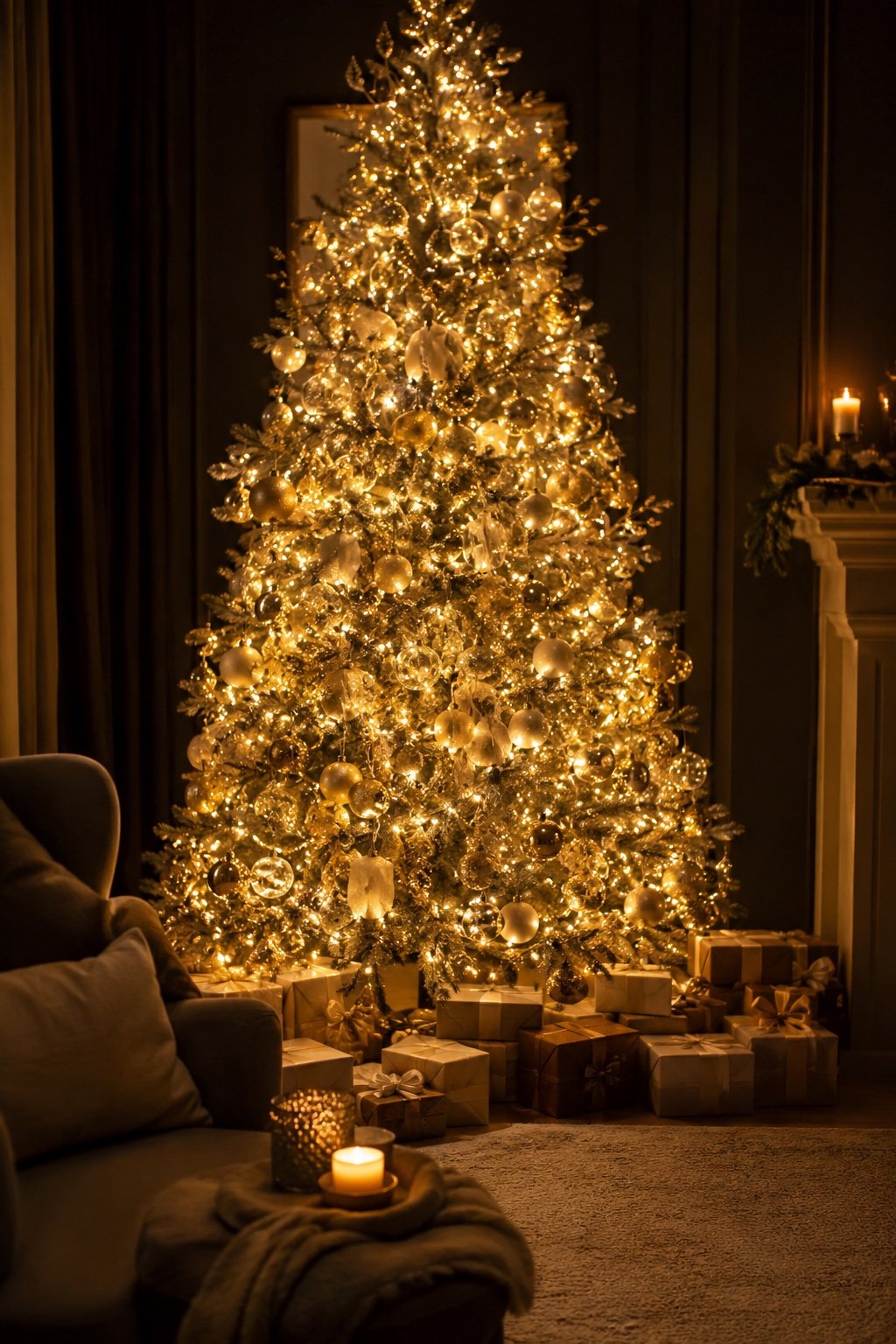
The whole idea is warm and low-contrast. If you squint at the tree and it reads as one glowing golden mass rather than a scatter of bright dots, you have it right.

Layer ornaments by finish, not by color
A neutral tree can look flat if everything on it is the same matte cream, so the interest comes from mixing finishes within the narrow palette. Aim for a spread of:
Shop the idea
White and gold ornament set
A 21-piece set in white and gold, a simple way to mix matte and shiny finishes inside one palette.
- Matte: cream balls, wood beads, natural fiber shapes, felt.
- Shiny: gold and champagne glass balls that catch the lights.
- Textured: glittered pinecones, rattan stars, knitted or crocheted ornaments, dried orange slices.
- Antique: mercury glass, aged brass bells, a few vintage pieces.
Hang the largest and shiniest ornaments deeper into the tree near the trunk, where they catch light and add depth, and the smaller matte and textured ones toward the tips. This layering, big and reflective inside, small and soft outside, is the difference between a styled tree and a decorated one.
Add the natural texture that makes it look collected
What keeps a neutral tree from looking like a store display is the handmade, foraged, natural elements. These are also the cheapest part:
Shop the idea
Dried orange slices and cinnamon sticks
A natural decoration kit with 20 dried orange slices and 20 cinnamon sticks, ready to tie with twine or jute.
- Dried orange slices on twine, which glow amber when the lights shine through them.
- Cinnamon stick bundles tied with jute, which also make the whole room smell like the season.
- Pinecones, real ones from outside, wired on or nestled into the branches.
- Wood bead garlands or dried seed pods instead of tinsel.
- Sprigs of eucalyptus, bay, or extra evergreen tucked in to fill gaps and add a second green.
These are the same warm, dried, natural materials that carry a good seasonal mantel, and using them on the tree ties the whole room’s decorating together.

Ribbon and garland, if you want the full look
Ribbon is optional, but it is what makes a tree look professionally done. For the neutral version, skip the wired plaid and reach for wide natural fabric:
Shop the idea
Cream velvet ribbon
Twenty-five yards of 2-inch cream velvet ribbon, a soft matte fabric for trailing down the tree.
- Wide linen, velvet, or cotton ribbon in cream, cognac, or soft gold, in a matte fabric rather than a shiny wire-edge.
- Tuck it in vertical cascades from top to bottom, letting loops and tails sink into the branches, rather than spiraling a thin ribbon around the outside.
- Two to three ribbon colors maximum, and let one dominate.
For garland, wood beads, dried orange and cinnamon strands, or a simple length of extra greenery all beat shiny tinsel, which is the single fastest way to make a warm tree look cheap.
The topper and the base
Toppers in the neutral world stay quiet. A cluster of picks, dried branches, or wheat bursting out of the top; a simple gold or rattan star; a bow of the same ribbon; or a few tall sprigs of greenery. Big light-up plastic stars fight the whole look.
Shop the idea
A woven tree collar
A 36-inch collar in woven hyacinth, three pieces that fit around the stand and hide it neatly.
Then do not forget the base, which is the most neglected part of the tree and the easiest win. Wrap the stand in a basket, a length of natural fabric, or a burlap and linen tree skirt in a neutral, and pile a few wrapped gifts in kraft paper and jute ribbon underneath. The bottom of the tree is in every photo and at eye level for anyone sitting down.

The order that makes it easy
Build the tree in this sequence and it comes together without redoing anything: fluff the branches fully, string the lights front to back, add ribbon or garland, hang the largest and shiniest ornaments deep, then the medium ones, then the small textured ones at the tips, tuck in the natural picks and greenery to fill gaps, set the topper, and dress the base last.
A warm neutral tree is not less festive than a red-and-green one. It is festive in the register of candlelight and old brass and orange peel, which happens to be the register your home is probably already decorated in. That is why it looks like it belongs, and why you will not be relieved to take it down.
Keep Reading
📖 12 Neutral Christmas Decor Ideas That Feel Warm, Not Cold
📖 Early Fall Mantel Ideas for the First Cool Week (No Orange Required)
📖 Warm Lighting 101: The Three-Light Rule Every Room Needs