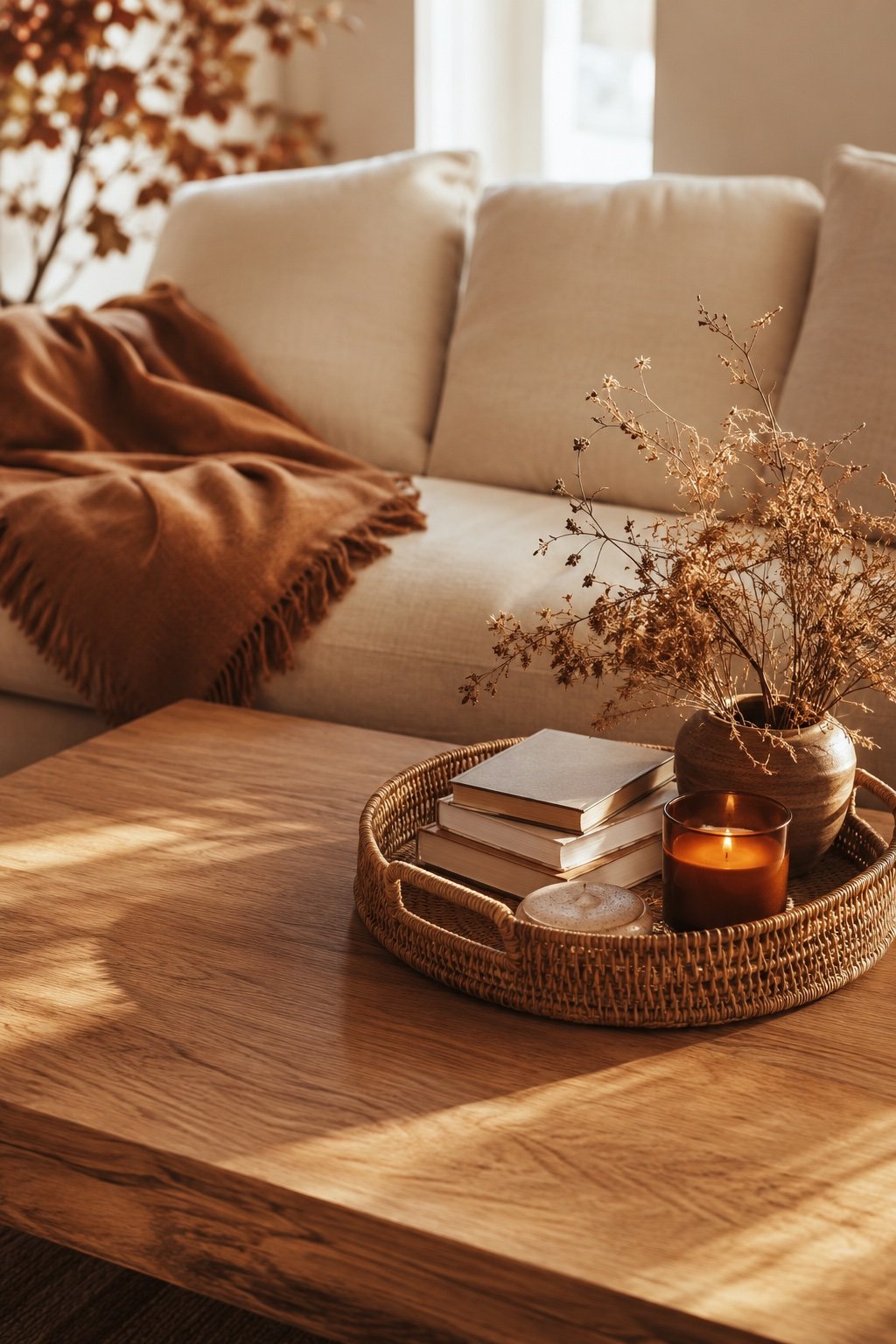
A coffee table is the hardest working surface in the house and the easiest to get wrong. Too bare and the room feels unfinished; too full and it fights with actual life. Good fall coffee table decor is not about buying more. It is about a formula you can repeat.
Below are five that work in almost any living room. Pick one, shop your own house first, and you will have a table that looks styled but still leaves room for a mug and a pair of feet.
The rule that makes all five work
Style in odd numbers, vary the heights, and always leave a third of the surface empty. That last part is what separates collected from cluttered. Every formula here follows it.
- Odd numbers: one, three, or five groupings. Two things side by side look like they are waiting for a third.
- Three heights: something low (a tray, a bowl), something medium (a book stack), something tall (a candle or stems).
- One third empty: measure it by eye. If you cannot set down a mug without moving something, take one piece away.
Get the scale right first
Most coffee tables that look off have the right objects at the wrong size. A few numbers fix that before you style anything.
- Tray: about a third to half the length of the table. A 48-inch table takes a tray around 18 to 24 inches.
- Height: keep everything under about 14 inches so it does not block the view from the sofa to the TV or the person across from you. Dried stems can go a little taller if they are airy.
- Round tables want one centered grouping. Rectangular tables look better with two groupings set off center, one at each end, and the middle left open.
Formula 1: Tray, stack, sculpture
A tray to corral everything, a stack of two or three books, one small sculptural object on top. The tray does the tidying for you, so even a busy table reads as intentional. This is the one to start with.
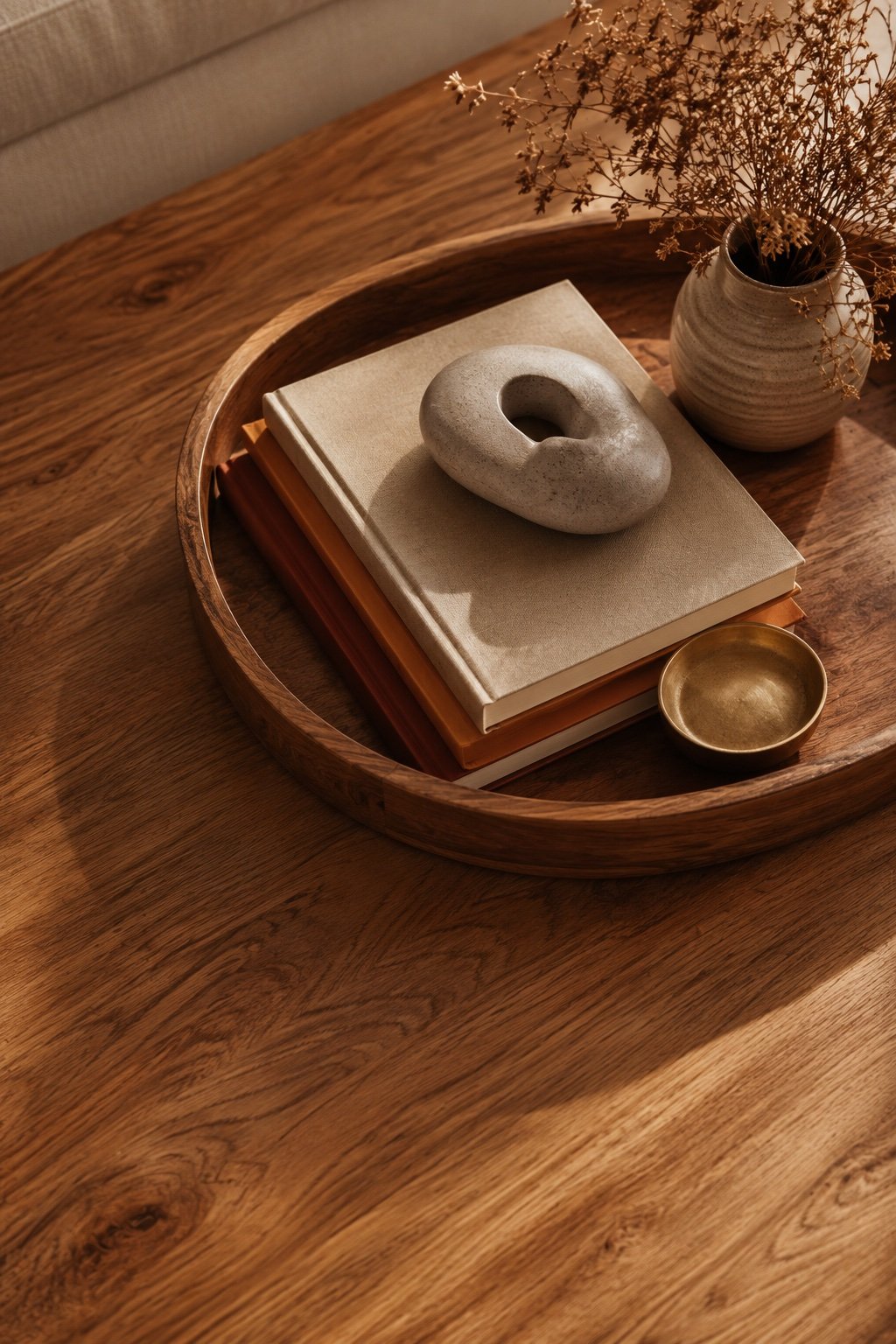
What to use: a round or oval tray in wood or rattan, art or design books with warm-toned spines, and a single ceramic or stone object. Done.
Formula 2: The living element
Anything alive or once alive keeps a table from feeling like a showroom. In fall that means dried stems, a bowl of muted gourds, or a low arrangement of foraged branches.
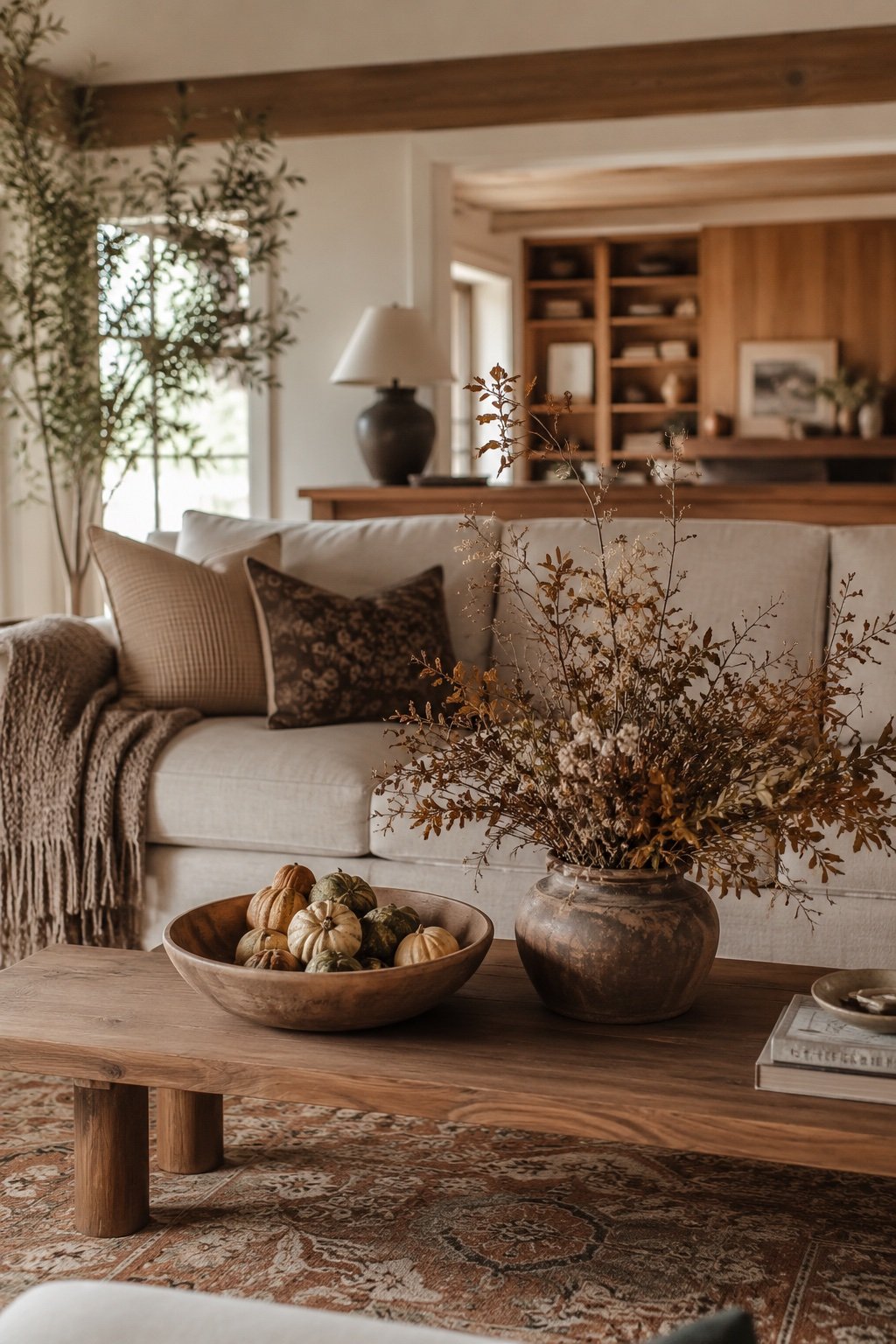
What to use: a short vase with five dried stems, or a wooden dough bowl holding heirloom pumpkins in sage and cream. Five stems look deliberate; twelve look like a bouquet that lost its way.
Formula 3: Books as the base layer
Two stacks of books at different heights create a built-in pedestal for a candle or a small vase. It is the easiest way to add dimension without buying anything.
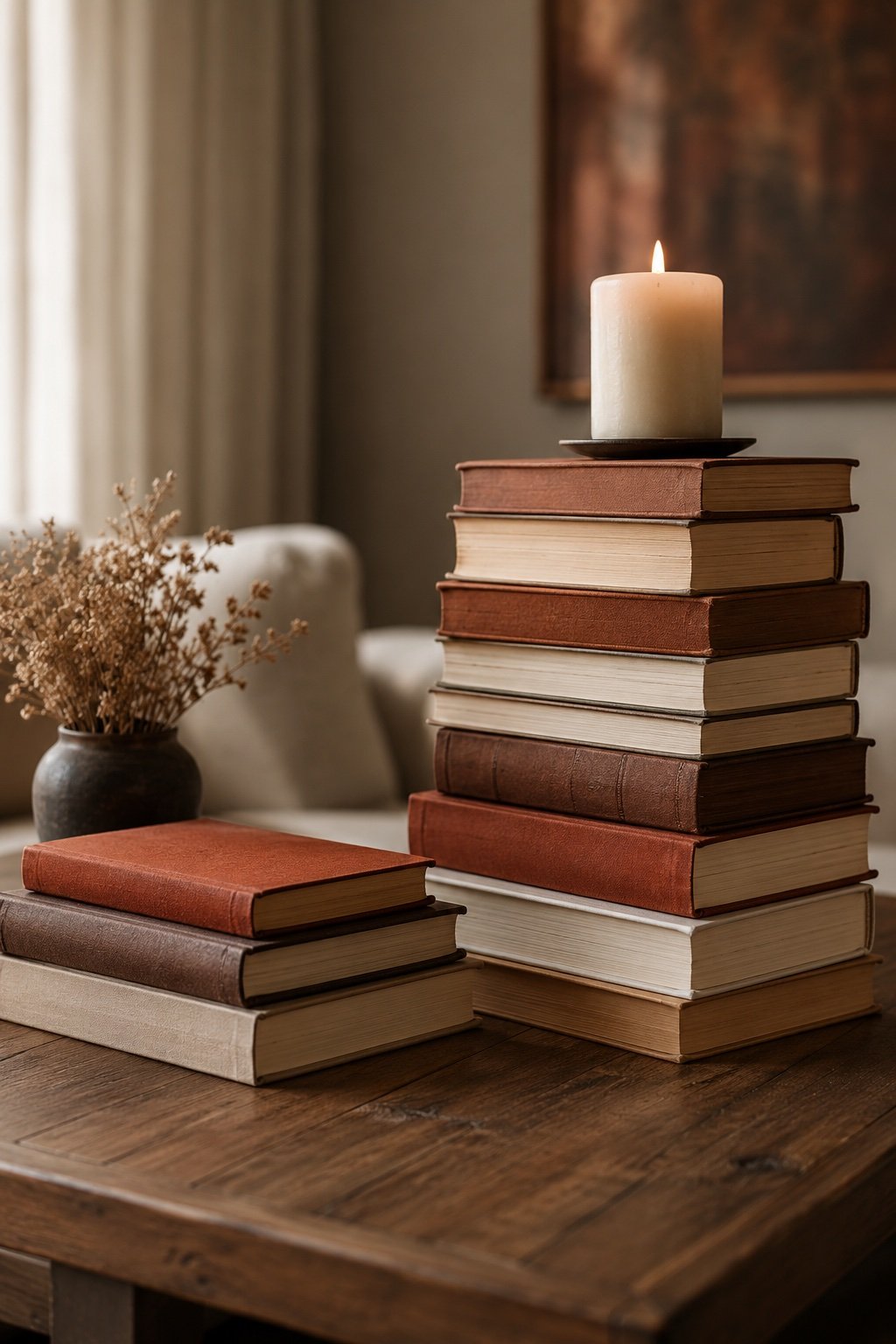
What to use: pull the rust, brown, and cream spines from your shelves. Make one stack of three and one of two, top the taller one with a candle, and set a single object beside the shorter stack.
Formula 4: The scent moment
A tray with a candle, a matchbox, and a small trinket dish turns the table into a ritual spot. It is practical, since the matches are right there, and it smells like the season.
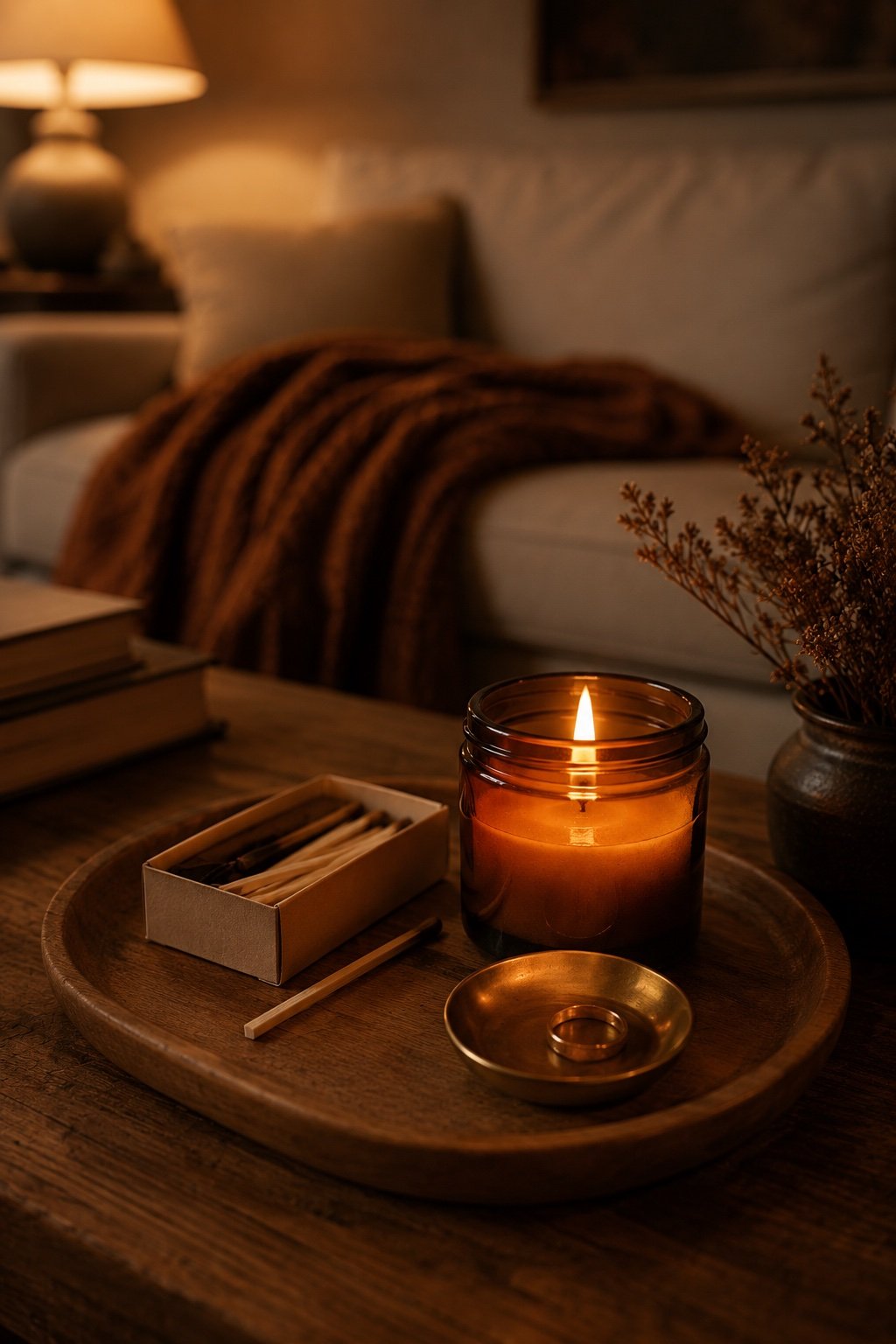
What to use: one candle in amber, fig, or cedar, a striker or matchbox worth leaving out, and a little brass or ceramic dish for rings and remotes. Our fall candles guide has the scents that work in a living room without taking over.
Formula 5: The minimalist version
If your table is small or the room is busy, do less on purpose: one large object and nothing else. A single oversized bowl, a stack of three books topped with a stone, or one sculptural vase with a couple of branches.
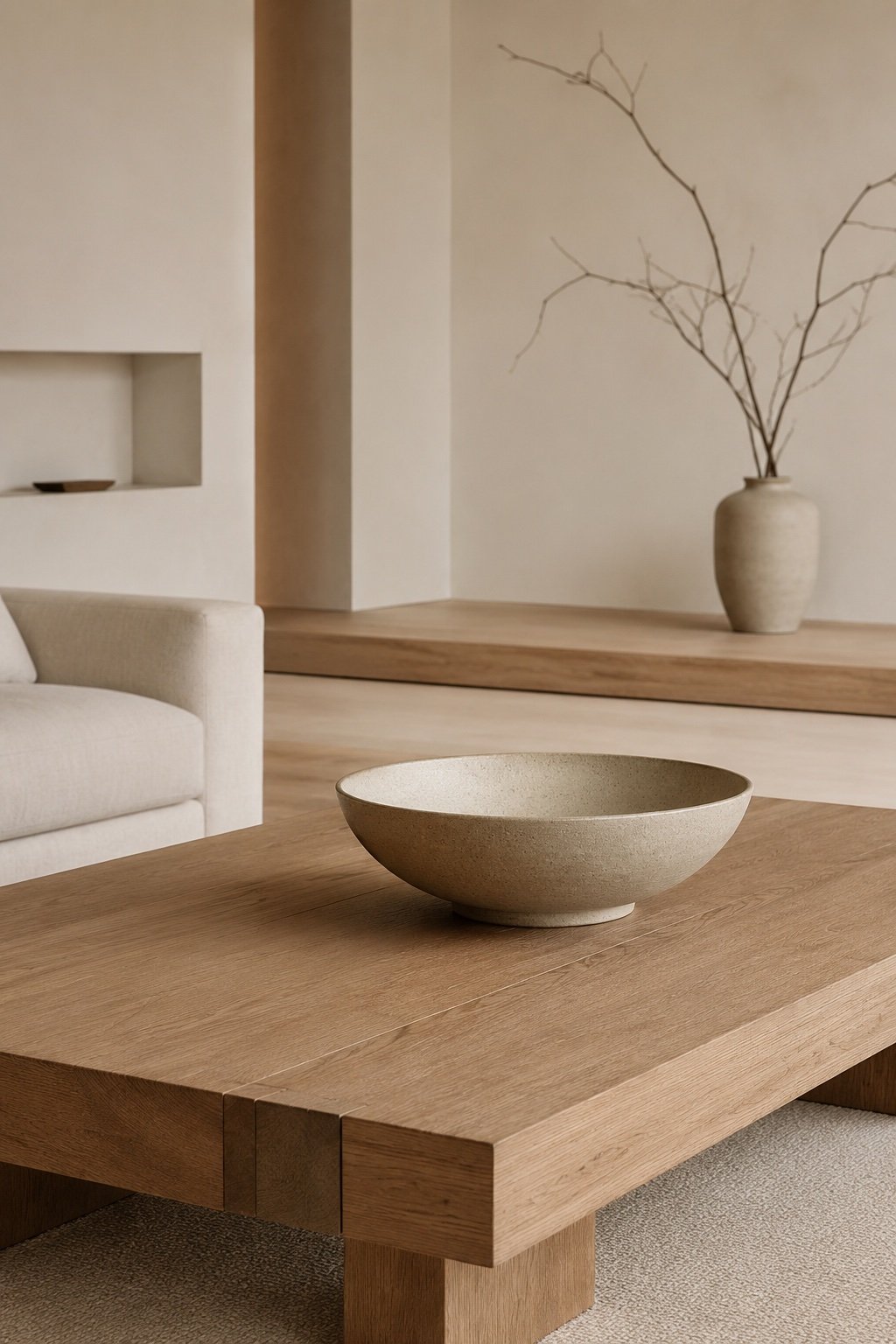
What to use: choose the largest single piece you own and let it carry the whole table. Negative space is a styling choice, not a gap.
The fall palette, on one table
Keep the colors in the same warm, low-contrast family and any of the formulas above will look finished.
- Base tones: cream, oat, and warm wood.
- Warmth: rust, cognac, and amber glass, in small doses.
- Green: muted sage or olive from dried stems, never bright.
- Metal: one only. Brass is the easy choice for fall.
What to skip
- Anything taller than a seated person’s eyes. It blocks conversation and the TV.
- Seasonal signs and word art. They read as store display, not home.
- A different object in every corner. Four corners, four objects, and the table is full before a mug lands on it.
- Fresh flowers you will not replace. Dried stems last until Thanksgiving; a vase of wilted tulips does not.
The two-minute reset
Whatever formula you land on, the maintenance is the same: clear everything off once a week, wipe the surface, and put back only what belongs to the formula. The remotes and the half-finished crossword go in the tray or the drawer.
For more warm-neutral pieces to build around, see our fall decor finds under $50. If a new piece does not fit one of the five formulas, it does not go on the table.
Keep Reading
📖 Bookshelf Styling: Why the Rule of Three Actually Works
📖 How to Mix Wood Tones Without It Looking Like an Accident
📖 Early Fall Mantel Ideas for the First Cool Week (No Orange Required)