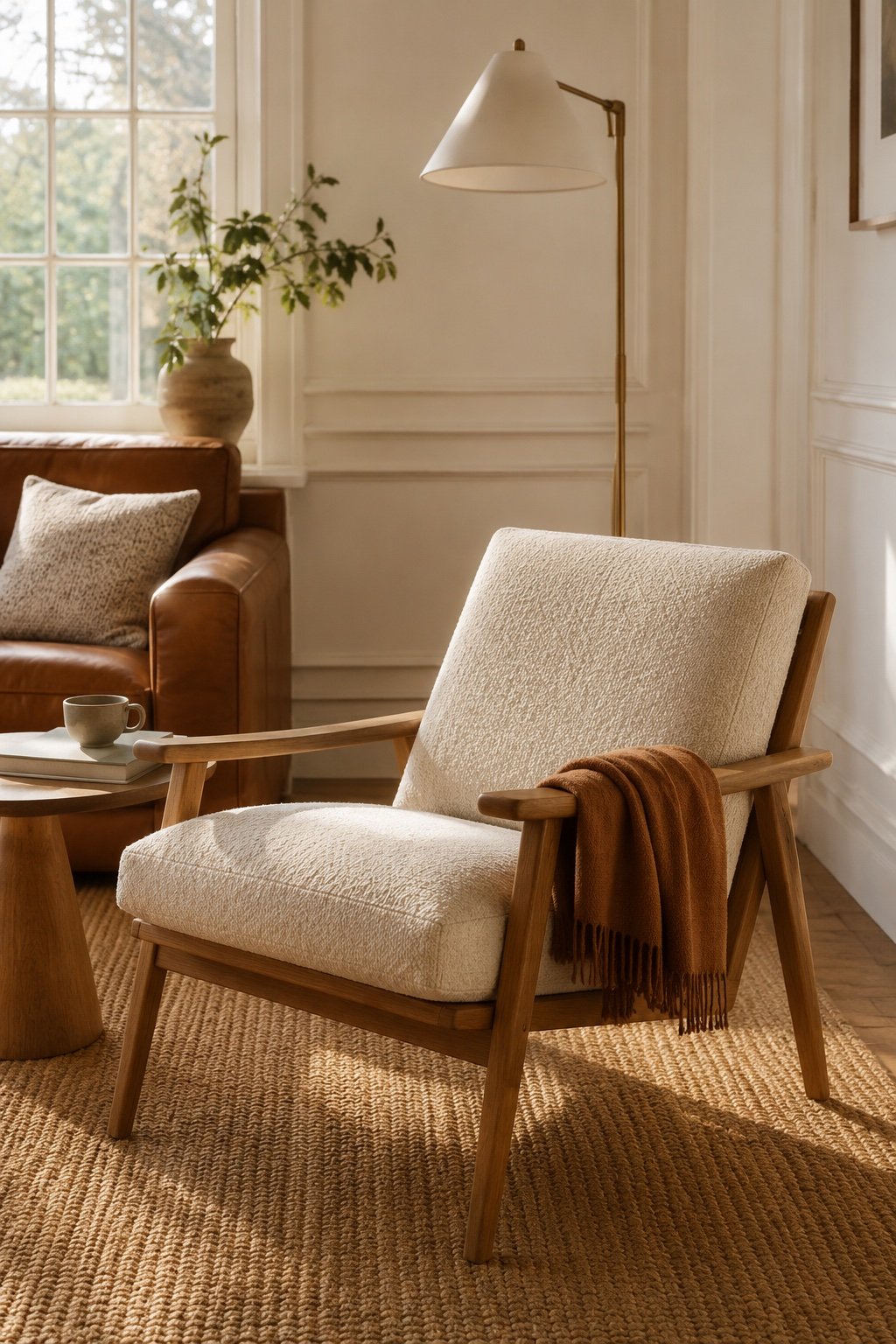
An accent chair is the piece people buy last and regret first. It is small enough to feel like a low-stakes purchase and expensive enough to hurt, and because it usually sits alone, every flaw in it is visible from across the room.
The good news is that a chair is easier to get right than a sofa, because there are only five numbers that matter and one honest question about how you will use it.
First decide what the chair is for
Three jobs, three completely different chairs. Getting this wrong is the source of most disappointment.
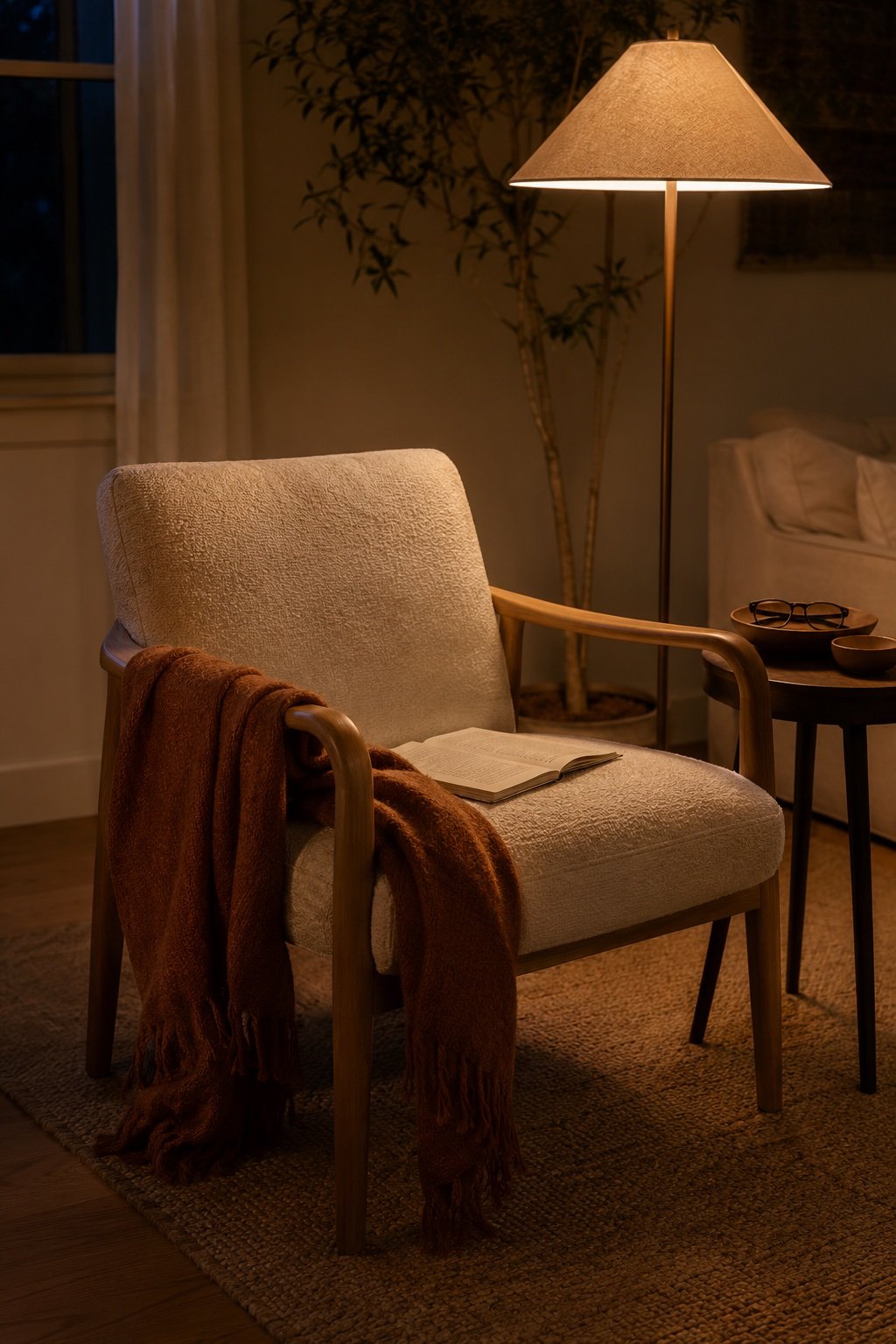
- A real sitting chair. Somebody reads in it for an hour. Needs a reclined back, a deep seat, arms, and a soft cushion. This is the chair by the window with a lamp beside it.
- A conversation chair. Used when guests come, and for perching. Upright back, firmer seat, lighter frame so it can be pulled around. Comfortable for forty minutes, not four hours.
- A corner chair. Mostly there to fill a space and hold a throw. Sculptural, light, often armless. Nobody will pretend to be comfortable in it, and that is allowed as long as you know you are buying it.
Be honest about which one you need. A gorgeous sculptural chair in the spot where you actually want to read will be the most resented object in your house.
The five numbers
Every listing gives you these, and they tell you more than the photos do.
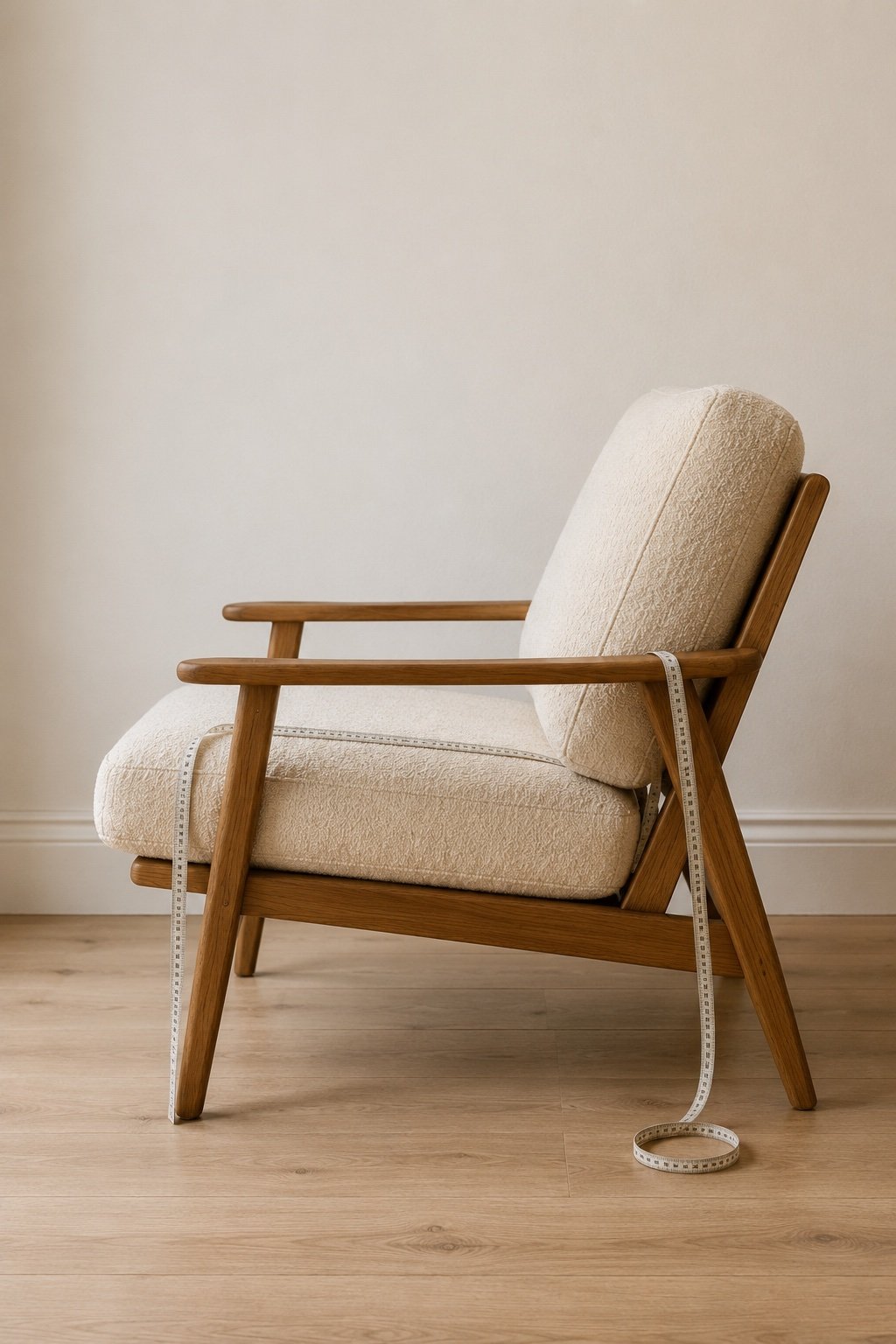
- Seat height: 17 to 19 inches for most people. Under 16 gets hard to stand up from; over 20 leaves feet dangling. Match it roughly to your sofa, within two inches, or the seating group will look mismatched even when nobody can say why.
- Seat depth: 20 to 22 inches is upright and easy to get out of. 23 to 26 is lounging, and needs a pillow if anyone in the house is under five foot six.
- Overall width: under 30 inches reads light and works in a small room. 30 to 36 is standard. Over 36 is a statement, and it will visually take up the space of a loveseat.
- Back height: a low back (under 34 inches overall) keeps sightlines open, which matters in an open plan. A high back is more comfortable and more furniture in the room.
- Arm height: if it is a reading chair, arms at 24 to 26 inches let you rest your elbow while holding a book. This is the number everybody ignores and then feels.
Before buying, tape the width and depth on the floor. A 34 inch chair is much bigger in a room than it is in a photo.
How to judge quality from a listing
You usually cannot sit in it first. Look for these instead.
- Frame: kiln dried hardwood is the answer you want. Plywood is acceptable in a light chair. Particleboard or unspecified “engineered wood” in a chair frame means it will loosen.
- Joinery: corner blocked, doweled, or mortise and tenon. If a listing says nothing about joints and shows no frame photo, assume staples.
- Suspension: eight-way hand tied is the heirloom answer and priced accordingly. Sinuous springs are the sensible answer for almost everyone. Webbing alone is the budget answer and sags first.
- Cushion fill: high resiliency foam wrapped in down or fiber is the sweet spot. Straight foam gets hard; straight down needs fluffing every day.
- Weight. An underrated signal. A 30 pound armchair is hollow. A well built one of that size is 45 to 70 pounds.
- Assembly. Legs bolting on is normal. A chair that ships in six pieces you assemble is a chair that will wobble in a year.
Fabric, by who lives there
The fabric decides whether you still like the chair in three years.
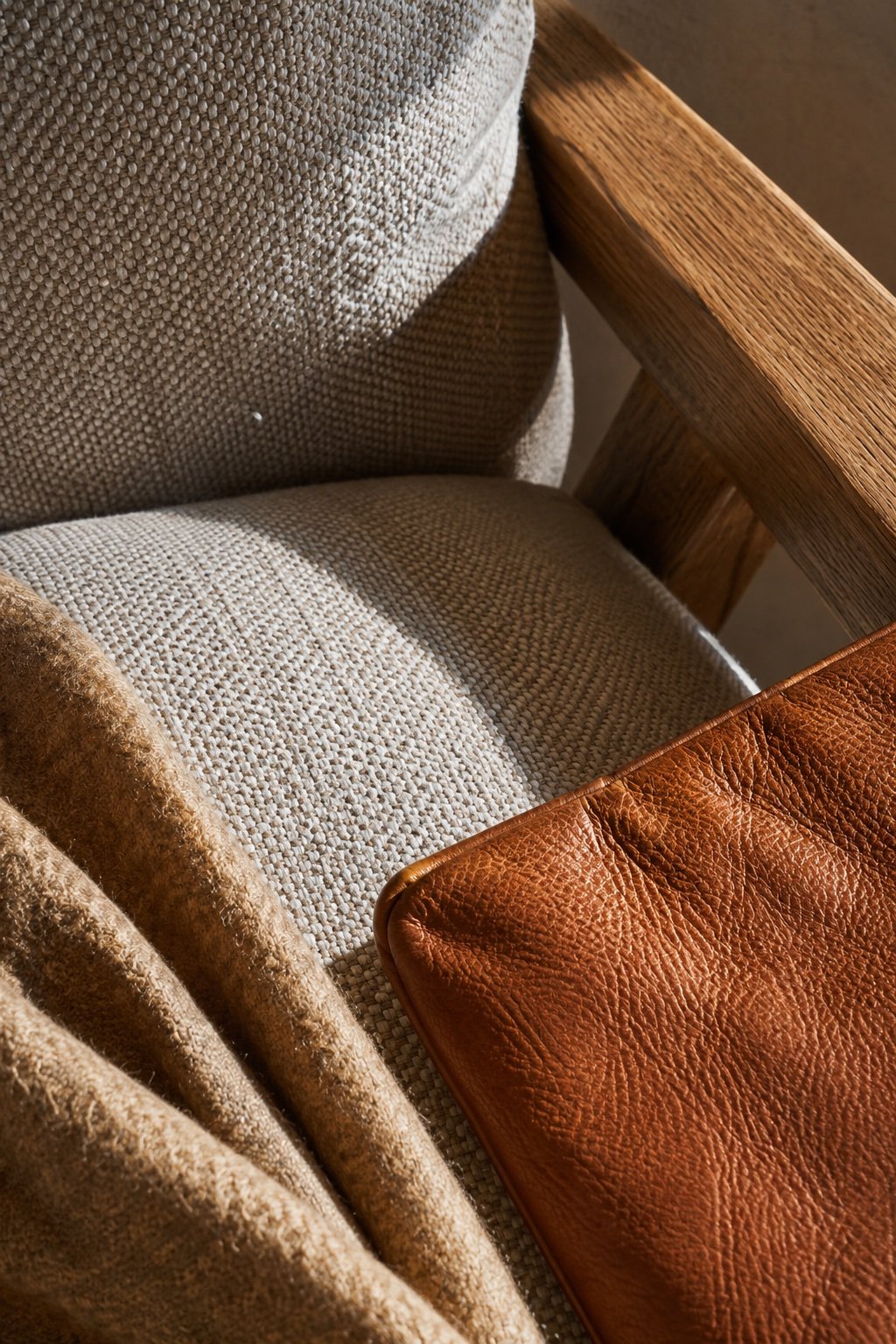
- Performance fabric if there are children, dogs, or anybody who eats on furniture. It has stopped looking like plastic; the current generation reads like linen and cleans with water.
- Wool and wool blends for durability and a slightly dressier look. Naturally stain resistant, wears for decades.
- Linen and cotton for looks, in a room where the chair is not doing daily heavy duty. It will wrinkle and it will show everything, and it will look wonderful doing it.
- Leather in a room with sun and traffic. Full grain ages into something better; corrected grain and bonded leather peel. If the price looks too good for leather, it is not leather.
- Bouclé if you have no pets and no claws. Cats treat looped fabric as a purpose-built toy, and a single pull runs.
Check the rub count if the listing gives one. Anything over 15,000 double rubs handles residential use; over 30,000 is heavy duty.
On color: an accent chair is the safest place in the room to take a risk, because it is the cheapest large thing to change. But if you take the risk, pull the color from something already in the room, a rug, a pillow, the art, so it lands as deliberate rather than random.
Where it goes
A chair in the wrong spot never gets used, and an unused chair becomes a laundry shelf.
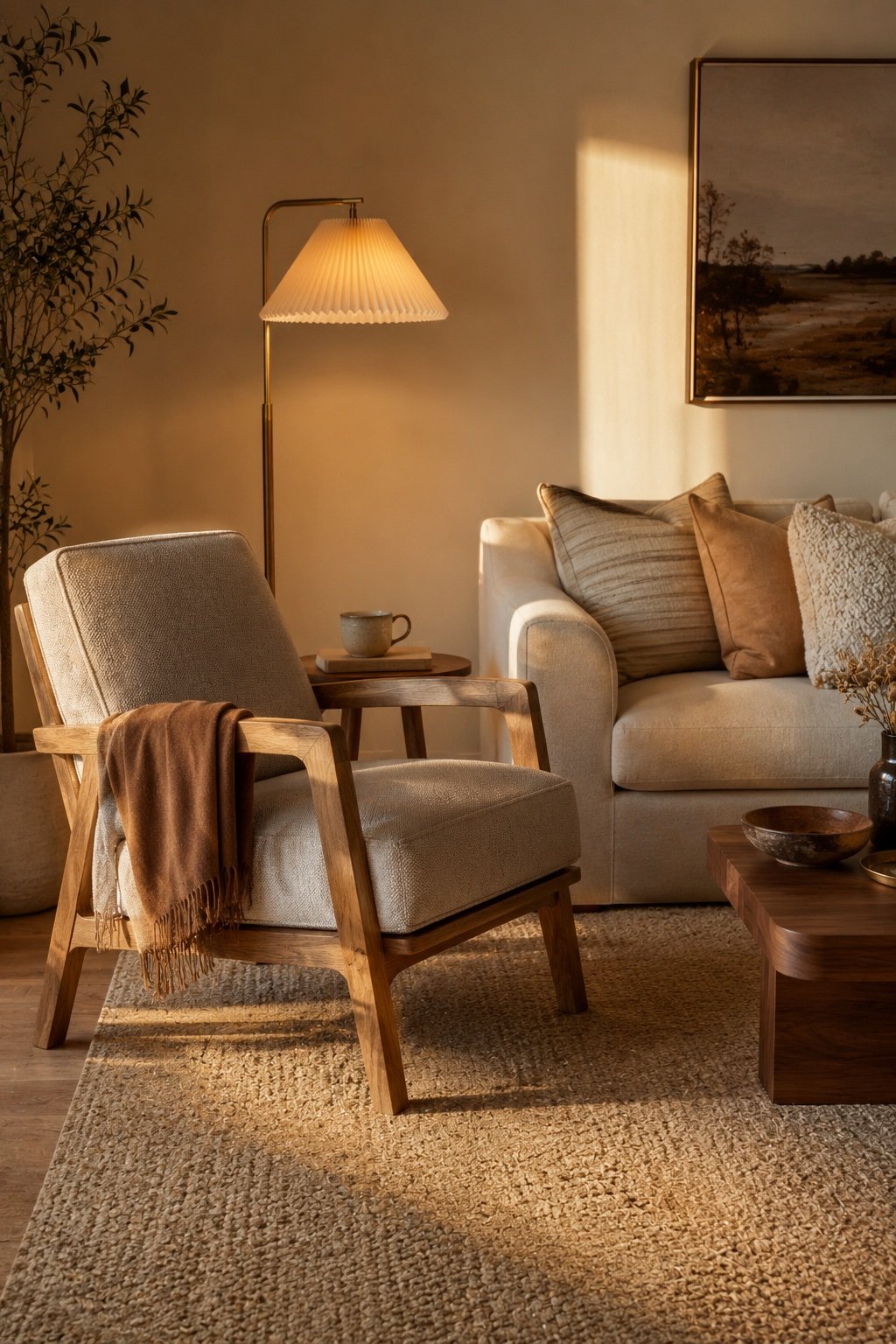
- Angle it. A chair set at roughly 45 degrees to the sofa creates a conversation group. A chair squared up against the wall creates a waiting room.
- Distance: the seats in a conversation group should be no more than eight feet apart. Past that, people raise their voices and stop talking.
- Give it a surface. Every chair needs somewhere to set a drink within arm’s reach, even if it is a stool or a stack of books.
- Give it a light. A floor lamp behind the shoulder, or a table lamp beside it. This is how a reading nook gets built in a corner that had nothing in it. A chair with its own pool of warm light gets sat in, every time.
- Front legs on the rug. The chair should relate to the rug rather than float beside it.
One chair or two
Two matching chairs facing the sofa is the classic, symmetrical, calm arrangement, and it makes a small living room look properly furnished. It also costs twice as much and gives you a room that reads formal.
One chair, unmatched, is the more collected look and the more flexible one, but it needs to be a chair strong enough to stand alone. If the chair is quiet, buy two. If it is a personality, buy one.
What it should cost
- $150 to $350. Light frames, foam cushions, thin fabric. Fine for a corner chair or a first apartment; do not expect it to be the chair anybody reads in.
- $400 to $900. The value band. Hardwood frame, sinuous springs, decent performance fabric. Most people should shop here, and a chair at the top of it can last fifteen years.
- $1,000 to $2,500. Eight-way hand tied, better fill, real leather or heavy wool, and a shape that holds up. Justified for a chair you sit in daily.
- Vintage, $100 to $600 plus reupholstery. The best value in furniture, if you like the frame. Older frames are frequently better than new ones. Budget $600 to $1,200 for reupholstery on top, which is why a vintage chair only makes sense when the bones are genuinely good.
Before you click buy
Read the return policy on a chair the way you would on a mattress. Measure your doorways and the turn at the top of the stairs. Check whether the legs are removable. And sit in something with the same seat depth and height somewhere, anywhere, so the numbers stop being abstract.
A chair that fits the room and the person is worth more than a chair that looks right in a photograph, and after the first week, nobody is looking at the photograph.
Keep Reading
📖 The Curtain Guide: Length, Width, Fabric, and What It Costs
📖 How to Choose a Dining Table: Size, Shape, Material, and What It Costs
📖 The Right Rug Size for Every Room: A Visual Guide