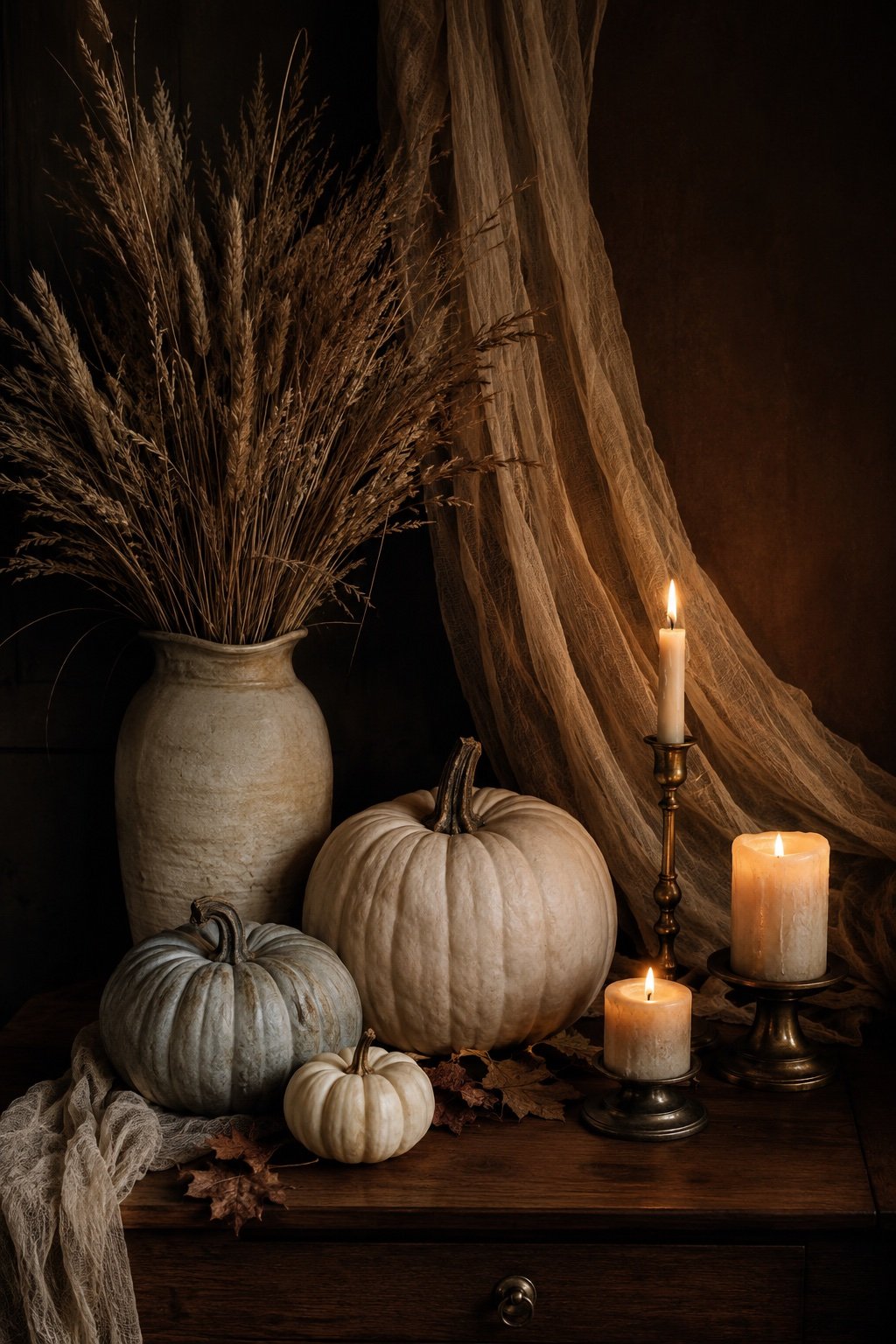
There is a version of Halloween decorating that does not involve orange plastic, purple string lights, or an inflatable anything on the lawn. It leans on the parts of the season that are genuinely beautiful: candlelight, dried things, dark corners, and the specific gold that October light has at four in the afternoon.
It also has a practical advantage. Decor in warm neutrals goes up in late September, works straight through Thanksgiving, and only the pumpkins have to leave.
Set the palette first
Skip orange and black as a pair, and the whole thing stops looking like a party store. What replaces it:
- Bone, cream, and oatmeal as the base. White pumpkins, pale candles, natural linen.
- Cognac and rust as the warmth. Dried leaves, leather, amber glass, terracotta.
- Deep espresso or charcoal instead of true black. Softer, and it still reads as the moody end of the season.
- Dried sage and olive as the green, if you want any.
- One accent, used sparingly. Oxblood, near-black, or antique gold. One, not three.
The rule that holds the whole look together: no more than four colors in a room, and at least two of them are neutrals you already own.
Pumpkins, chosen like objects
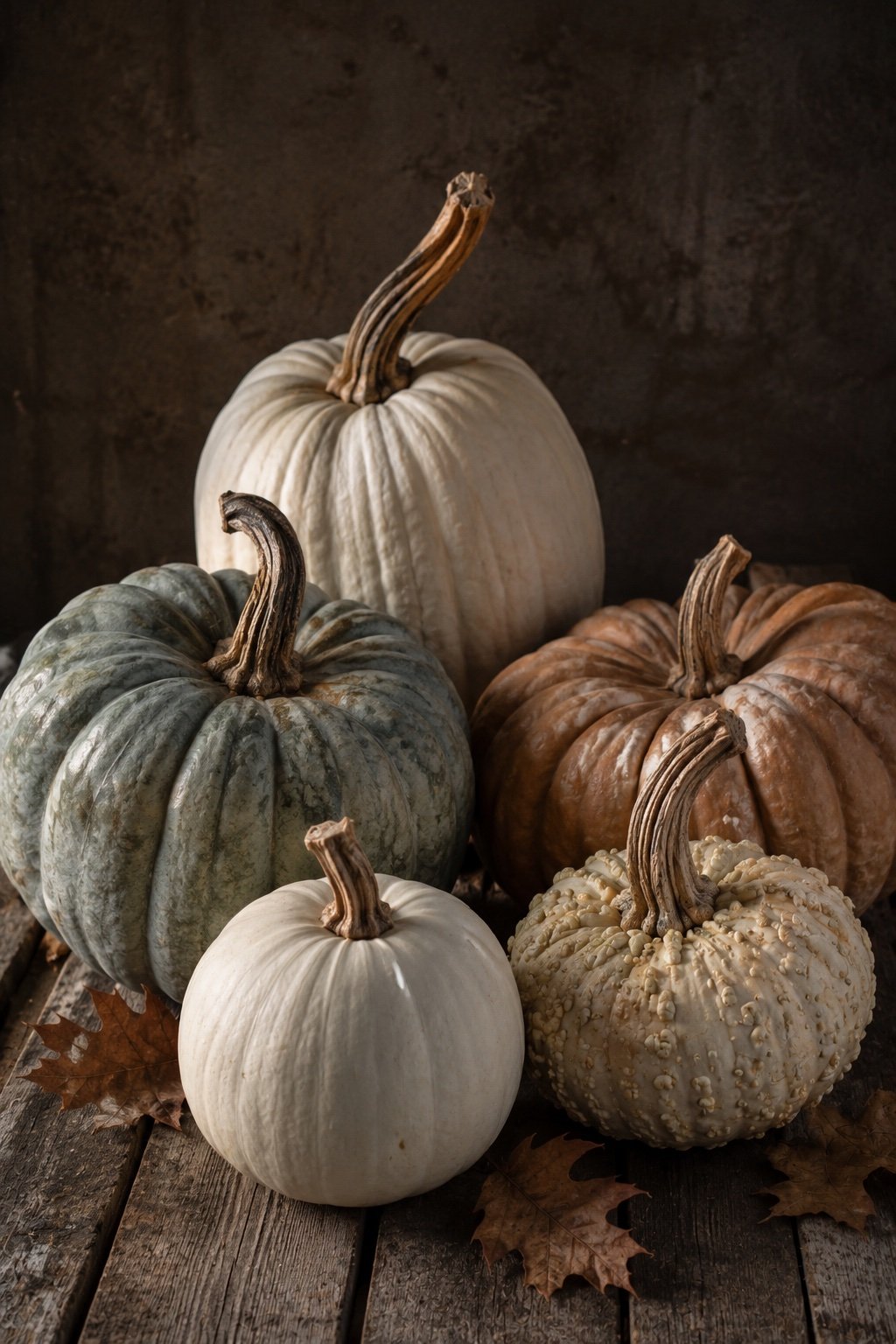
Pumpkins are the easiest part of the season to make look expensive, because the interesting ones cost the same as the boring ones.
- Look for the pale varieties: Casper and Lumina are chalk white, Jarrahdale is blue-gray, Fairytale is a flattened cinnamon brown, and Long Island Cheese looks exactly like a wheel of cheese in the best possible way.
- Group in odd numbers at three different sizes. Three is enough for a doorstep. Five is a full display.
- Vary the texture, not just the color. A warty pumpkin next to a smooth one is more interesting than two smooth ones in different shades.
- Leave the stems long. The stem is the sculptural part.
- Do not paint them. If you must, do one, matte, in a color already in the room.
Real ones last six to eight weeks outdoors in cool weather if you keep them off wet ground. Put them on a doormat, a wooden crate, or a stone step, not directly on soil.
Candlelight is the actual decoration
Everything about this season that feels good is a lighting effect. Get the light right and you barely need objects.
- Group candles at three heights. A tall taper, a medium pillar, a low votive. The height difference is what makes a cluster look styled instead of scattered.
- Unscented for the table, scented anywhere else. Nobody wants to eat next to a pumpkin spice candle.
- Amber and smoked glass holders do more for the mood than the candles themselves, because they color the light.
- Battery tapers in the windows, on a timer set for dusk. This is the one place fake candles are unambiguously the right call, and from the street they look identical.
- Turn the overhead lights off entirely after dark for the whole month. Lamps at 2700K and candles only. This costs nothing and changes everything.
Dried, not fresh
The dried material is what carries the season for eight weeks without needing a single thing from you.
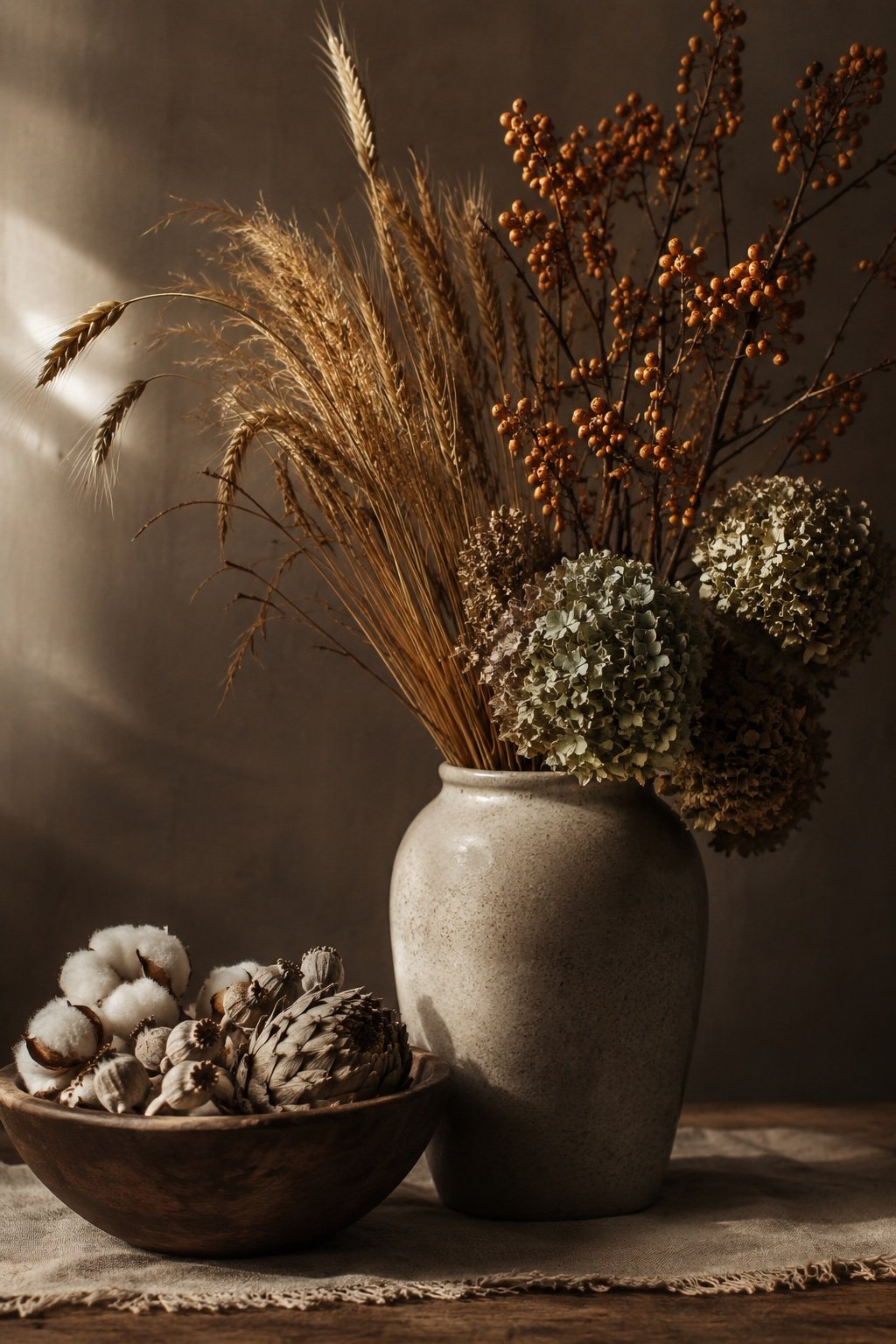
- Wheat sheaves and dried grasses in a tall vase by the door or on the mantel.
- Bittersweet or dried oak branches, the twiggy, slightly witchy version of a bouquet.
- Dried hydrangea, which goes papery and antique and lasts all winter.
- Preserved eucalyptus in a bud vase in the bathroom or beside the bed.
- Pods, cotton stems, and dried artichokes in a wooden bowl, as the low element on a table.
Nothing here dies, drops, or asks for water, and all of it is still working in November.
The tasteful spooky, if you want any
You can lean into the eerie without a single plastic skeleton. The trick is that it should look old rather than scary.
- Antique brass or bone-colored candlesticks, the taller and more mismatched the better, dripping real wax.
- One dark botanical or moody still life print swapped into an existing frame for the month. A single art change reads more strongly than ten objects.
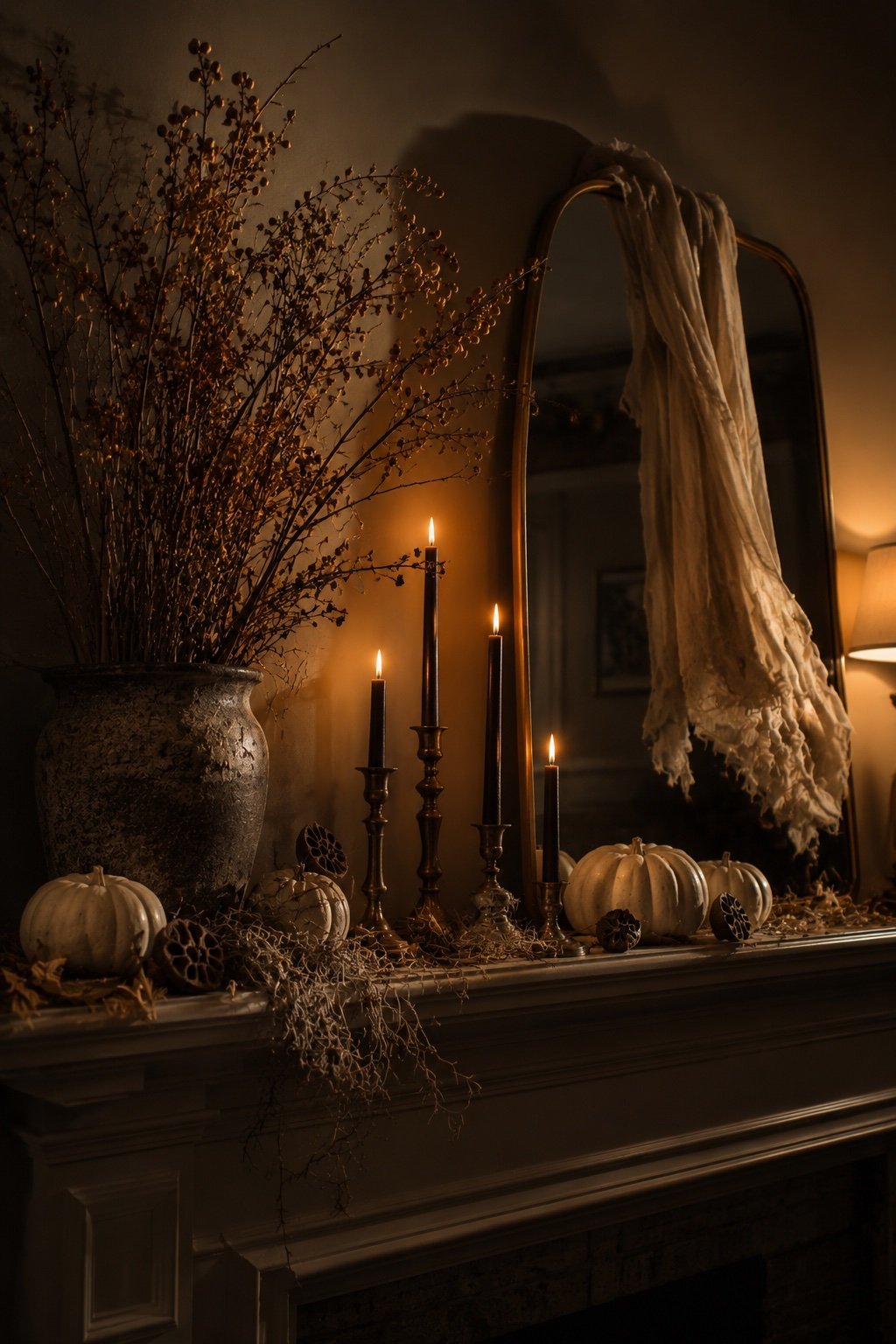
- Cheesecloth or gauze, loosely draped over a mantel or a mirror and left slightly torn. It costs three dollars and it is the only ghost you need.
- A cloche over something odd: a dried rose, a stone, a bird skull if that is your house. Putting anything under glass makes it a specimen.
- Black wax tapers in an otherwise cream room. One material in a dark color is menacing. Six is a costume.
If you have kids and the house needs to be actually fun, keep the neutral setting and let the fun be temporary: paper bats on one wall, a bowl of candy, a carved pumpkin on the step for the last week only. The set stays, the costume comes off on November first.
Where to put it, room by room
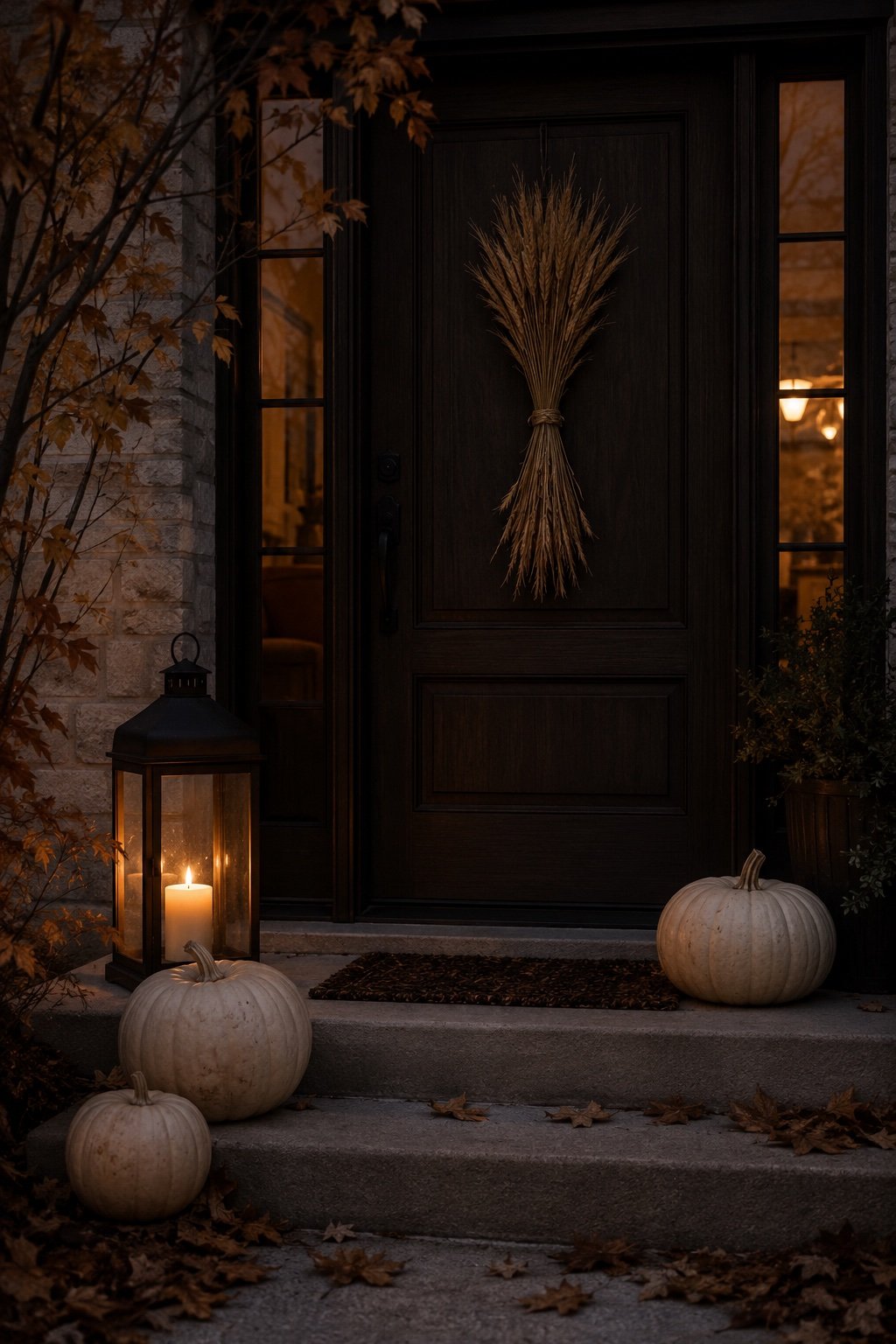
The doorstep. The highest impact spot in the house. Pale pumpkins on the steps at three sizes, a wheat or dried grass bundle on the door instead of a wreath, a lantern with a battery candle on a timer, and a dark natural fiber doormat. Done in twenty minutes.
The mantel. Same structure as an early fall mantel, one shade darker. One tall anchor at one end, usually branches or a leaning frame. Candles in the middle at three heights. A trail of small pale pumpkins and pods along the base. Keep the middle lower than the ends so the arrangement has a shape.
The dining table. A linen runner, a low line of votives, two or three small pumpkins, and one shallow bowl of pods. Everything under twelve inches tall so people can see each other.
The entry or console. A wooden bowl of dried material, a stack of dark spined books, one candle, and a cloche. This is the fastest surface in the house to season and unseason.
Make it earn eight weeks
Everything above is chosen so that on November first you remove exactly three things: the gauze, the black tapers, and any carved pumpkin. What remains, the wheat, the pale pumpkins, the candlelight, the dried bowl, is a Thanksgiving table waiting to happen.
That is the whole argument for the neutral version. It is not just quieter. It is the version you only have to decorate once.
Keep Reading
📖 Early Fall Mantel Ideas for the First Cool Week (No Orange Required)
📖 Vintage Halloween Decor: The Antique Look Without the Kitsch
📖 15 Cozy Fall Decor Finds Under $50 That Look Expensive