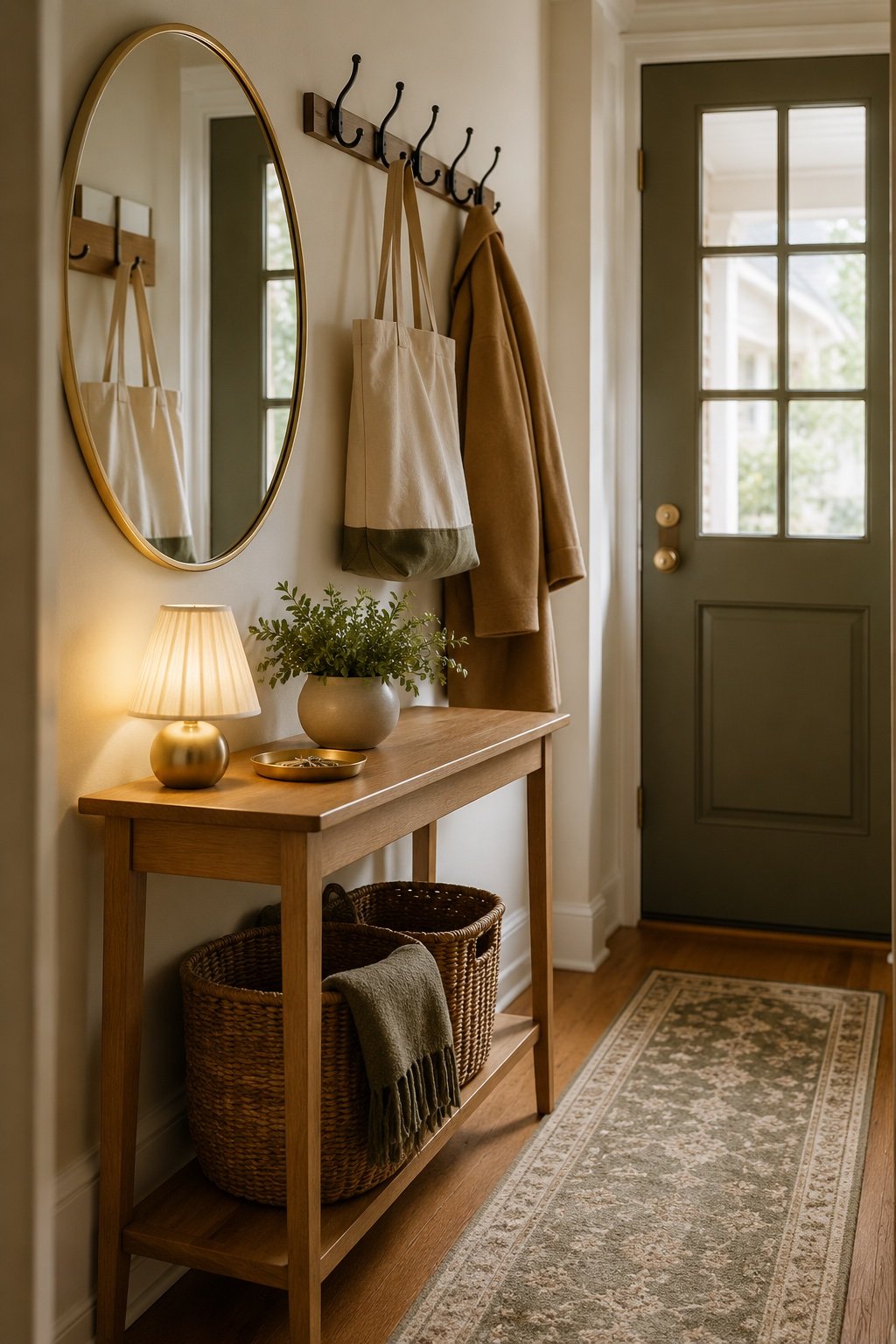
Watch what happens in the first ten seconds after you walk in. Keys go on the nearest flat surface, the bag drops by the wall, shoes come off wherever you are standing. A small entryway has one job and no room to do it, and every one of the small entryway ideas below comes back to the same fix: give each of those objects a home within arm’s reach of the door. The homes that pull it off are not bigger. They use the wall instead of the floor.
Here is how to make even a two-foot-wide entry work, whether you have a real foyer or just the wall beside the door.
Measure before you buy anything
Most entry mistakes are furniture that is two inches too deep. Five minutes with a tape measure saves a return.
- Keep a 30-inch path clear. That is the minimum for walking past with a grocery bag. Whatever is left over is your storage zone.
- Check the door swing. Nothing on the hinge side can stick out farther than the gap between the open door and the wall.
- Depth rules everything. A console should be 10 to 12 inches deep. A bench can go to 16 because you sit on it, not walk past it.
- Hook height: about 60 to 66 inches for adults, 40 inches for a second row that kids can reach.
Start with the drop-zone essentials
Everything that lands by the door needs a designated spot, or it lands on the floor. There are four non-negotiables:
- A tray or dish for keys, so they stop migrating around the house.
- Hooks for bags and coats, the biggest space-saver there is.
- A place for shoes that keeps them out of the walkway.
- A spot for mail so it never piles on a counter.
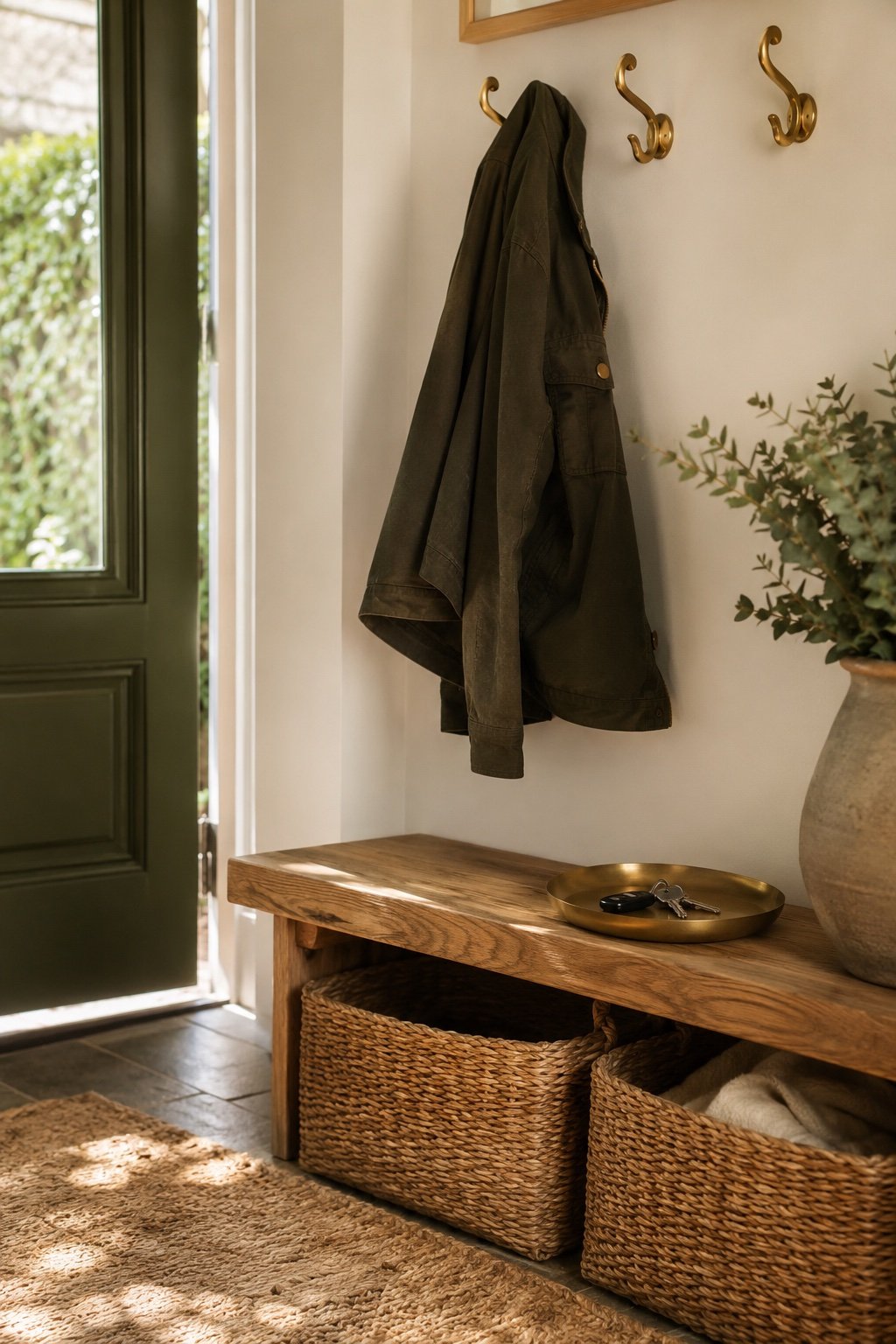
Solve those four and the entry stays clear on autopilot. Everything else in this guide is a way to fit them into less space.
Go vertical when there is no floor
Wall hooks instead of a coat rack. A row of hooks or a peg rail takes zero floor space and holds coats, bags, and a leash. A freestanding coat tree needs about two square feet and tips over when it is loaded on one side. Mount a lower row for kids and they will actually use it.
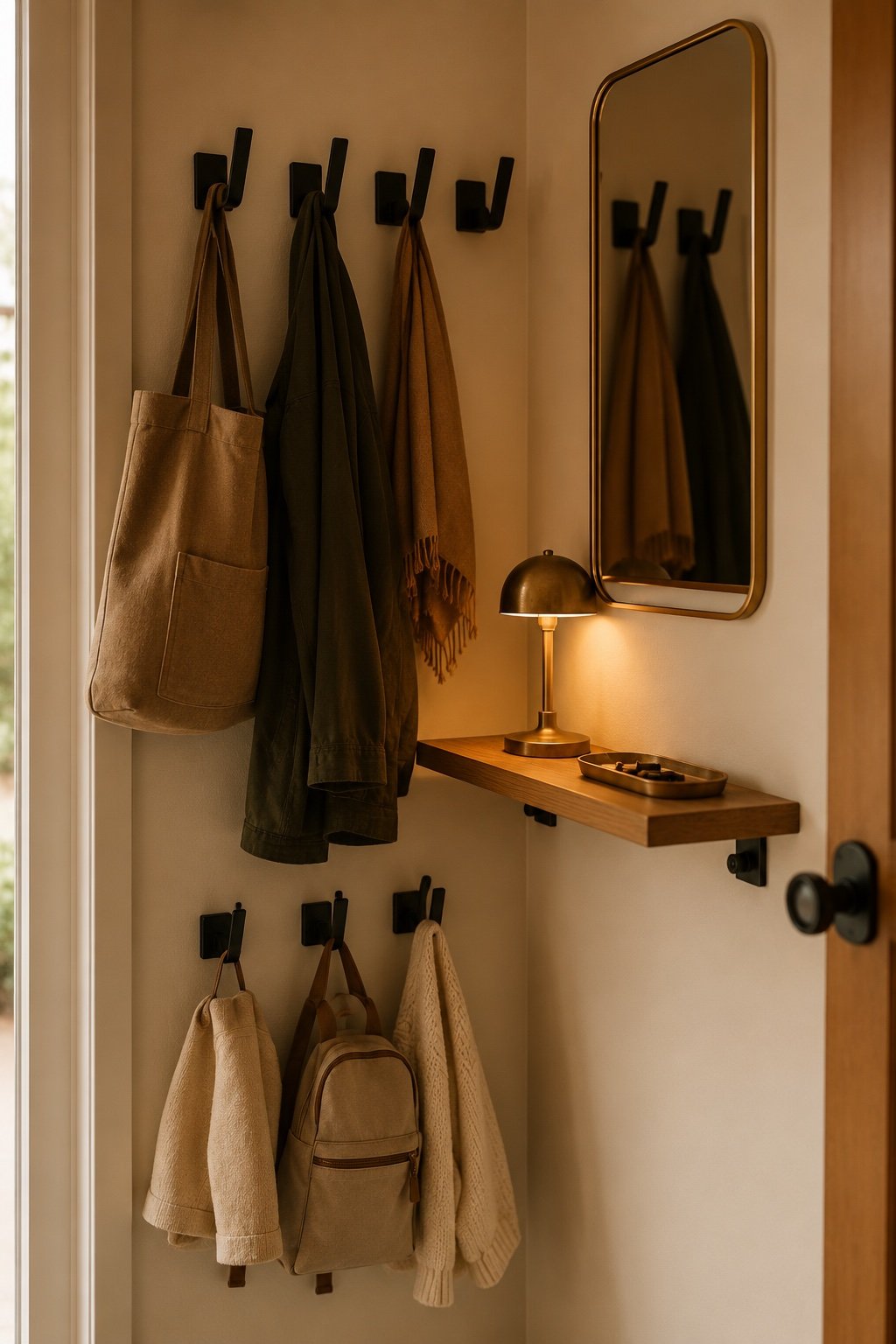
A floating shelf as your console. No room for a table? A narrow shelf at about 36 inches gives you a surface for the key tray and a small lamp with none of the footprint. Six to eight inches deep is enough.
A slim wall mirror. A mirror does two jobs: the last look on the way out, and it bounces light around a tight entry so it feels wider than it is. Hang it with the center at about 60 inches.
Shrink the footprint of storage
A narrow console or a bench, not both. Pick one. A slim console holds the drop zone. A storage bench gives you a seat for tying shoes and hides the shoes underneath. In the smallest entries the bench wins, because it solves two of the four essentials in one piece.
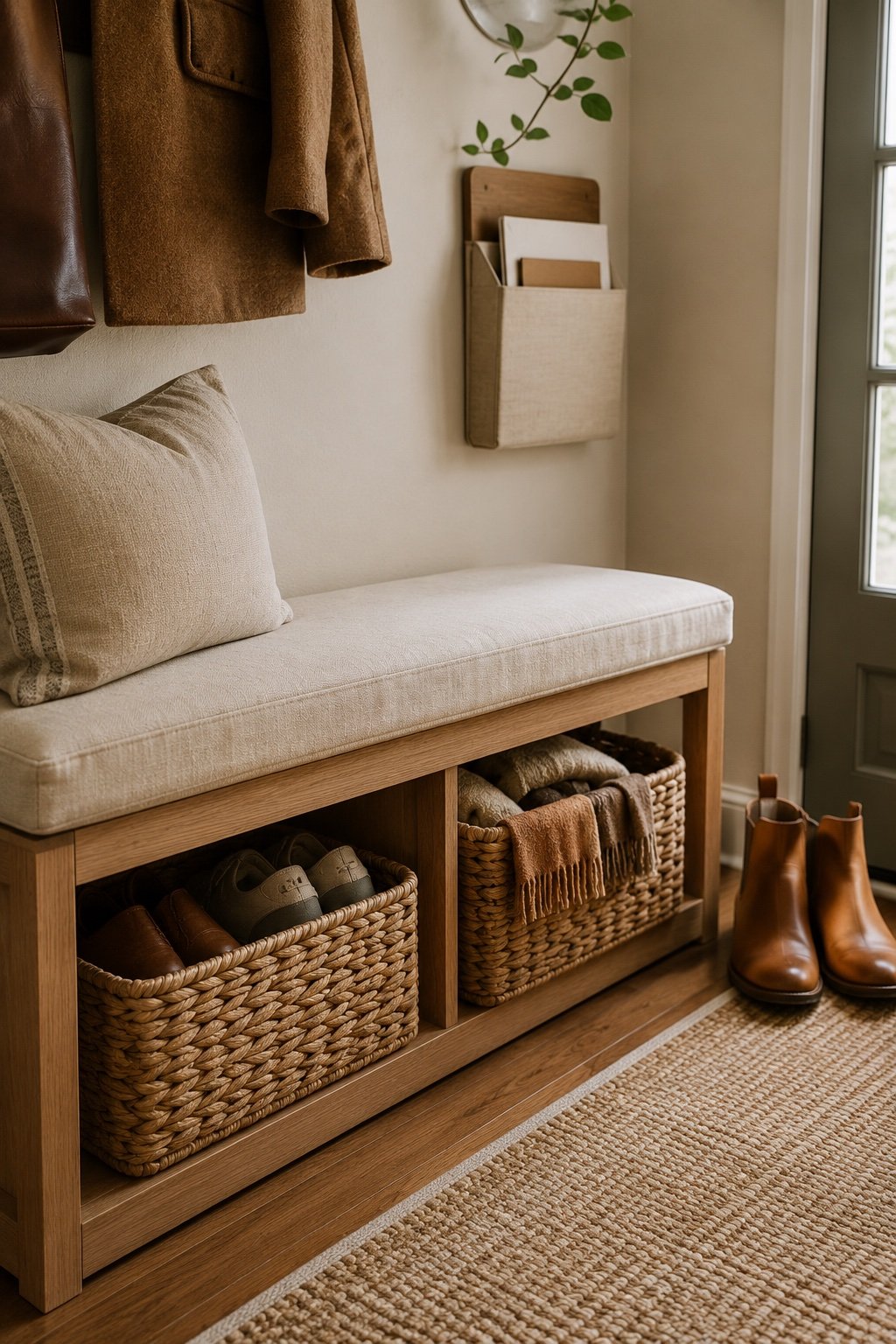
Baskets under the bench. Two baskets under a bench corral shoes, hats, and gloves out of sight. Measure the gap under the seat before you buy them; most benches leave 14 to 16 inches.
A wall-mounted mail organizer. A small wall file or a lidded box keeps paper from ever touching a surface. Anything that needs action goes in the front slot, and the recycling bin should be closer than you think.
Shoes decide whether it works
Shoes are the part of the entry that grows. The fix is a limit, not more storage.
- Two pairs per person live by the door. The rest go back to the closet.
- A slim shoe cabinet with tipping drawers fits in about 7 inches of depth and holds a dozen pairs. Anchor it to the wall; they are top heavy.
- Add a boot tray in winter. It is not decoration, but it saves the floor and the rug from November to March.
If you rent
Everything above can be done without a drill.
- Adhesive hooks rated for 5 pounds or more handle bags and light jackets. Heavy winter coats need screws or an over-the-door rail.
- An over-the-door hook rail on the coat closet adds six hooks with no hardware at all.
- A leaning mirror on top of a console or bench works as well as a hung one.
- A tension rod inside a closet doubles the hanging space for guests’ coats.
Make it feel like a room, not a hallway
A small runner or washable rug. It defines the space, catches dirt, and softens a hard floor. Washable is the right call here since the entry takes the most grime. A 2 by 3 or a 2 by 6 runner fits most small entries; the rug size guide has the rest of the numbers.
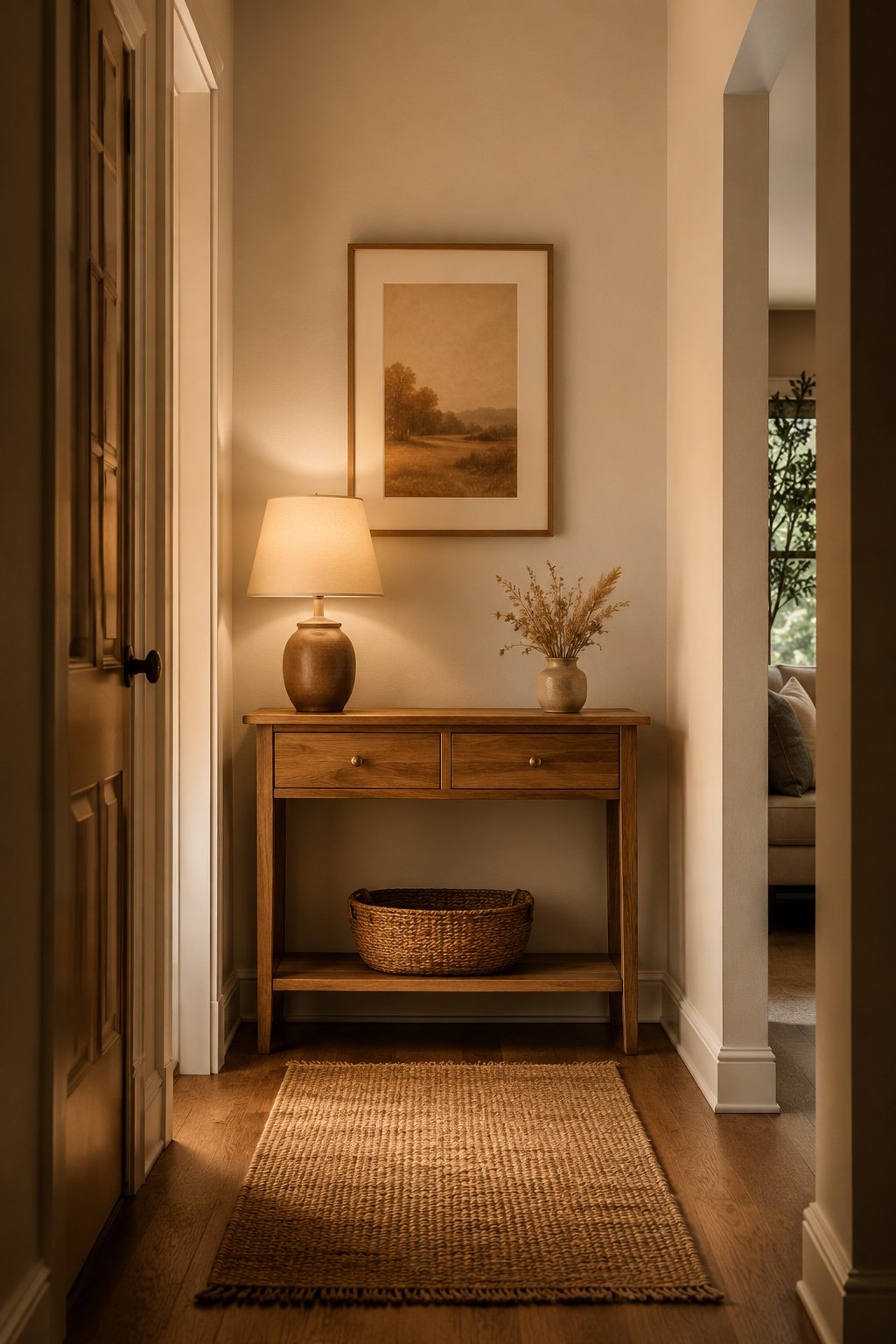
One warm light source. A small lamp on the shelf or a plug-in sconce turns a dim corridor into a welcome. Use a 2700K bulb (the warm lighting guide explains why), the warm white that makes a small space feel intentional instead of clinical.
A single piece of art or a peg for seasonal touches. One framed print or a small wreath on the inside of the door adds personality without adding clutter. One is the number. Two starts to look like a gallery in a hallway.
What to skip in a small entry
- A coat tree. It takes floor space and holds less than a row of hooks.
- A deep console. Anything over 12 inches eats the walkway.
- Too many baskets. Two is storage. Five is a pile with lids.
- Decor on the only surface. If the key tray has to compete with candles and a vase, the keys end up on the kitchen counter again.
The everyday reset
Storage only works if it is used. The habit that keeps a small entry clear: on the way in, keys in the tray, coat on the hook, shoes in the basket, mail in the file. Ten seconds. Done every night, it means you never face the pile.
If you only add three things
A row of hooks, a key tray, and a bench with two baskets underneath. That is a fully working entryway in under two feet of wall, and it is the base everything else layers onto. Start with the hooks. They fix the most in the least space.
Keep Reading
📖 Linen Closet Organization That Survives Real Life
📖 Pantry Organization That Survives a Real Grocery Run
📖 The Guest Room Checklist: What People Actually Notice