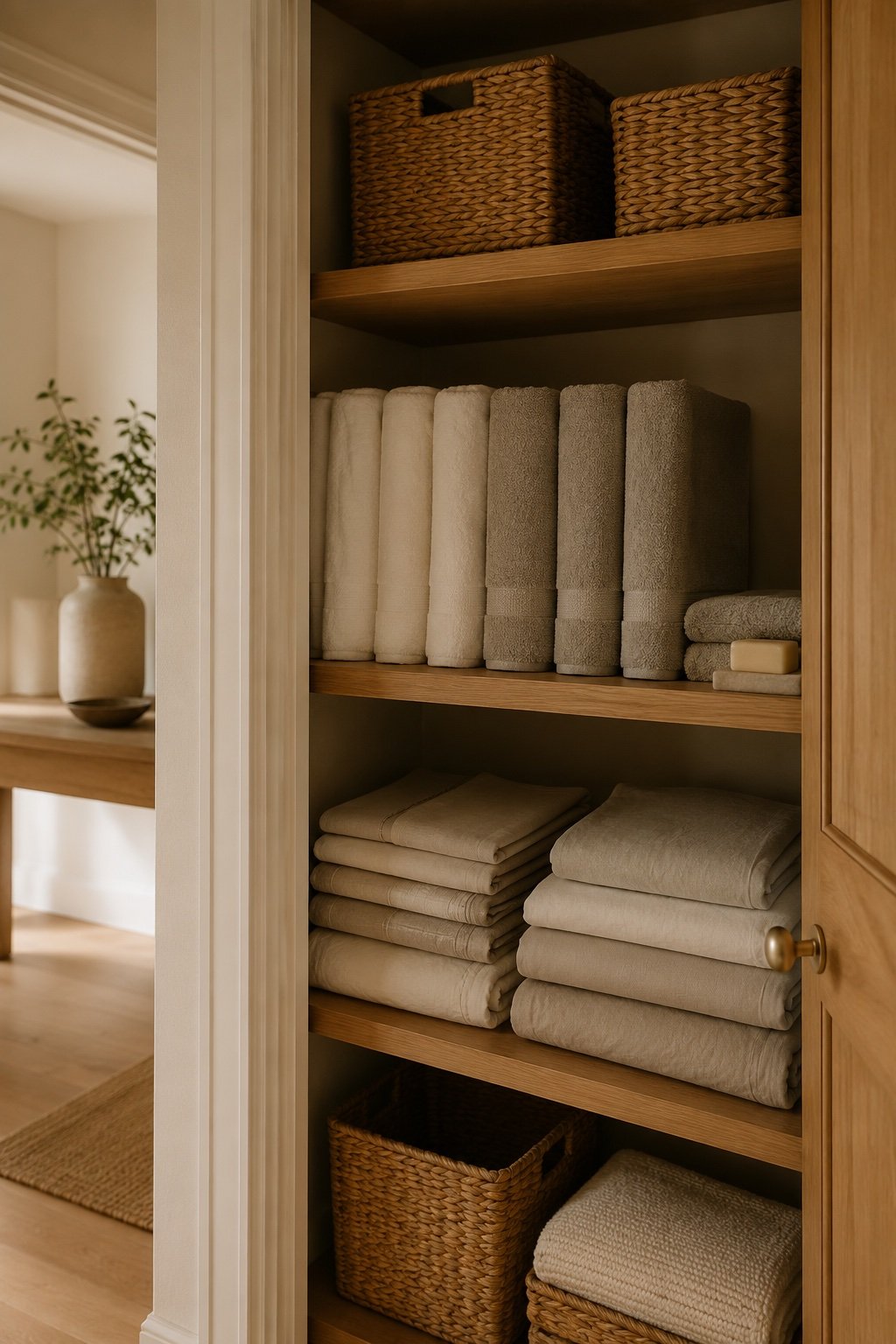
Every linen closet starts organized. Then someone needs a towel in a hurry, pulls the one from the middle of the stack, and by March it’s an avalanche with a heating pad in it. The linen closets that stay organized aren’t maintained by more disciplined people. They’re built so that the lazy move and the right move are the same move.
First, own less
No system organizes a closet that’s overfull, and most linen closets hold roughly twice what the household uses. The honest numbers:
- Sheets: two sets per bed. One on, one in the wash or the closet. A third set for a bed that gets accidents. That’s all.
- Bath towels: two per person, plus two for guests. Not the eleven you have.
- Hand towels: two per bathroom in rotation, plus a small backup stack.
- Blankets: what you use, plus one spare per bed for a cold snap.
- Pillows: the ones on beds, plus two guest pillows. The flat ones from 2019 are not a resource.
Everything past those numbers is taking up the space that makes the rest work. Old towels go to an animal shelter, which will genuinely take them. Sheets that don’t fit any bed you currently own are not going to start fitting.
The rule that keeps it neat
Stacks fall apart because we pull from the middle. So stop stacking things people pull from.
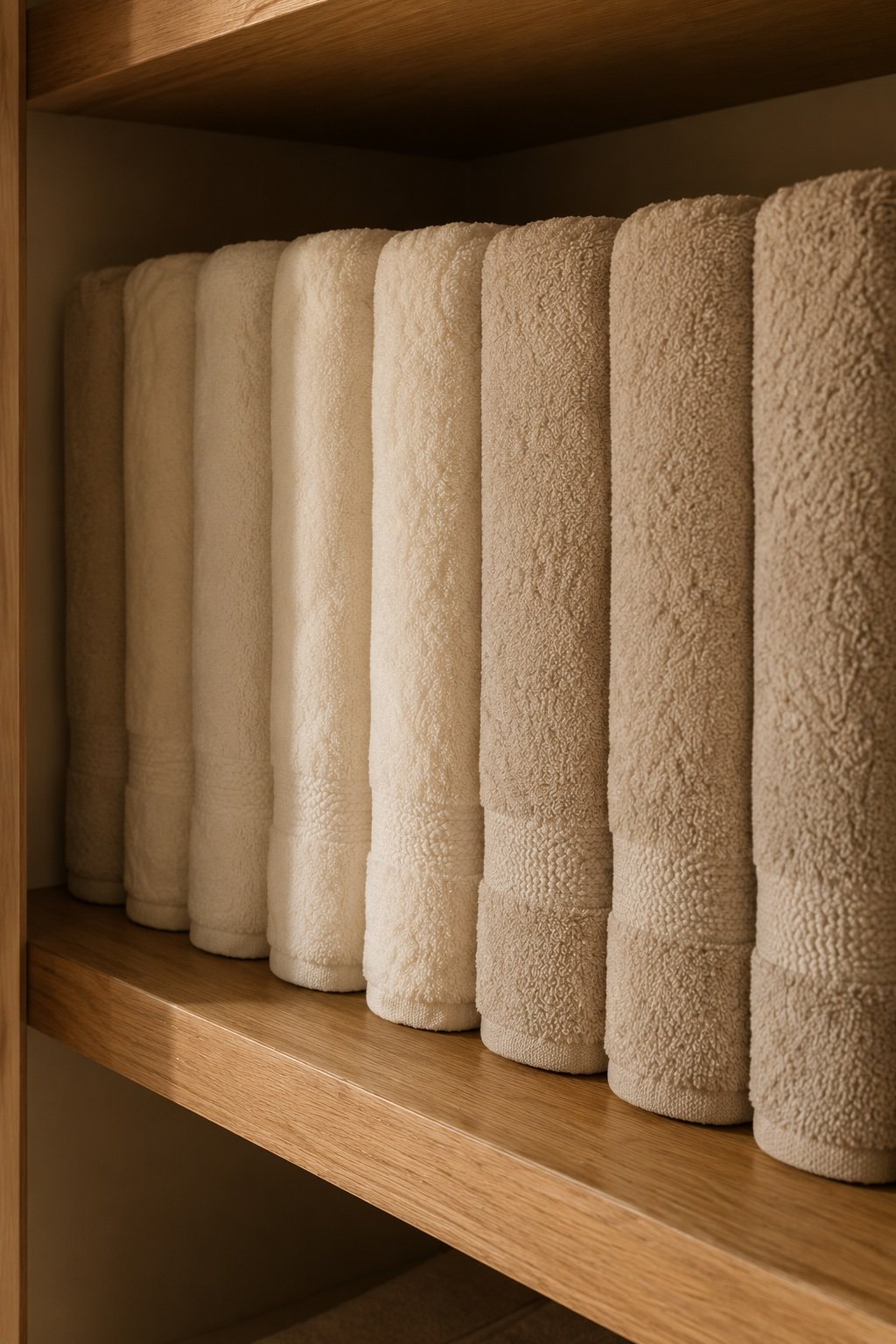
File it instead. Fold towels into thirds and stand them on end in a bin or on the shelf, like books on a shelf. You take the front one, put the clean one at the back, and the closet cannot collapse because there’s no stack to collapse. This one change does more than any other, and it costs nothing.
Stack only what you touch rarely: spare blankets, the guest quilt, the tablecloths.
The sheet set trick
You know this one, and it’s worth doing because it’s the difference between a linen closet and a fabric drawer. Fold the flat sheet, fold the fitted sheet as well as it will fold, fold one pillowcase, then slide the whole set inside the second pillowcase.
Now every sheet set is one tidy rectangle. Nobody has to identify a fitted sheet by squinting. Nobody unfolds three sets to find the queen. And you can label the pillowcase with a small tag if the household has multiple bed sizes, which is where most linen closets truly die.
Zone by height, not by category
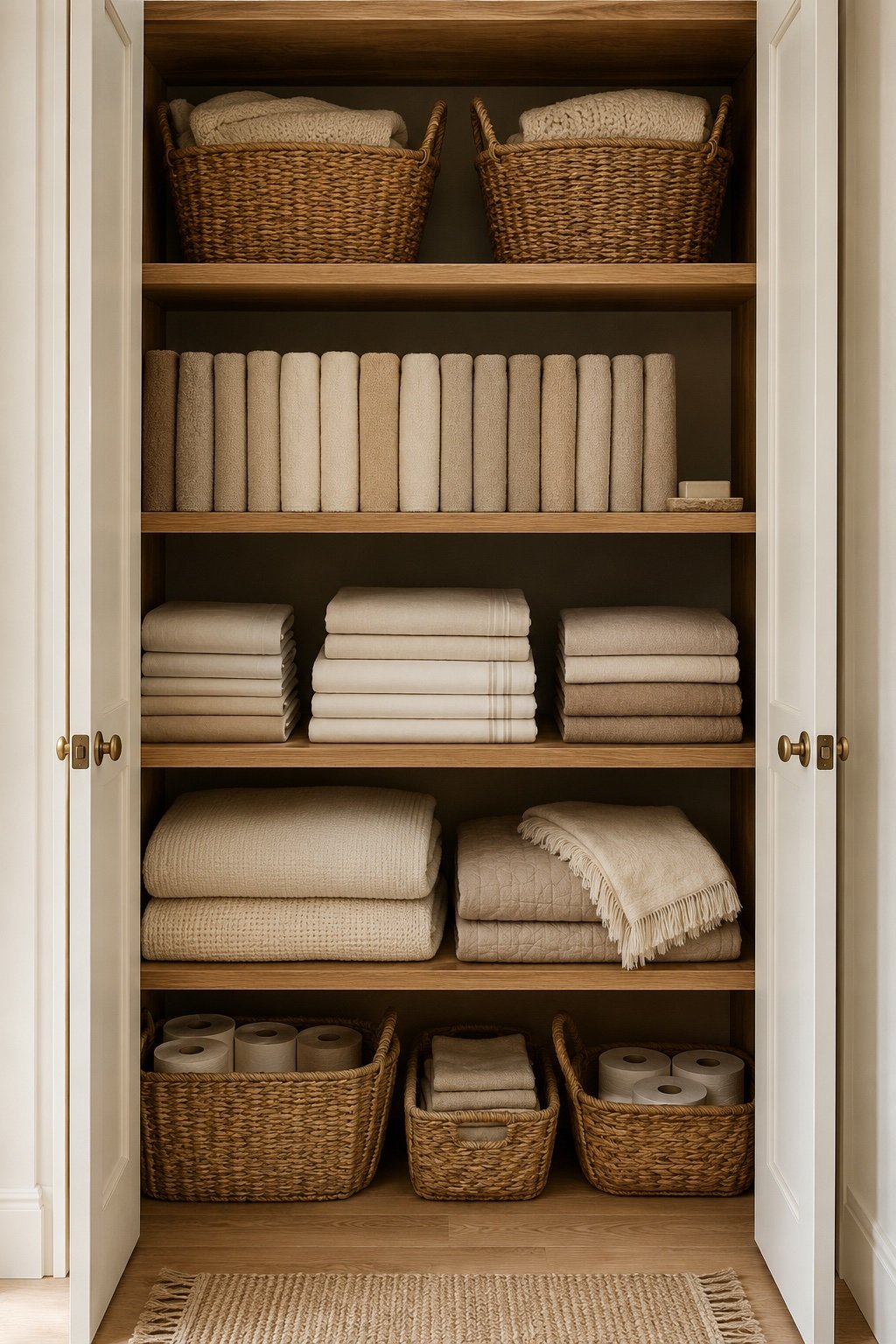
The shelves are not equal, so don’t treat them equally. Assign by how often you reach for something:
- Top shelf: rarely used. Guest bedding, the spare comforter, seasonal blankets. Things you get a step stool for twice a year.
- Eye level: the most valuable real estate in the closet. Daily bath towels and hand towels, filed on end.
- Middle: sheet sets, sorted by bed. One bin per bed if you have several.
- Lower shelf: the not-linen things that always end up here anyway. Toilet paper, extra soap, the first aid box.
- Floor: a hamper, a vacuum, a bin of cleaning supplies. Don’t leave it empty and don’t let it become a graveyard.
The principle: if a thing gets used every day, it should require zero effort. If it gets used twice a year, effort is fine.
Bins, and where they earn their keep
Bins get oversold. They’re not organization by themselves. But three kinds genuinely help:
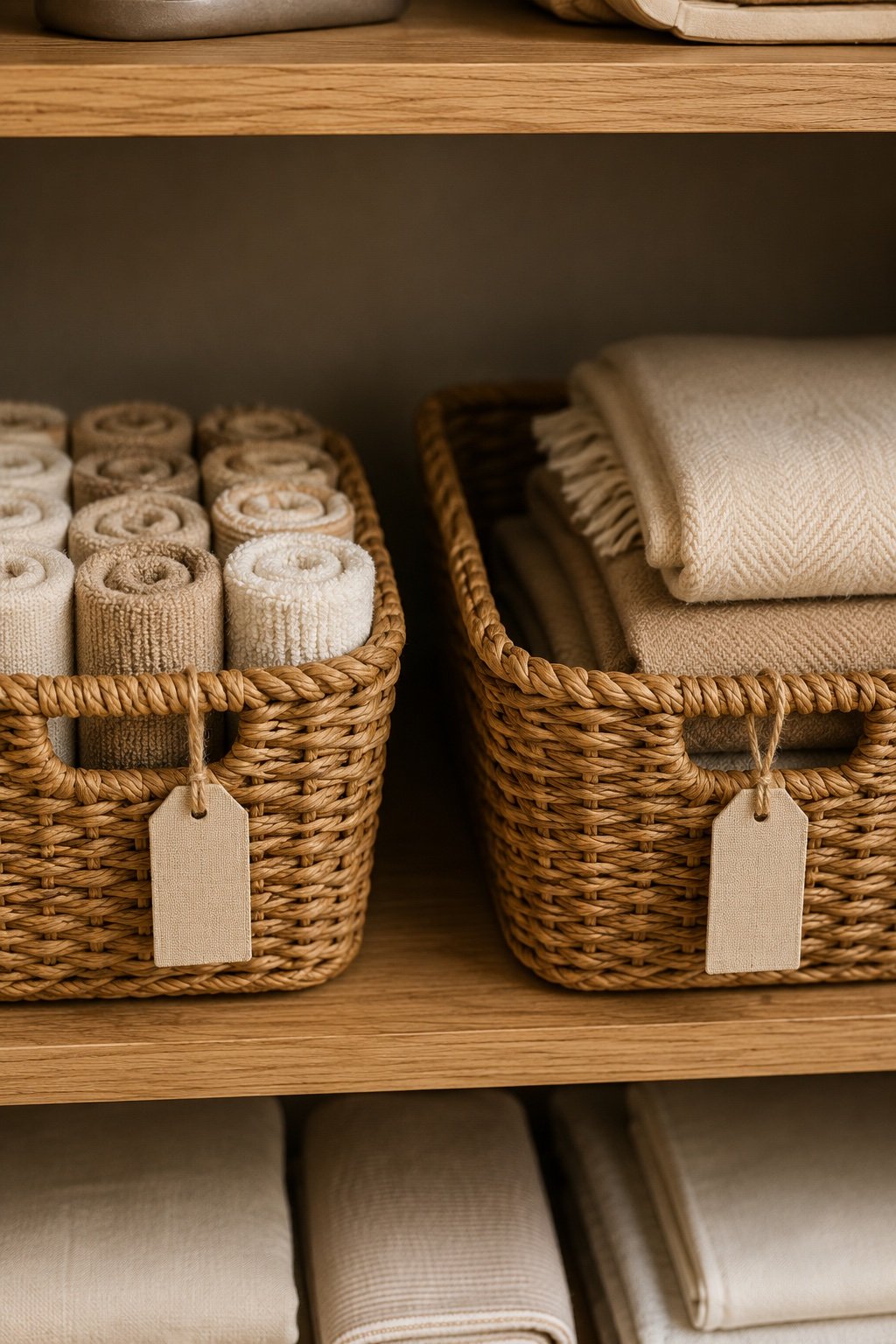
- Open bins for small loose things that would otherwise roll around. The heating pad, extra washcloths, the beach towels. Corralled and contained.
- Shallow bins for filed towels if your shelves are deep, so the back half of the shelf doesn’t become a lost zone.
- One labeled bin per bed size for sheets, in a house with a king, a queen, and a twin. This is the single highest-value bin in the house.
What to skip: lidded bins at eye level. A lid is a step, and a step is where the system breaks. Anything you use weekly should be reachable one-handed with an armful of laundry.
Woven bins in natural fiber look warmer than plastic and cost a little more. Canvas ones are the compromise. It’s a closet, so let this be practical, but a closet you like opening does get maintained more often. That’s not nothing.
Labels, honestly
Label the bins if more than one person puts laundry away. That’s the entire criterion. If you live alone, you know where your sheets are, and labels are decoration. If there’s a household, a label is the only thing standing between your system and someone else’s best guess.
Keep them plain. Small, one word, same font. “Queen.” “Guest.” “Beach.”
The small touches that make it feel like a hotel
Once it’s functional, three things make it feel considered:
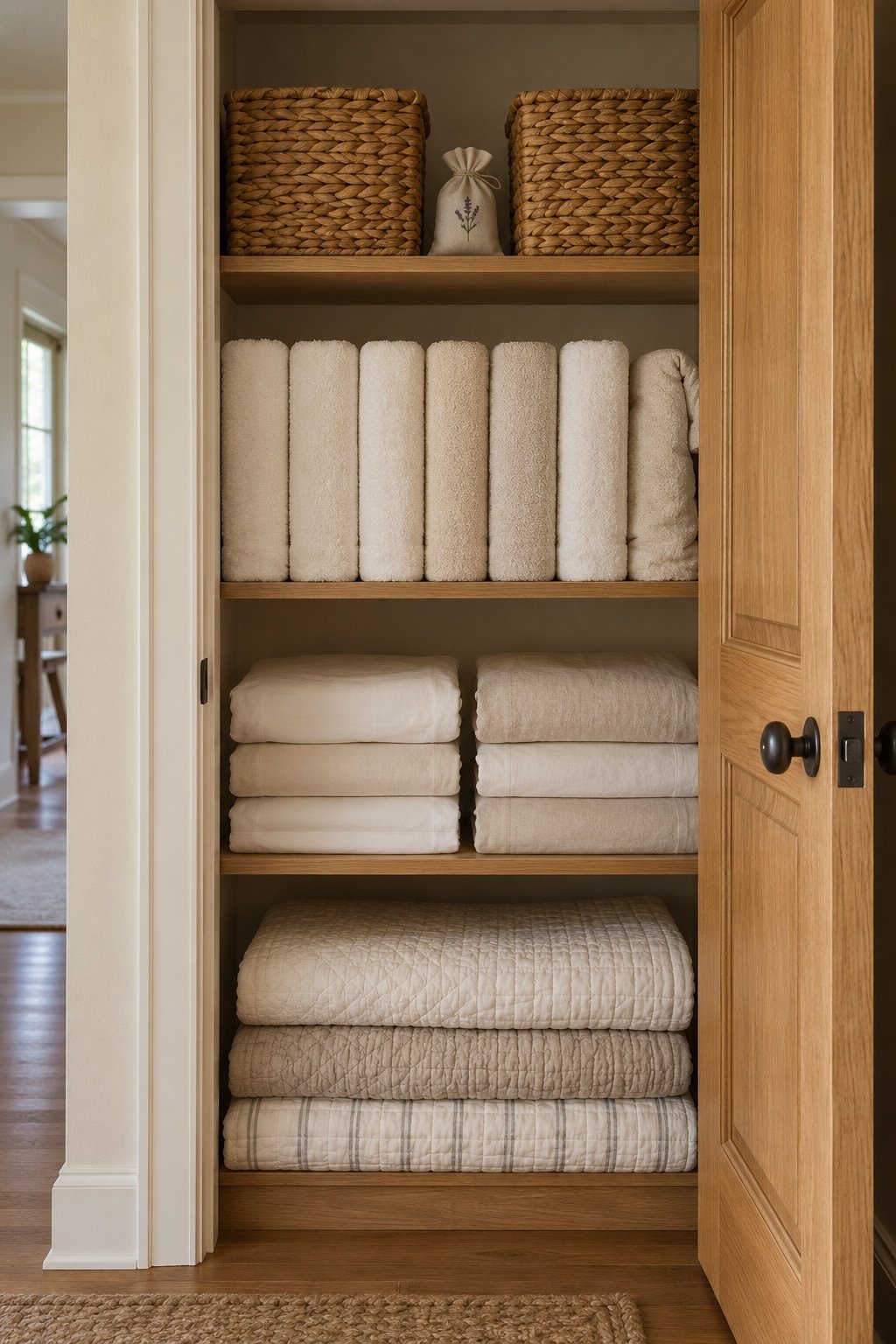
- Fold to a consistent width. Match your fold to the shelf depth so every edge lines up on one plane. Uniform edges are ninety percent of why the photos look like that.
- Same-color towels per bathroom. A closet of one or two tones reads calm. A closet of nine reads like accumulated gifts, because it is.
- A scent. A small sachet or a bar of soap unwrapped on the top shelf. Costs a few dollars and you notice it every single time you open the door.
The reset that keeps it going
Twice a year, when the clocks change. Pull everything to the floor, wipe the shelves, and be honest about the towels that have gone thin. It takes twenty minutes and it’s the only maintenance the system needs, because the filing does the daily work for you.
The rest of the year, the rule is just: clean linens go to the back. That’s the whole habit.
If you do nothing else
Stand your towels on end instead of stacking them, and put each sheet set inside its own pillowcase. Two changes, no purchases, and your linen closet will still look like this in six months, which is more than any bin can promise.
Keep Reading
📖 Pantry Organization That Survives a Real Grocery Run
📖 Small Entryway Ideas: Organization That Actually Fits
📖 The Guest Room Checklist: What People Actually Notice