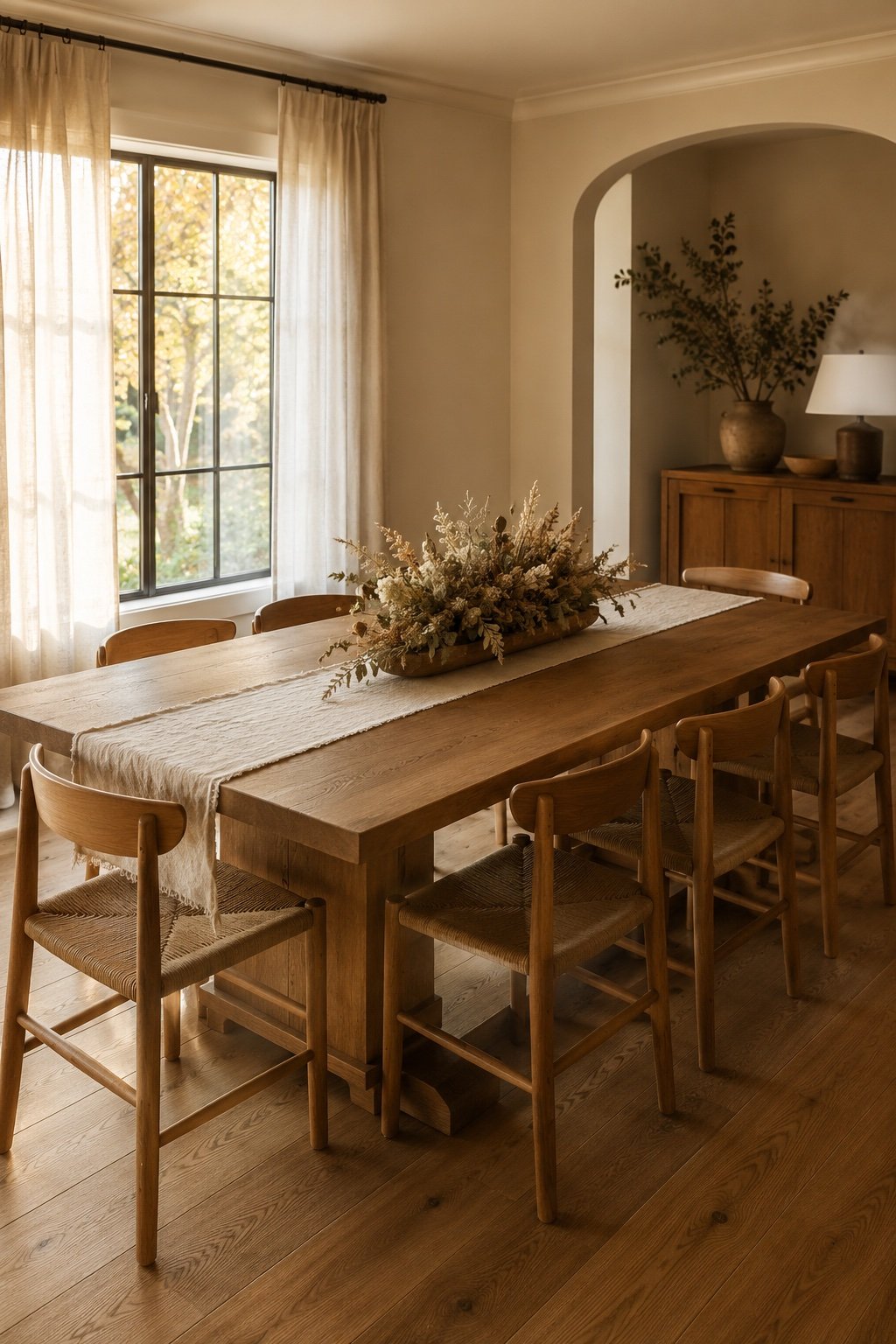
A dining table is the piece of furniture most likely to outlive the house you bought it for. It’s also the one most people buy wrong, usually by picking the shape they like the look of and discovering later that six people can’t actually sit at it. Here’s the whole decision, in the order it should be made: size first, then shape, then material, then price.
Start with the room, not the table
Before anything else, one measurement decides everything. You need 36 inches of clearance between the table edge and the nearest wall or piece of furniture. That’s the space for a chair to pull out and a person to get up. If you can afford 42 to 48 inches, that’s where it gets comfortable, because someone can walk behind a seated guest.
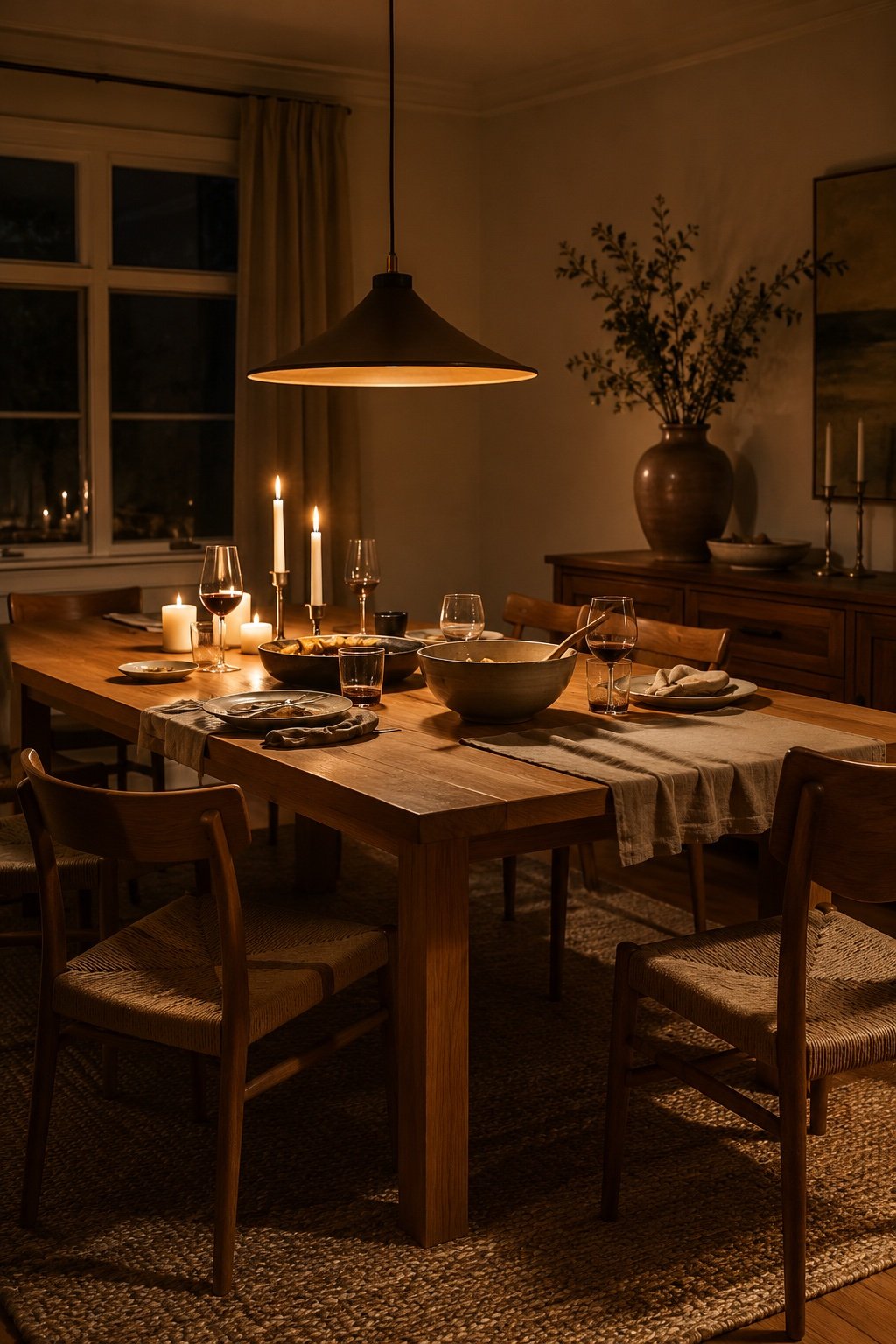
So: measure the room, subtract 72 inches from each direction (36 on each side), and what’s left is the biggest table the room can take. Do this before you fall in love with anything. A too-big table in a small room isn’t generous, it’s a room you shuffle sideways through for a decade.
How much table each person needs
The number is 24 inches of table edge per person. That’s a comfortable place setting with elbows. You can squeeze to 22 for a crowd, but at 20 you’re at a banquet hall.
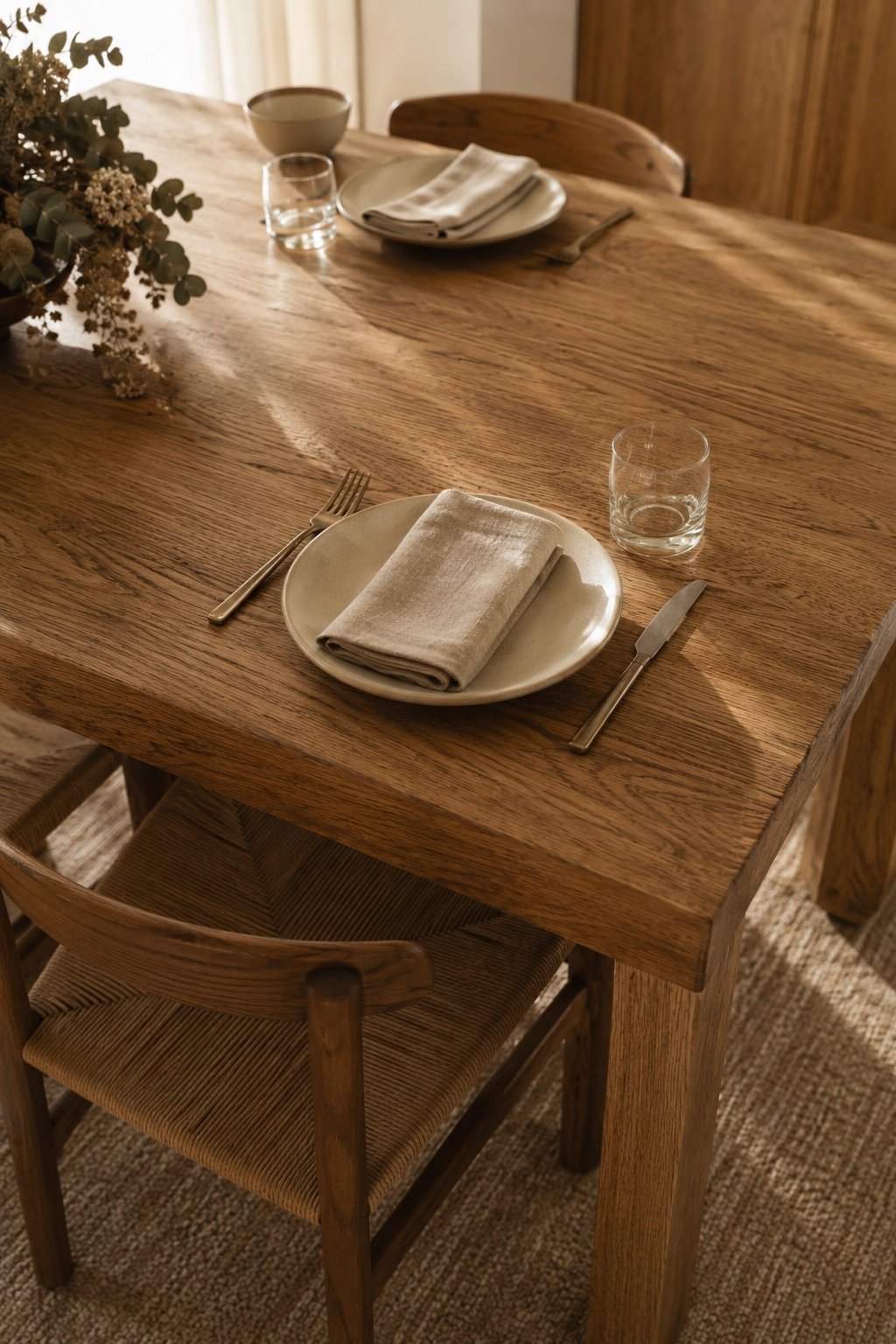
Which gives you, roughly:
- Four people: a 36 to 48 inch round, or a rectangle around 48 by 30.
- Six people: a 60 inch round, or a rectangle 60 to 72 by 36.
- Eight people: a rectangle 78 to 96 by 36 to 40. A round table for eight is 72 inches across and needs a genuinely big room.
- Ten or more: rectangle, 108 inches and up, or a table with leaves.
Depth matters too. A rectangle under 36 inches deep can’t hold serving dishes down the center and a place setting on each side at the same time. 36 to 40 is the sweet spot. Past 44 you can’t pass the salt.
Shape: the honest trade-offs
Round
Best for conversation, because everyone can see everyone. Best for small and square rooms, because there are no corners to bruise a hip on and the traffic flows around it. Best for squeezing in one extra person, since there are no fixed seats.
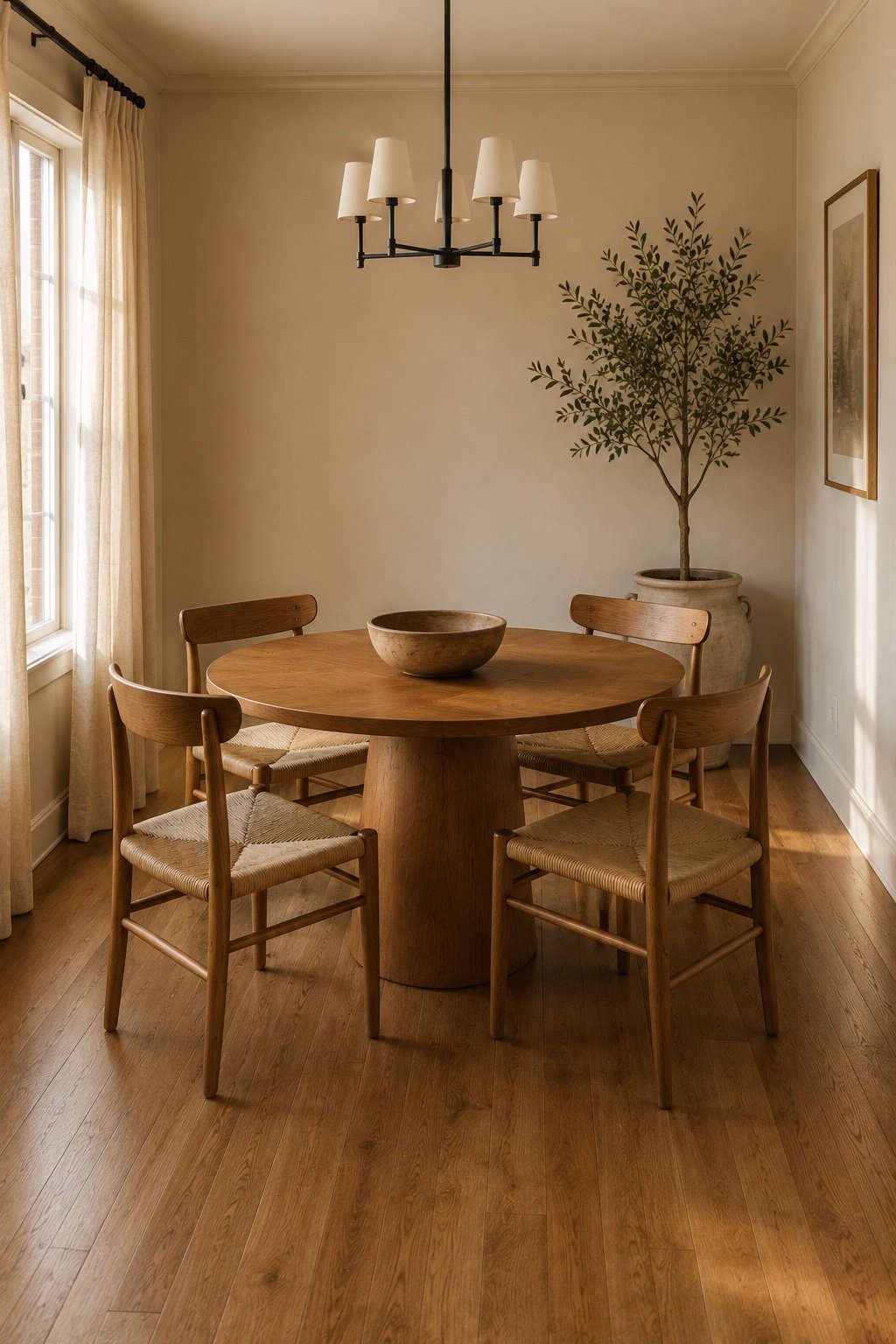
The catch: round tables don’t scale. Past 60 inches, the center is unreachable and it stops being one conversation. And if the base is a pedestal, check where the feet land before you buy, because a bad pedestal puts a leg exactly where a knee wants to go.
Rectangle
The workhorse. Seats the most people per square foot, fits a rectangular room, takes leaves. It’s the default for a reason.
The catch: the ends are conversationally isolated at eight-plus seats, and in a narrow room a rectangle can turn the space into a hallway.
Oval
A rectangle with the corners softened. Seats close to what a rectangle does, moves through a room more kindly, and gives a smaller room some grace. Harder to find, and often more expensive for the same size.
Square
Lovely for four in a square room, and genuinely intimate. Doesn’t work past four unless it’s very large, at which point the middle is dead space.
Material, and what actually happens to it
- Solid hardwood (oak, walnut, ash). The one that lasts generations and can be sanded back if life happens to it. It moves with humidity, it dents, and the dents become the story. This is the buy-once option.
- Veneer over engineered core. A real wood surface at a lower price, and it stays flatter than solid wood does. The limit is that you get one light sanding, maybe, and a deep gouge is permanent.
- Stone and marble. Beautiful and heavy. Marble stains from wine, oil, and lemon unless it’s sealed and re-sealed. Quartz and porcelain give you the look with none of the anxiety.
- Glass. Makes a small room feel open. Shows every fingerprint within an hour and won’t hide a thing.
- Laminate. Genuinely practical with young kids, cheap, and forgiving. It will never age into anything. Replace it when the kids are older.
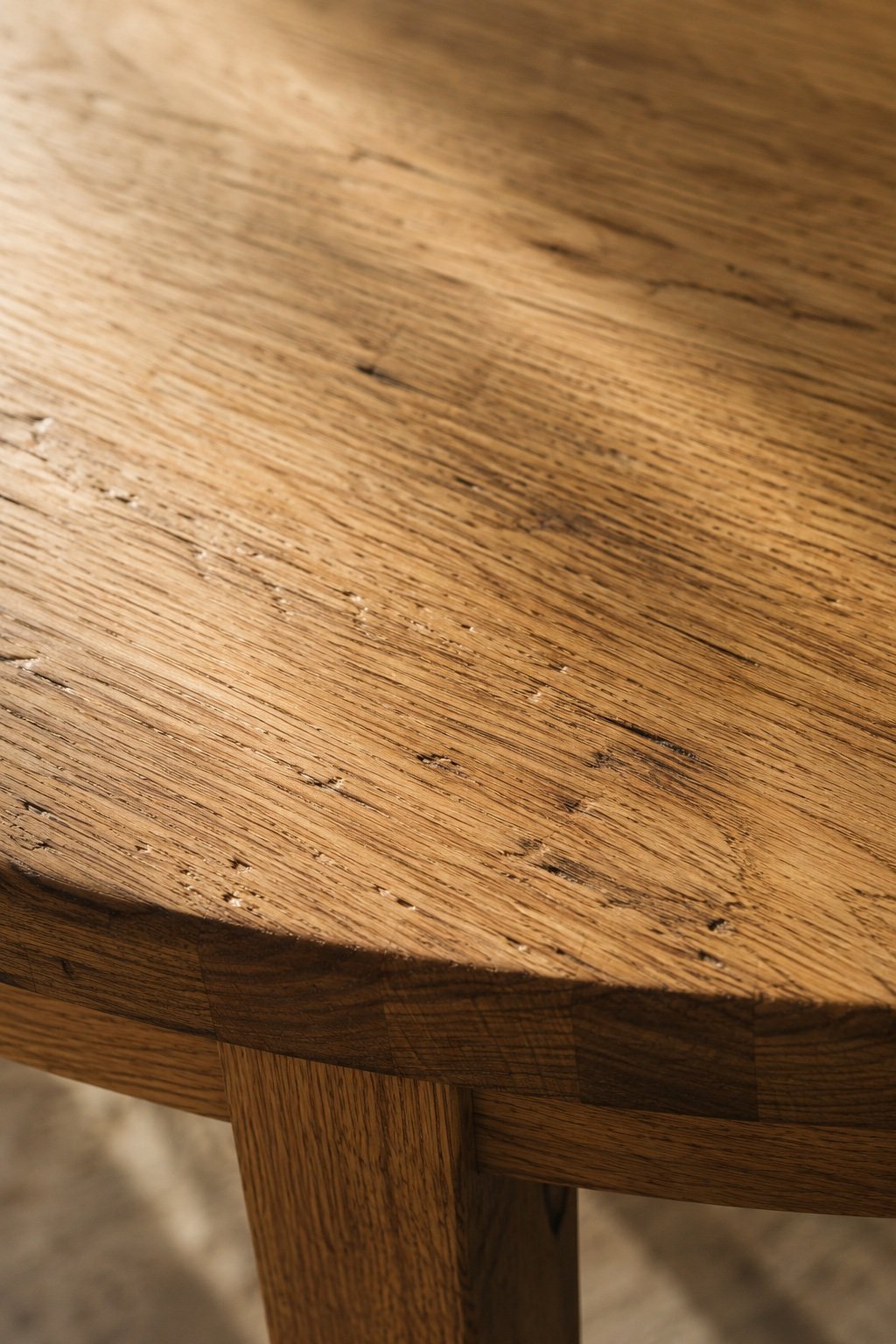
The finish matters as much as the material. A matte oiled finish looks warm and can be spot-repaired at home with a rag. A high-gloss lacquer looks flawless until the first scratch, which is then permanent and very visible.
What things cost
Broadly, in 2026, for a six-seat table:
- Under $400: engineered wood or laminate, flat-pack. Fine as a first table. Expect the joints to loosen in a few years.
- $400 to $1,200: veneer over engineered core, solid wood legs, or solid pine or acacia. The volume market. Good ones here last a decade.
- $1,200 to $3,000: solid hardwood from a mainstream retailer. This is where a table stops being a purchase and starts being furniture.
- $3,000 and up: custom, small-workshop, or heirloom hardwood with joinery that’s meant to be repaired rather than replaced.
The used market is where the value is, and it’s not close. A solid oak table from the 1970s costs a few hundred dollars, has already survived fifty years, and can be sanded and oiled in a weekend into something that would cost thousands new. Dining tables are the single best thing to buy secondhand because the failure mode of a good one is cosmetic.
The details people forget
- Apron height. The rail under the tabletop. You need at least 24 to 25 inches from the floor to the underside of the apron for legs to fit, and taller people need more. Check that your chairs slide under before you buy either one.
- Leg position. Legs at the very corners mean nobody can sit at the corner. Inset legs or a pedestal solve it.
- Table height. 30 inches is standard. Chair seat height should be 18, giving you 12 inches of lap clearance. Mismatch these and every meal is slightly wrong.
- The doorway. Measure it. A 96 inch table does not turn a tight stairwell corner, and this is discovered on delivery day more often than anyone admits.
Do you need leaves?
Only if you host more than a few times a year. A leaf mechanism adds cost and a seam you’ll feel under the tablecloth, and most extension tables spend their lives at the small setting. If you host once at Thanksgiving, a folding table with a good tablecloth at the end is a cheaper and honestly better answer.
The short version
Measure the room, subtract 36 inches of clearance on every side, and buy the largest table that fits with 24 inches of edge per person. Round for small and square rooms and for talking, rectangle for everything else. Solid hardwood if you plan to keep it, veneer if you don’t, and check the used listings first either way.
Get the size right and almost any table works. Get the size wrong and no amount of beautiful wood fixes it.
Keep Reading
📖 The Right Rug Size for Every Room: A Visual Guide
📖 How to Buy an Accent Chair: The Five Numbers That Matter
📖 Thanksgiving Table Setting Ideas (Simple, Warm, Repeatable)