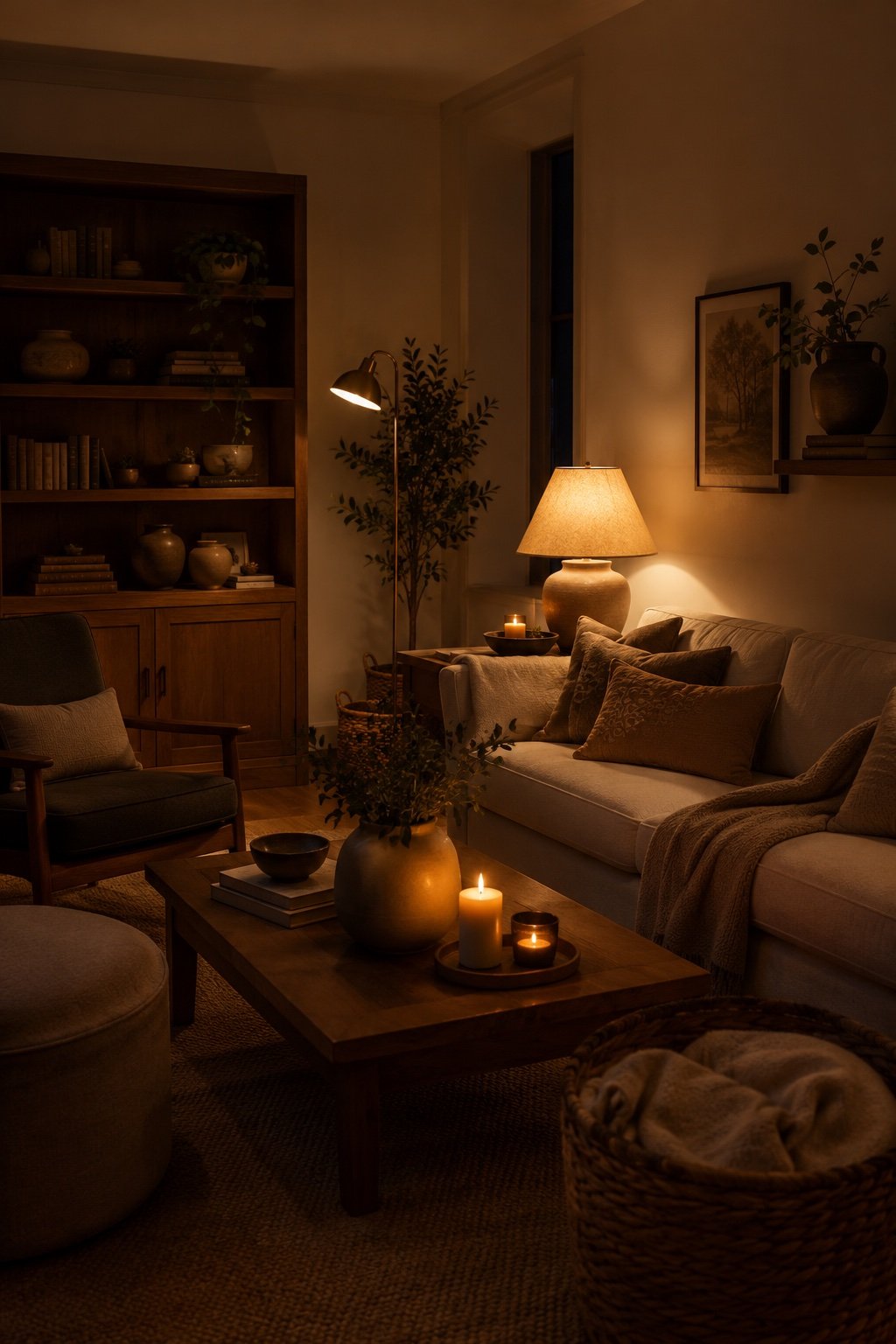
Here’s a test. Walk into your living room at nine at night, turn on the light the way you normally do, and ask whether you’d want to sit down. If the answer is no, it’s almost certainly not the furniture. It’s that you have one light, it’s on the ceiling, and it’s the wrong color. Lighting is the cheapest thing in decorating and the one that changes the most, and almost nobody gets taught the rules.
The three-light rule
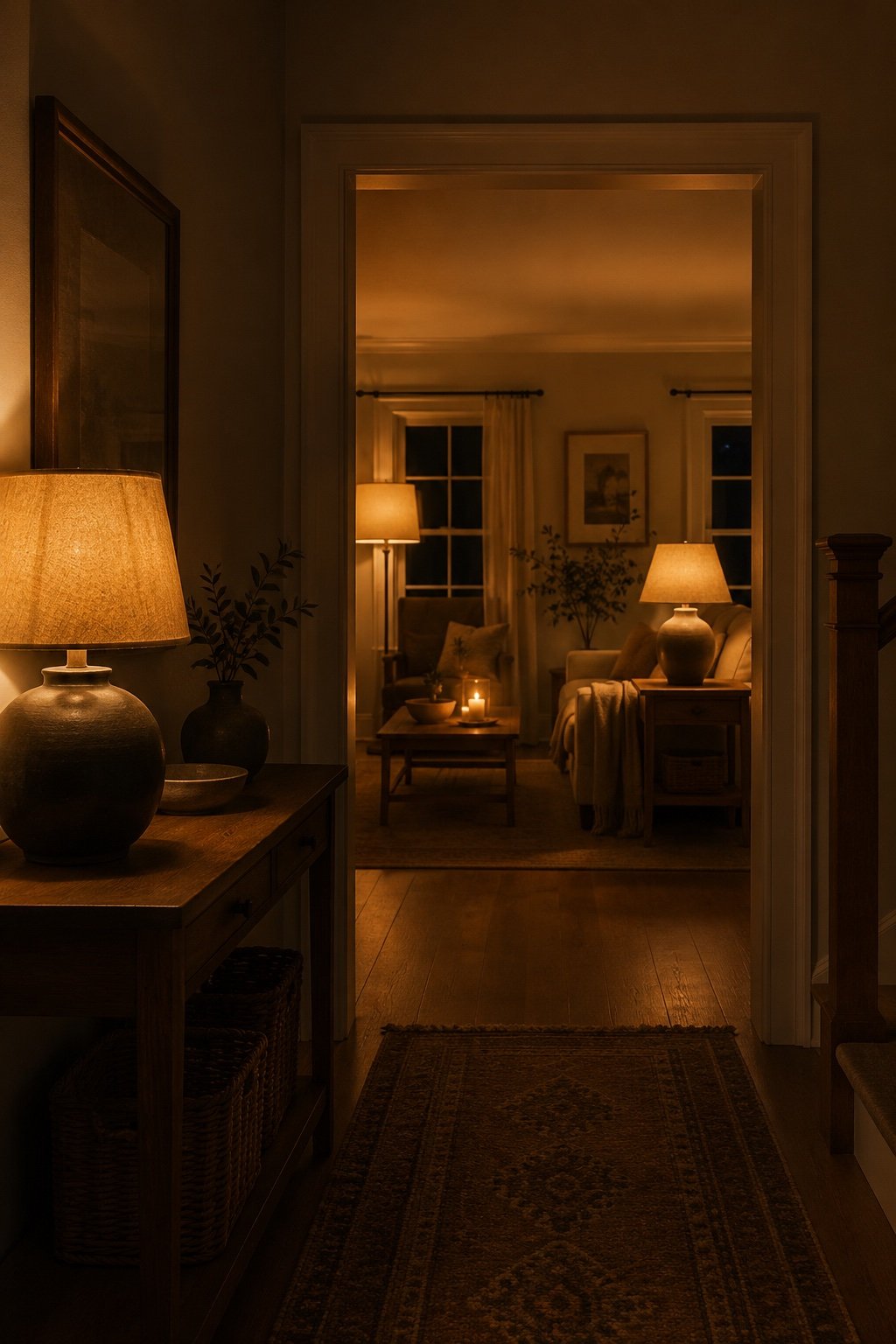
Every room needs at least three light sources at three different heights. That’s the whole framework, and it’s what separates a room that feels like a home from a room that feels like an office after hours.
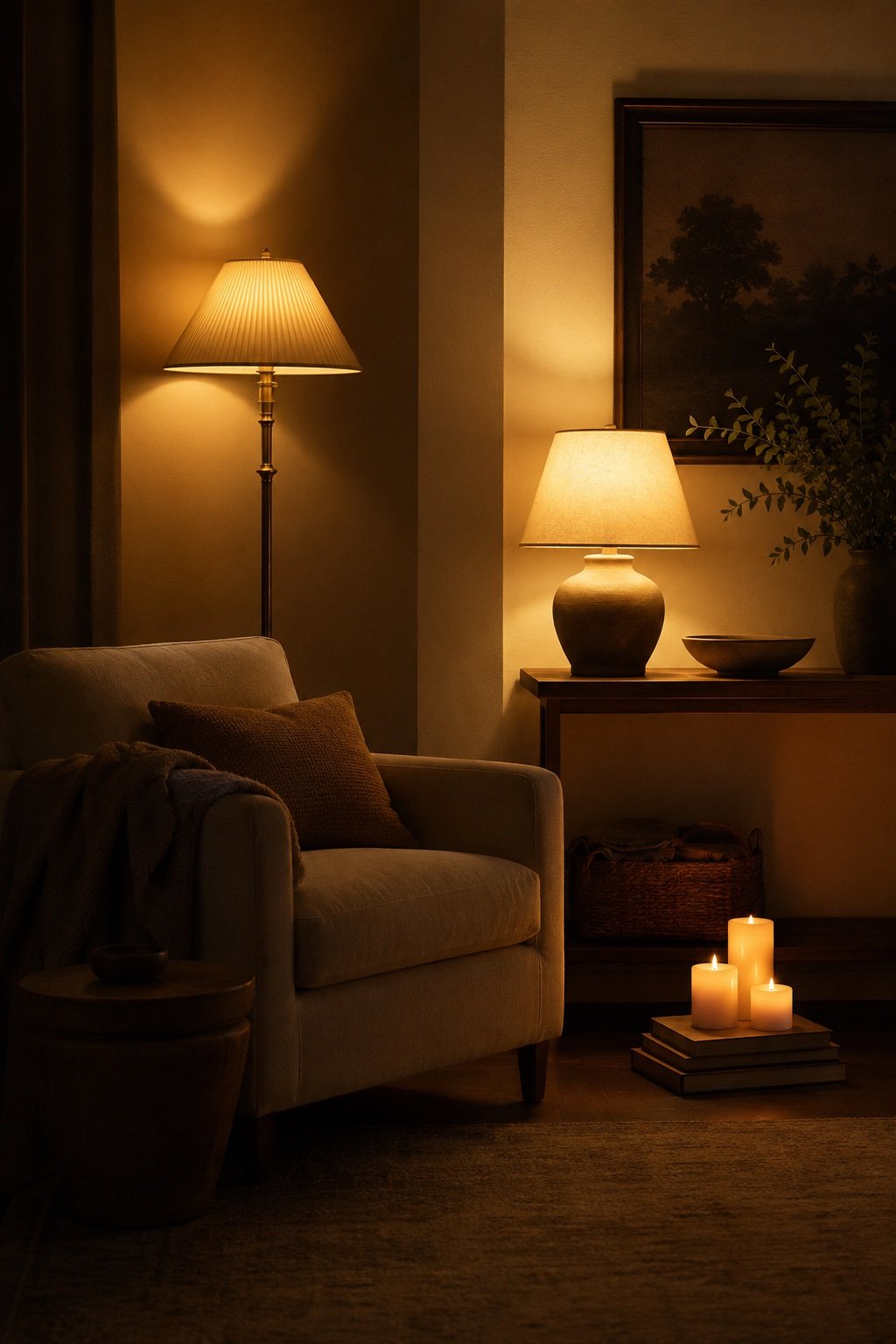
- High: the ceiling fixture, or a tall floor lamp. Ambient. This is the one that fills the room.
- Middle: a table lamp, a sconce, a lamp on a console. This is the one at eye level that does the actual work of making a room feel warm.
- Low: a candle, a small lamp on a low shelf, a floor uplight behind a plant. This is the one people don’t think of and the one that finishes the room.
Three points of light at three heights create the pools and shadows your eye reads as depth. One overhead source creates flat, even, shadowless light, which is exactly what a supermarket wants and exactly what your living room doesn’t.
Kelvin: the number that matters most
Look at any bulb box and there’s a Kelvin number. It is the most consequential specification in the whole house and almost everyone ignores it for the wattage.
- 2700K: warm white. The color of an old incandescent bulb. This is the answer for living rooms, bedrooms, dining rooms, and hallways. This is the answer for almost everything.
- 3000K: soft white, slightly crisper. Acceptable in a kitchen or a bathroom where you want to see clearly.
- 4000K and up: cool white and daylight. This is garage, workshop, and closet light. Put it in a living room and no amount of throw blankets will save the room.
If you do one thing after reading this: buy a pack of 2700K bulbs and go around the house replacing every bulb that isn’t. It costs about thirty dollars and it is, per dollar, the biggest change you can make to how your home feels. People walk in afterward and say something looks different and can’t name it.
The second number: CRI
Color rendering index, on a scale to 100, tells you how truthfully a light shows color. Cheap LEDs sit around 80, and they make wood look muddy, skin look gray, and your carefully chosen caramel throw look brown.
Look for CRI 90 or higher. It’s printed on better bulb packaging and omitted on worse. This is why a room can have all the right warm bulbs and still look slightly dead. The bulbs are lying about the colors.
Kill the overhead light
Not literally, but functionally. The ceiling fixture in most American rooms is a builder-grade dome that puts hard light straight down from a single point, and it’s the reason evenings at home feel like a waiting room.
What to do instead:
- Put it on a dimmer. A dimmer switch is under twenty dollars and turns a bad fixture into a usable one. At thirty percent, even a dome is fine.
- Use it as backup, not default. Train the household to switch on lamps first. The overhead comes on when you drop something.
- Replace the fixture if you can. A shaded or opal fixture diffuses instead of spotlighting. In a rental, this is often reversible in twenty minutes with the original stashed in a closet.
One caveat on dimmers: dimming an LED lowers the brightness but not the Kelvin, so it gets dimmer without getting warmer, which is why it can still feel a bit clinical. “Warm dim” bulbs shift toward amber as they dim, exactly like an incandescent did. They cost more. In a bedroom or a dining room, they’re worth it.
Lamp heights, which nobody tells you
- Table lamp beside a sofa: the bottom of the shade at about eye level when you’re seated, roughly 24 to 27 inches tall on a standard side table. If you can see the bulb from your seat, it’s too tall.
- Bedside lamp: shade bottom at shoulder height sitting up in bed. Usually 24 to 27 inches on a normal nightstand.
- Floor lamp: 58 to 64 inches. Behind or beside a seat, not in front.
- Dining pendant: 30 to 36 inches above the tabletop. Higher and it lights the room instead of the table. This is the one people hang too high.
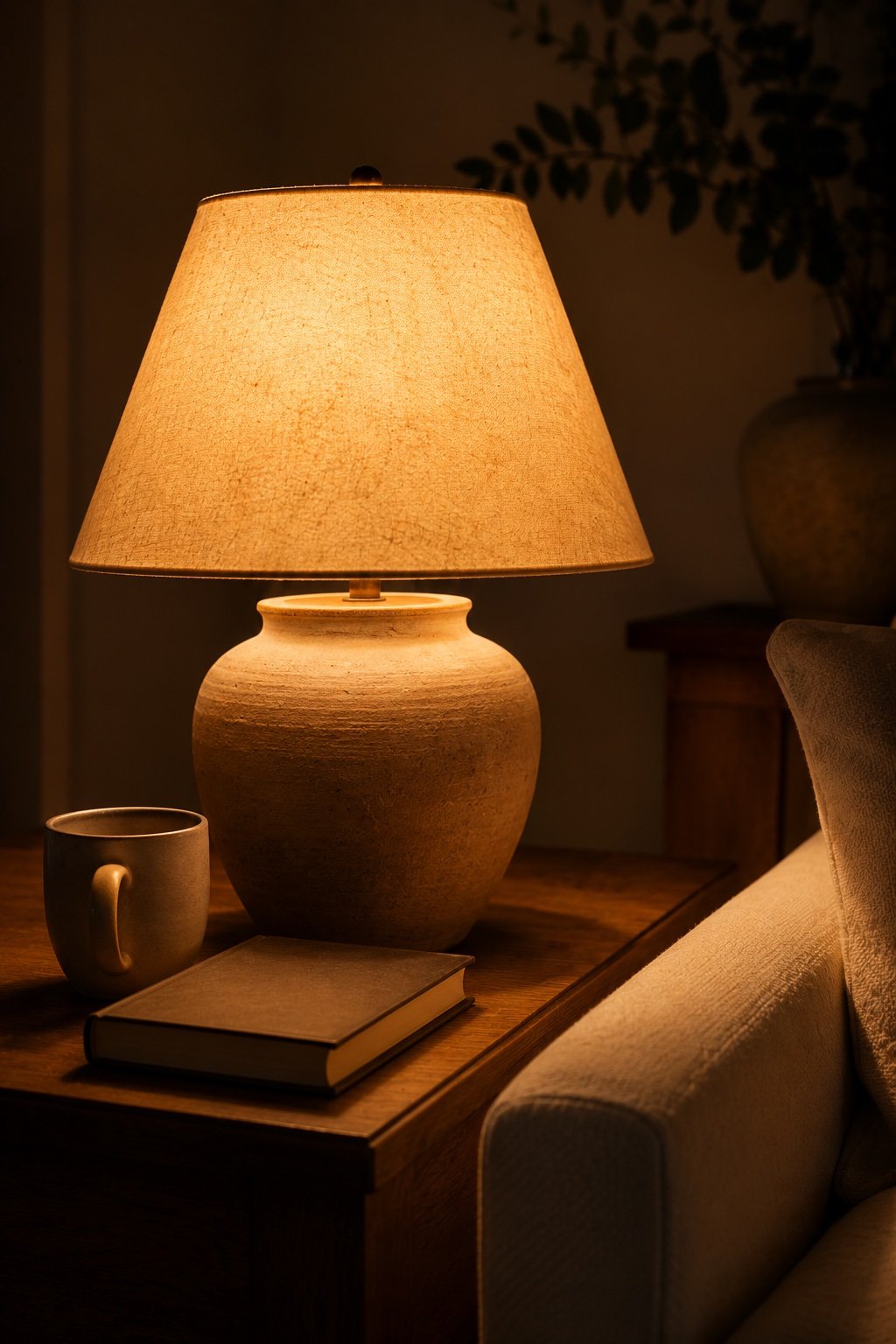
And the shade material matters more than the base. Linen and paper glow. Metal and dark shades throw light up and down in two beams and leave the middle dark, which is a look, but it isn’t a cozy one.
Room by room, quickly
Living room: a floor lamp in the far corner, a table lamp beside the sofa, a candle or small lamp low. Overhead dimmed or off. The far corner lamp is the one that matters most, because a lit corner is what makes a room read as larger.
Bedroom: two bedside lamps with dimmers, one low source, overhead off after dark. Warm dim bulbs if you’re buying anyway.
Kitchen: the one room where you’re allowed to be bright, but layer it. Under-cabinet lights are the highest-value kitchen upgrade going, because they light the counter instead of your own shadow on the counter. Then something warm for when the cooking’s done, so the room can turn off.
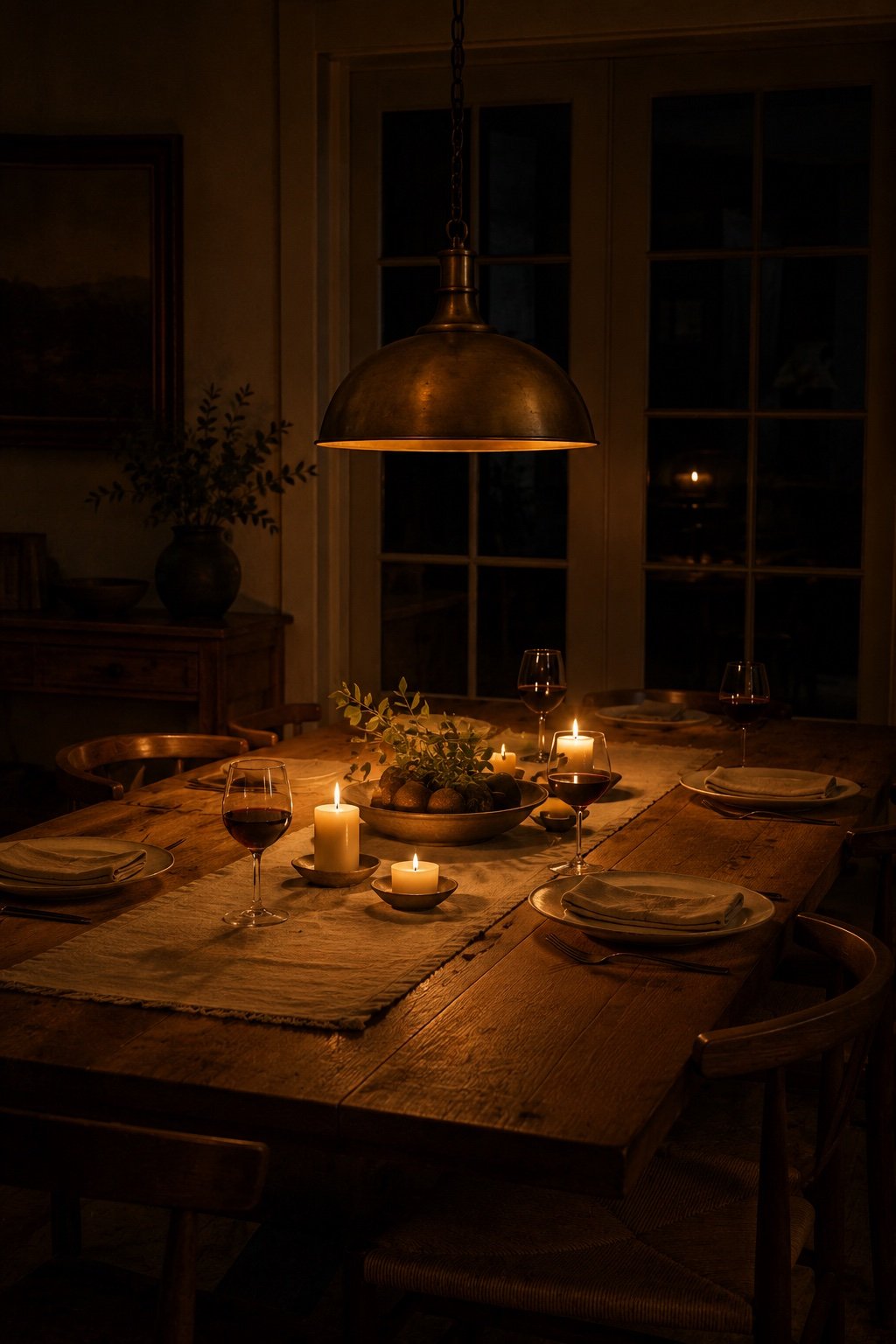
Dining room: pendant at 30 to 36 inches, on a dimmer, plus candles. This room, more than any other, is about the light being low.
Entry and hallways: one small warm lamp beats an overhead. A lamp glowing at the end of a hall is the most welcoming thing in a house.
The plug problem
The real reason people don’t have enough lamps is that there’s no outlet where the lamp should go. Solvable: a flat cord under a rug, a cord cover along the baseboard painted the wall color, or a plug-in sconce that hangs where a hardwired one would. And a smart bulb in a lamp means you don’t have to reach behind the sofa to a switch, which is the difference between a lamp you use and a lamp you don’t.
The tonight version
Turn off the overhead. Turn on every lamp you own. If the room is too dark, you need another lamp, and the corner farthest from where you sit is where it goes. If the room is warm and pooled and you want to stay in it, you were one switch away the whole time.
Then order the 2700K bulbs.
The short version
Three lights, three heights, 2700K, CRI 90, and a dimmer on the ceiling. That’s the entire discipline. It costs less than a throw pillow and it’s the difference between a house you photograph and a house you sit down in.
Keep Reading
📖 27 Cozy Fall Living Room Ideas That Feel Warm, Not Cluttered
📖 How to Create a Reading Nook in Any Corner
📖 9 Living Room Layout Mistakes (and the Fixes That Cost Nothing)