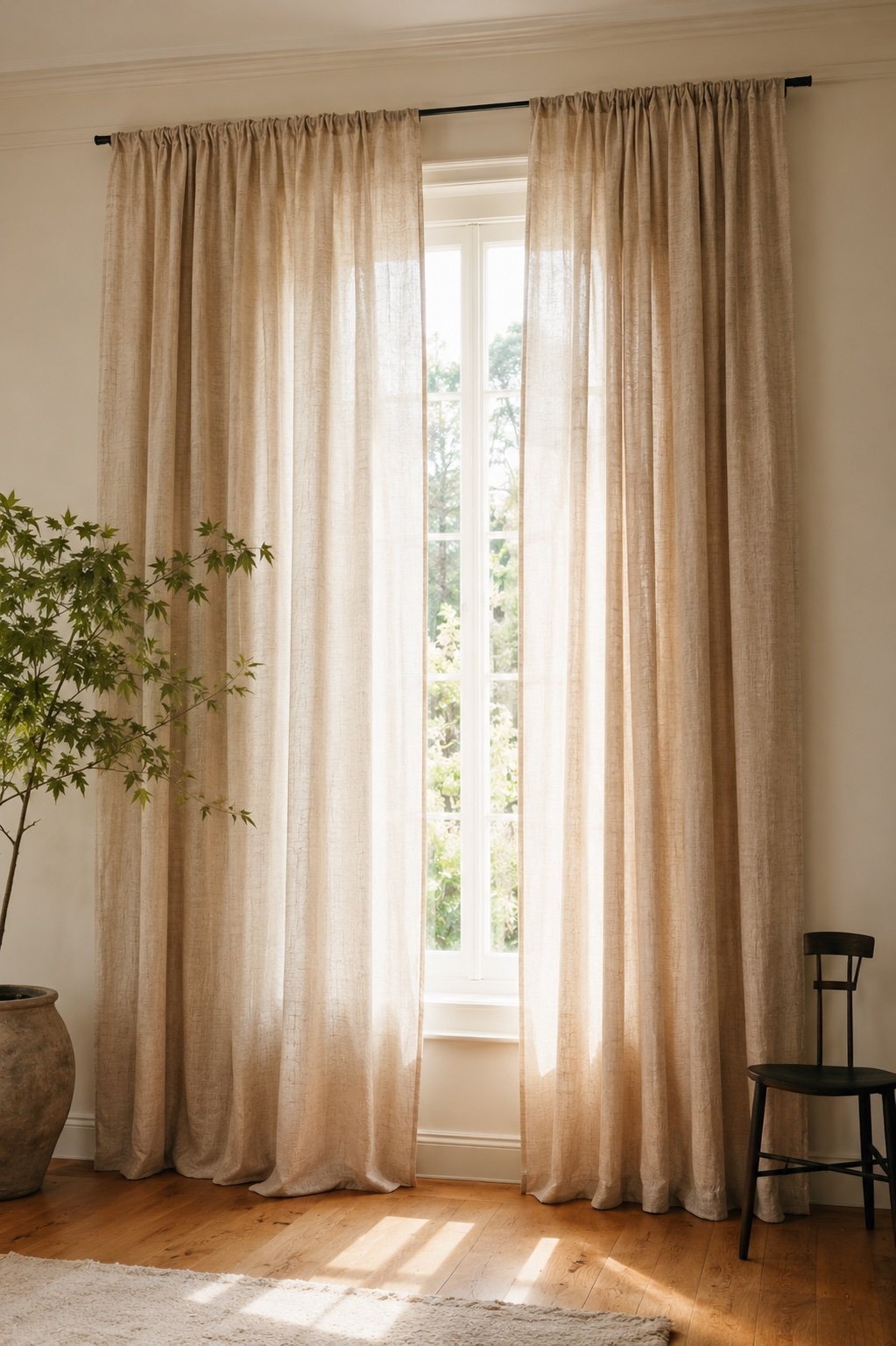
Curtains are the fastest way to make a room look finished and the easiest thing in the house to get wrong. Almost every set of curtains I see in a real home has the same three problems: hung too low, too narrow, and too short. Fixing those costs nothing extra at the time of purchase, because it is a question of buying the right size and putting the rod in the right place.
Here is the whole decision, in the order you actually have to make it.
Length: measure from the rod, not from the window
The most common mistake is buying curtains to fit the window. Curtains do not dress the window. They dress the wall around it, which is why a room with well-hung curtains looks taller than the room next door with the same ceiling.
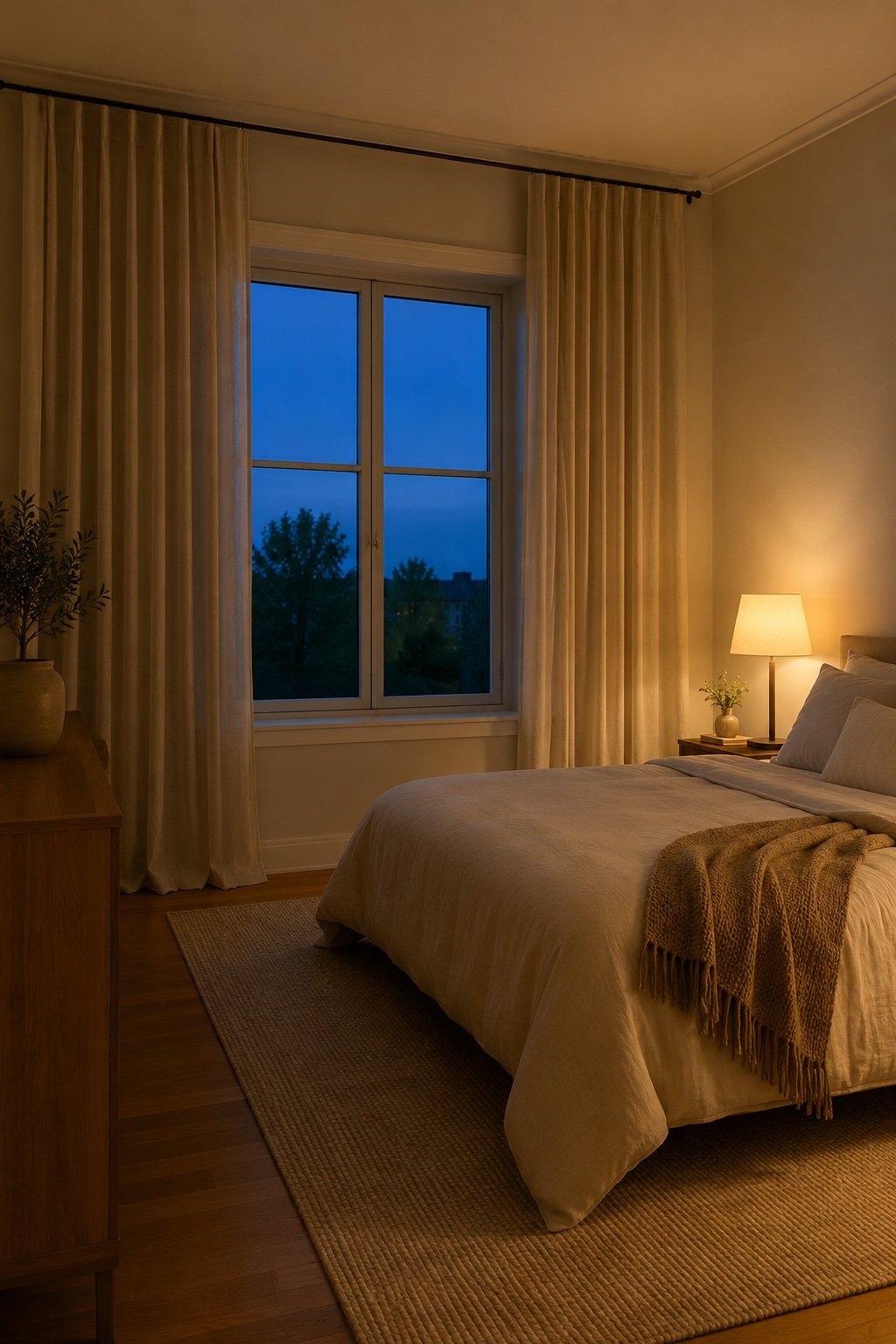
The rule: the rod goes as high and as wide as the wall allows, and the panel length is measured from the rod to the floor.
- Height. Two thirds of the way between the top of the window frame and the ceiling, or four to six inches above the frame at minimum. If you have less than twelve inches of wall above the window, go straight to the ceiling and stop thinking about it.
- Panel length. Measure from where the rod will sit down to the floor, then account for how the panel hangs. Rod pocket and tab top panels hang from the rod itself. Rings and grommets drop the panel one to two inches below the rod, so subtract that.
Standard ready made lengths are 84, 96, 108, and 120 inches. Buy the length that lands closest to the floor from your intended rod height, always rounding up. Long can be hemmed. Short cannot be fixed.
Where the hem should land
Three acceptable answers and one wrong one.
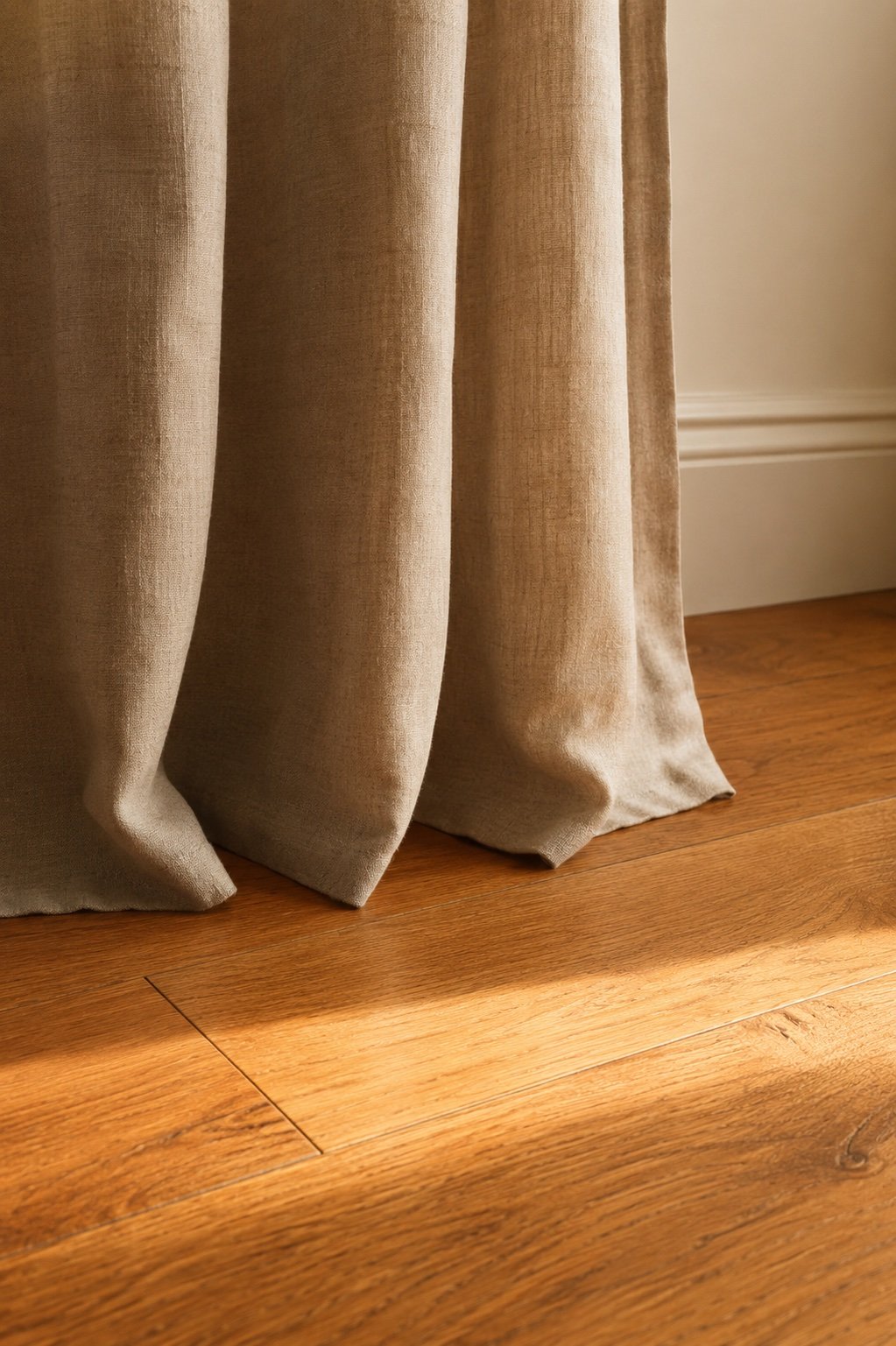
- Kissing the floor. The hem grazes the boards, no gap, no fold. The cleanest look and the hardest to hit, because it needs an accurate measurement and a level floor.
- The break. One to two inches of extra length so the panel just crumples at the bottom. Forgiving, slightly softer, works with almost any fabric.
- The puddle. Three to six inches pooled on the floor. Romantic, dramatic, and a magnet for dust and pets. Best in bedrooms and on panels you never open.
- Floating. The hem stopping an inch or more above the floor. This is the wrong one, and it is what most store-bought curtains do. It reads as pants that do not fit.
Exception: in kitchens, over a radiator, or where a door swings, half an inch off the floor is practical and nobody will notice.
Width: the number almost everybody underbuys
Curtains should look full whether they are open or closed. Full means fabric, and fabric means width.
The formula: the total width of all your panels combined should be two to two and a half times the width of the rod. For sheer fabrics, go up to three times. For heavy blackout velvet, two times is enough.
So a rod that spans 60 inches wants roughly 120 to 150 inches of curtain across it. A standard panel is 50 inches wide, which means three panels, not two. This is the single reason so many living rooms look thin at the windows: two 50 inch panels on a 60 inch rod is barely 1.6 times, and it hangs flat and stingy.
Also extend the rod six to twelve inches past the window frame on each side. That way the open panels stack on wall rather than glass, you keep the full window uncovered in daylight, and the window itself looks wider than it is.
Fabric: choose by what the room needs
Every fabric is a trade between light, privacy, and how it drapes. Pick by the job.
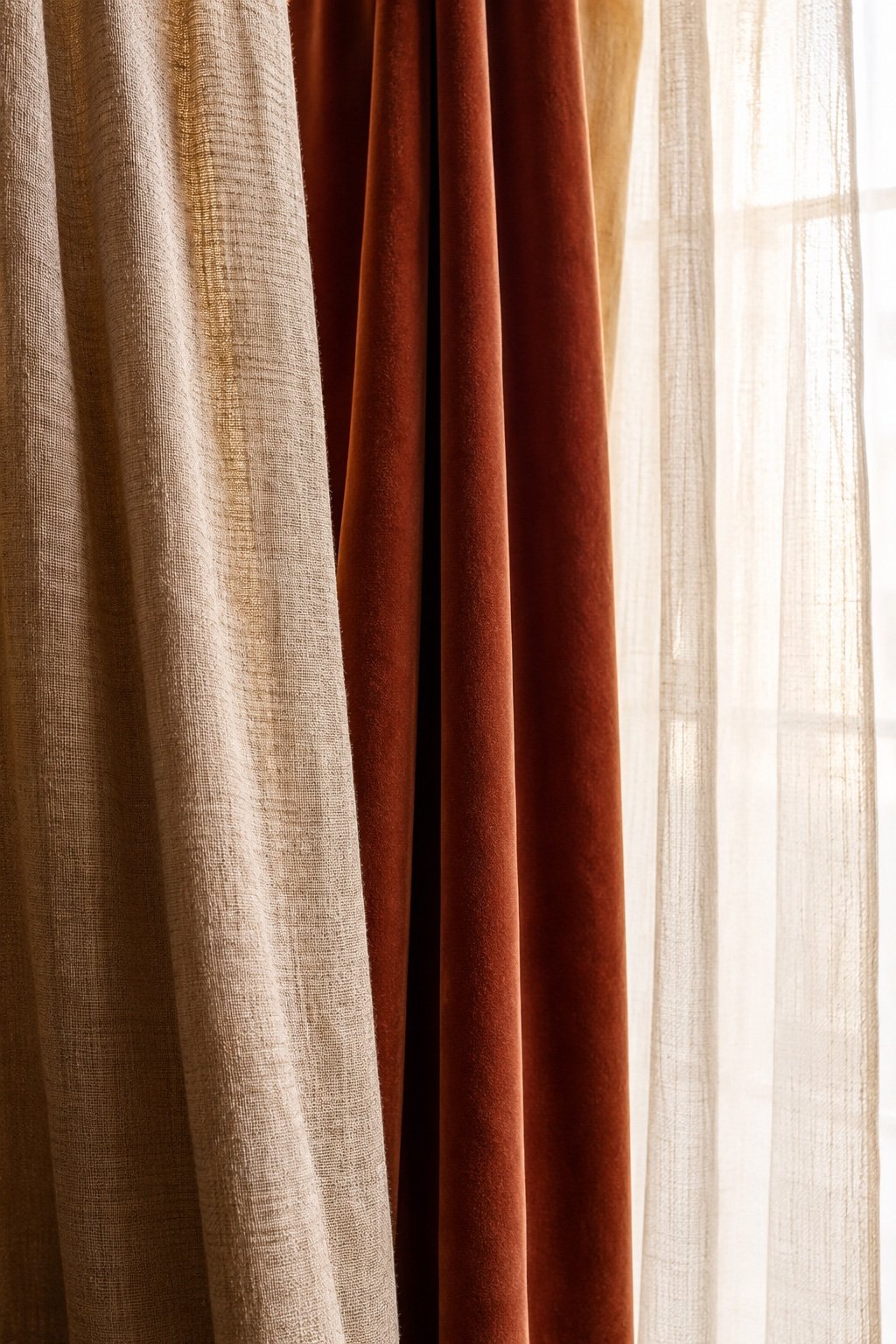
- Linen or a linen blend. The best all-round choice for living rooms. Filters light beautifully, drapes with weight, looks better slightly rumpled. Pure linen wrinkles and can shrink, so a cotton-linen blend is the practical version.
- Cotton. Crisp, affordable, easy to wash, less drape than linen. Good in bedrooms and kitchens.
- Velvet. Heavy, insulating, quietest in a room with hard floors. Excellent for winter and for blocking light without a blackout liner. Reads formal, so keep the color soft.
- Sheer. Privacy without darkness. Almost never used alone in a room you sit in at night, because at dusk a sheer curtain shows more than it hides. Best layered.
- Blackout. Not really a fabric, a liner. Buy the panels you like and add a separate blackout liner behind them, rather than buying stiff blackout panels that hang like cardboard.
Color: match the wall a shade or two off if you want the window to disappear and the room to feel bigger, or go clearly darker if you want the window to be an event. Curtains that contrast slightly with the wall in an unclear way are the version that looks unresolved.
Headers, rods, and hardware
The header is the top of the panel, and it decides how the folds fall.
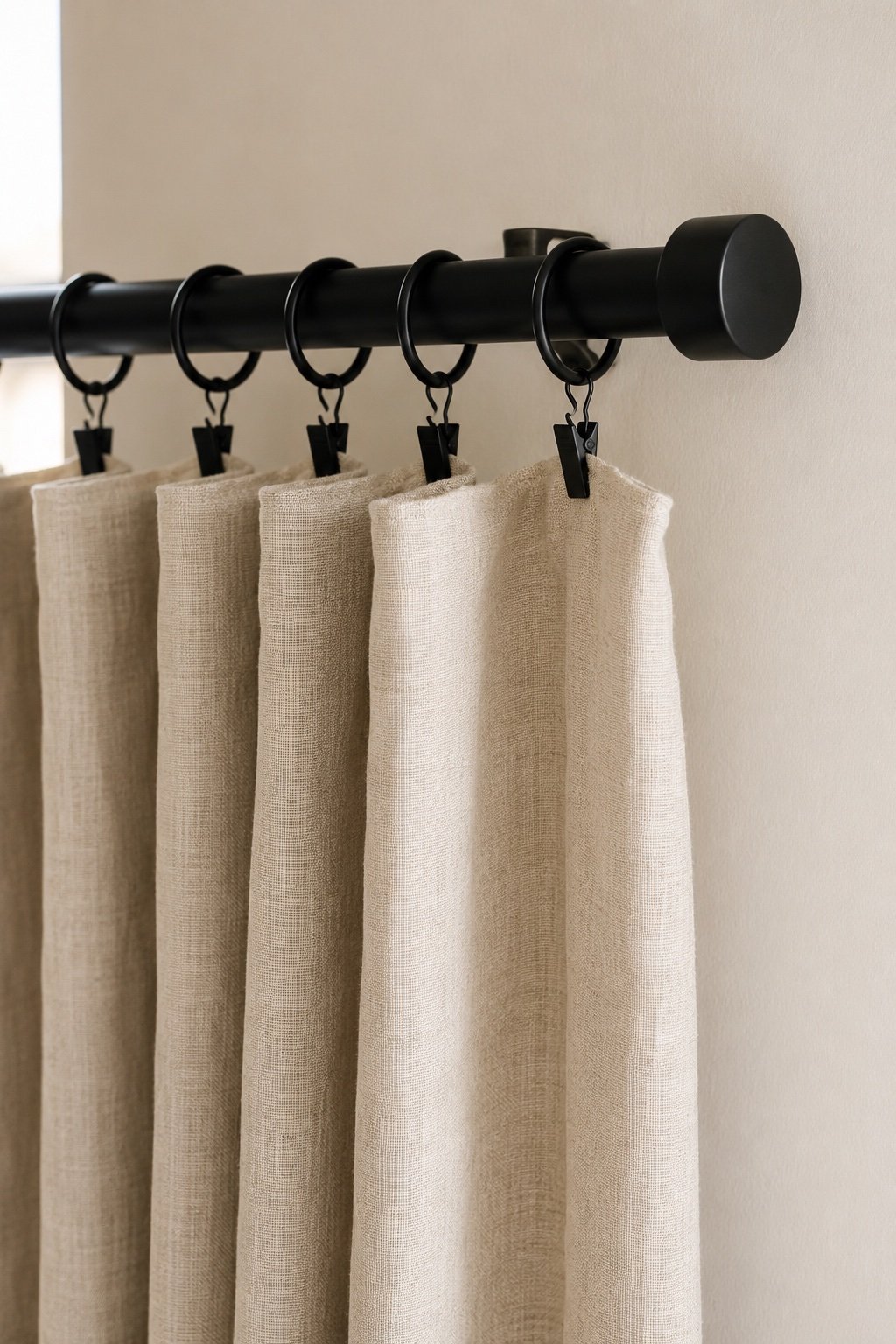
- Rings with clips or hooks. The most flexible and the best looking, because the panel hangs in loose vertical folds and slides easily. Also the easiest to adjust in height.
- Pinch pleat. The most tailored, deep permanent folds. Reads custom even on ready made panels.
- Grommet. Modern, wide even waves, glides well. Fine, but the metal rings date faster than anything else on this list.
- Rod pocket. Cheapest, gathers tightly, does not slide. Best for panels that stay closed or purely decorative.
For the rod itself: diameter of at least one inch so it does not bow, brackets every four feet on long spans, and a center support bracket on anything over seven feet. Finish should relate to something else in the room, usually the metals you already have. Black is the safest and disappears against most walls.
What curtains should cost
Rough per panel, for a 96 inch length, in 2026 dollars.
- $20 to $40. Basic polyester, thin, hangs with static and shine. Usable for a rental or a room nobody sits in, but they photograph badly.
- $40 to $90. The value sweet spot. Cotton blends and linen blends from mainstream retailers, decent weight, real drape. Most rooms should shop here.
- $90 to $200. Heavy linen, velvet, lined panels, better hems and headers. Worth it on the windows you look at every day.
- $250 and up per panel, or $1,000 plus per window. Custom, made to your exact measurements. Justified only when you have odd windows, an unusual ceiling height, or a very specific fabric.
Add $30 to $80 for a good rod, and count the liner as its own cost. And do the math on width before you compare prices: cheap panels that need four of them are not cheap.
The last ten percent
Two habits separate hung curtains from styled ones. Steam them the day they go up, because every panel arrives folded and the creases never fall out on their own. And train the folds: run your hand down each fold, gather the panel tight against the wall, and tie it loosely with a ribbon overnight. The fabric learns the shape and keeps it.
Then leave them mostly open. Curtains are a frame, not a wall. And once they are up, check the room’s lighting at three heights, because heavy panels change how a room reads after dark.
Keep Reading
📖 How to Choose a Dining Table: Size, Shape, Material, and What It Costs
📖 How to Buy an Accent Chair: The Five Numbers That Matter
📖 The Right Rug Size for Every Room: A Visual Guide