This post contains affiliate links. If you buy through them, I may earn a commission at no extra cost to you.
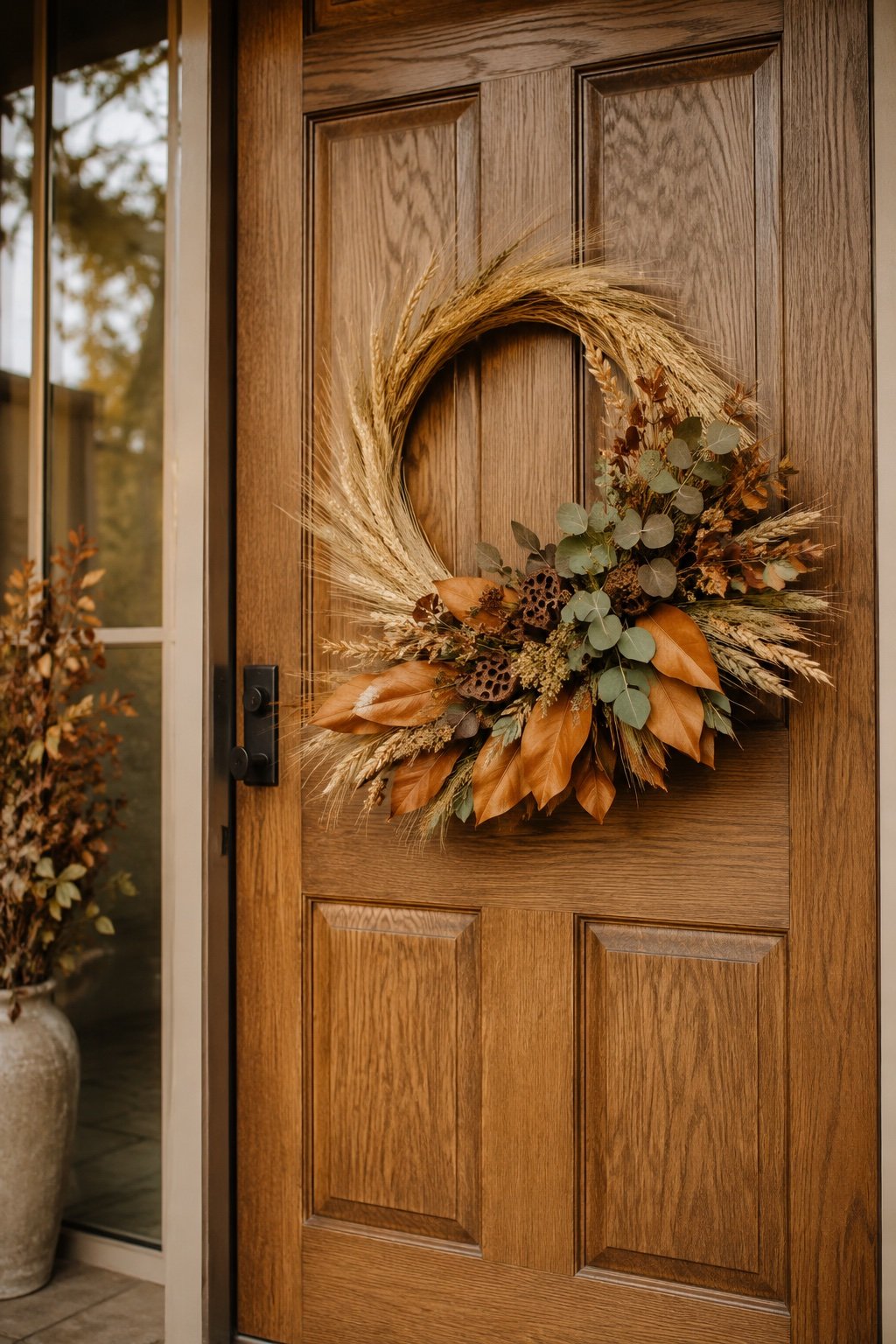
A wreath is the one piece of seasonal decorating everyone walks past twice a day, yours and the neighbors’, which makes it the highest-visibility three feet of the whole house. And most store-bought fall wreaths are the same tired orange-and-burgundy circle of plastic maple leaves. The neutral fall wreath ideas below cost about the same, looks like something you found rather than bought, and lasts from September clear through Thanksgiving.
Here is how to build one, or buy one that does not look like everyone else’s.
Start with the base, because the base is most of it
The material of the ring underneath decides the whole character of the wreath. Three bases carry the neutral fall look on their own, before you add a single thing:
Shop the idea
An 18-inch grapevine wreath base
A bare natural grapevine ring, warm brown and twiggy, that looks good on its own and grips wire for everything you add.
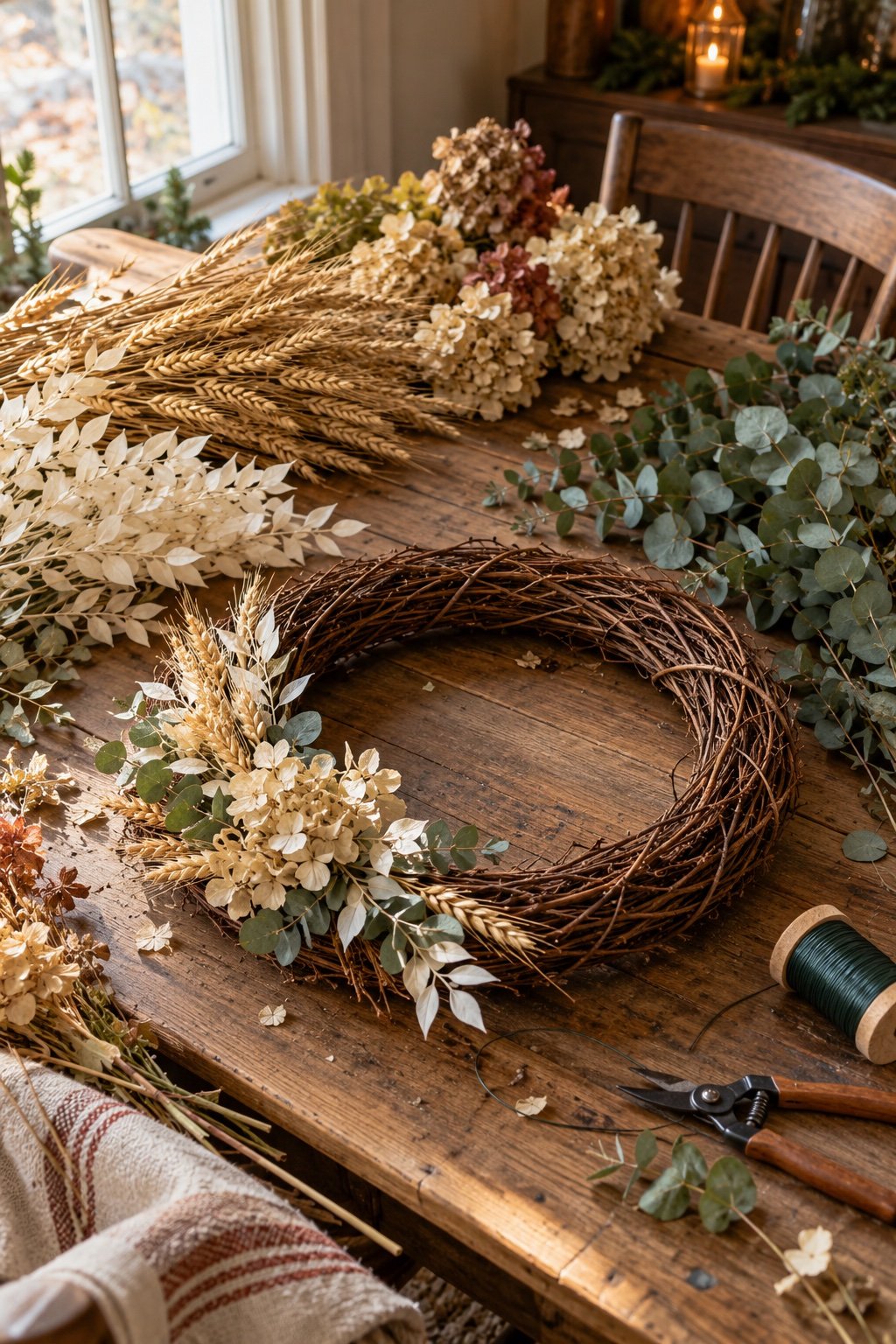
- Grapevine. The workhorse. Bare, twiggy, warm brown, and beautiful with almost nothing on it. A plain grapevine wreath with one small cluster tucked in is a complete, expensive-looking door in about four minutes.
- Dried wheat or grass. A full ring of wheat, palm, or dried grass reads soft and golden and needs no additions at all. This is the one that looks like it came from a nice shop.
- Bare branch or birch. Twiggy, architectural, a little wild. Best for a modern door or a farmhouse one, and it holds up outdoors for months.
If you buy nothing else, buy a good grapevine base. Everything below is built on it, and you will reuse it every season for years.
The neutral fall palette
Skip orange and burgundy as the leads. The colors that read as autumn without reading as the seasonal aisle:
Shop the idea
Dried wheat stalks
A bundle of natural dried wheat, about 16 inches, enough to build the straw and oat base tones of the palette.
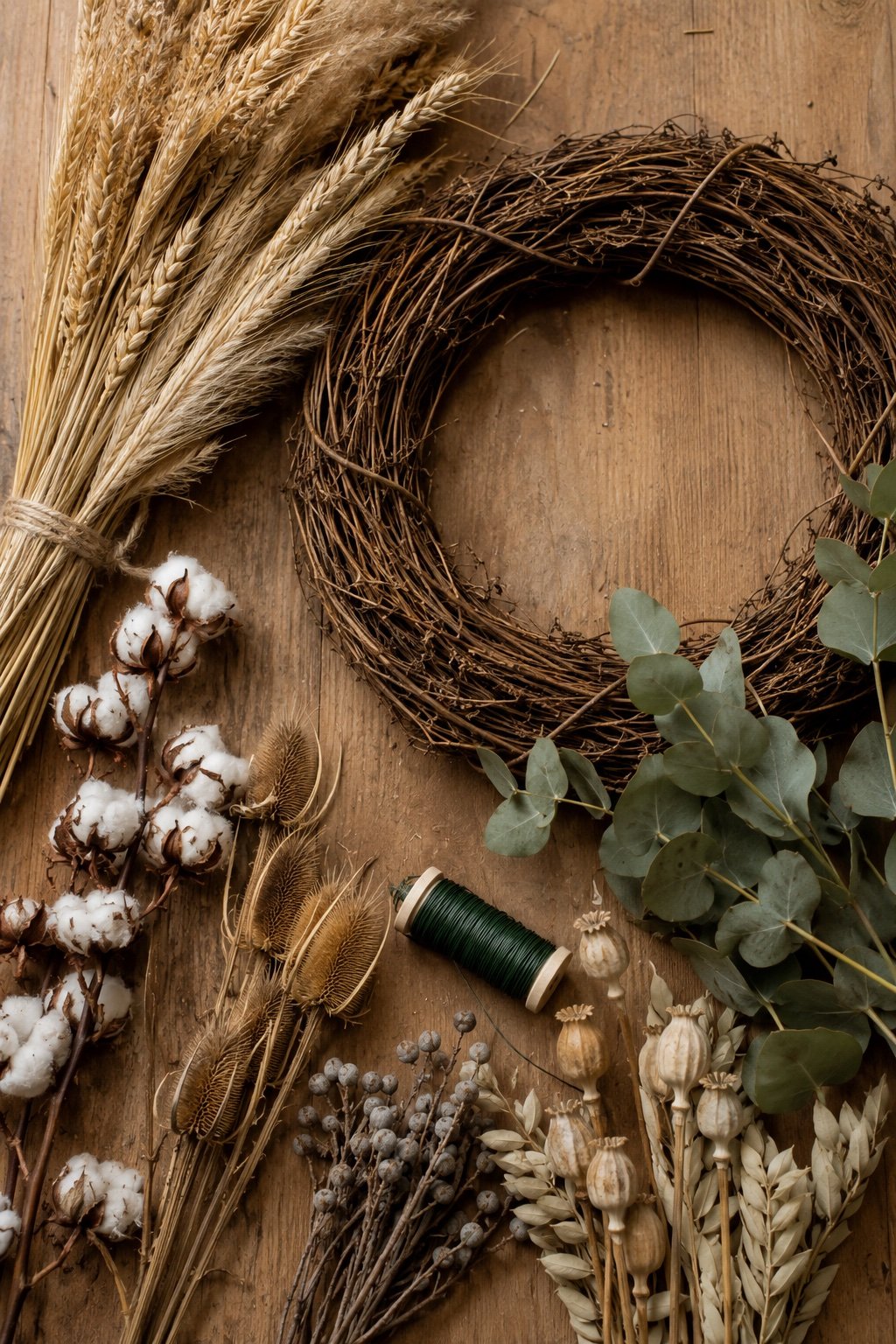
- Wheat, straw, and oat as the base tones.
- Cognac and dried-leaf brown for warmth.
- Sage, olive, and eucalyptus for the green, kept muted.
- Cotton, bleached pod, and bone for the light accents.
- One touch of rust or dusty terracotta, if you want any color at all, and only one.
The rule that keeps it from looking like a craft-store kit: no more than three or four materials total, and let one of them dominate. A wreath that is mostly wheat with a little cognac and one bone-white pod looks composed. A wreath with ten different things on it looks like a clearance bin.
Dried beats faux beats fresh, for a door
For an outdoor wreath that has to last two or three months, the order of preference is clear.
Shop the idea
Dried eucalyptus and silver dollar stems
A mixed bundle of preserved eucalyptus and silver dollar leaves, about 17 inches, for the muted green in a dried wreath.
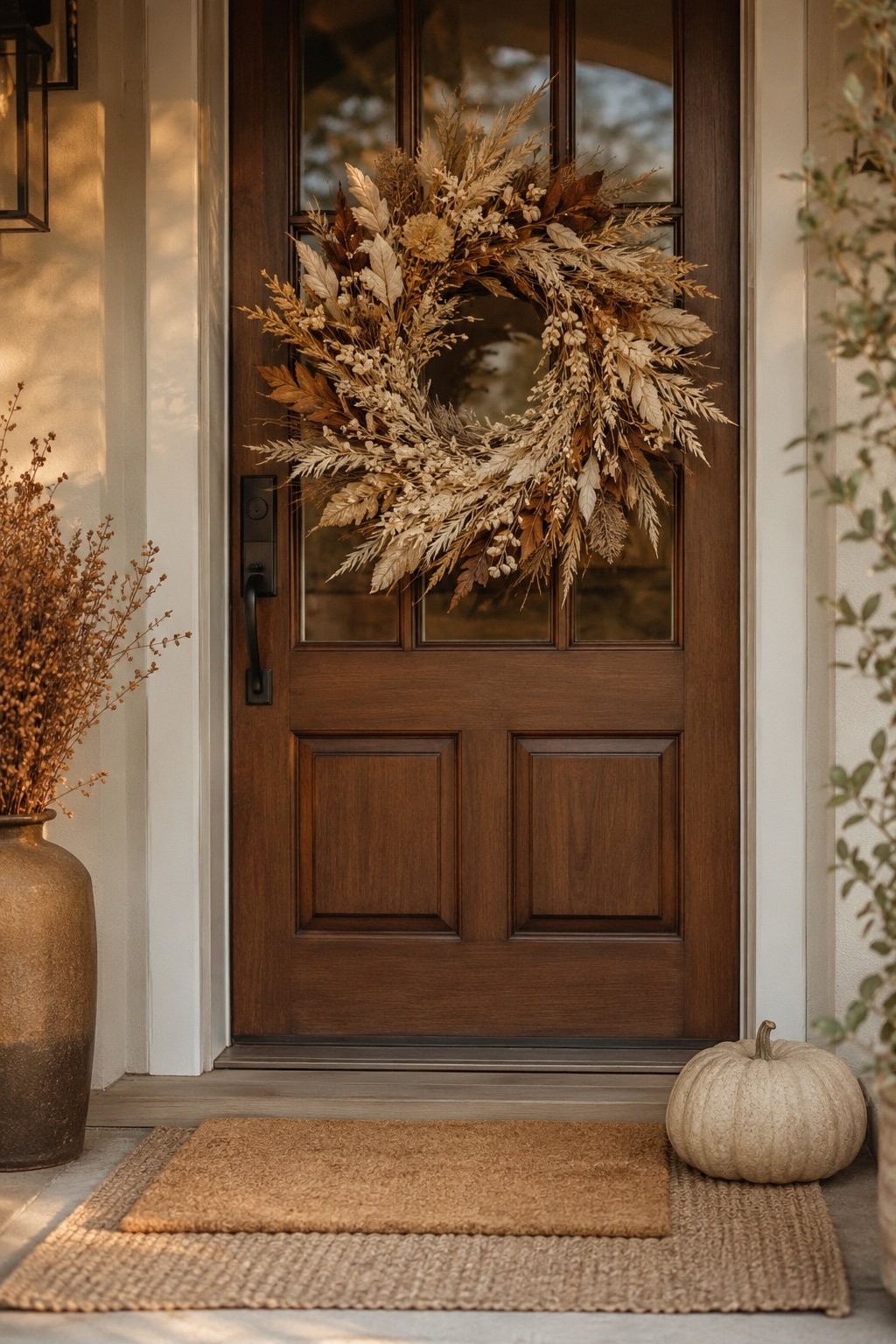
- Dried naturals are the sweet spot: wheat, grasses, pods, cotton stems, preserved eucalyptus, bittersweet. They look real because they are, they cost little, and on a covered porch they last the whole season and store for next year.
- High-quality faux earns its place only for the pieces dried versions cannot do, like a few realistic leaves. Buy few, buy good, and mix them into dried material so the eye reads the whole thing as real.
- Fresh is gorgeous for a party and gone in a week on a warm door. Save fresh greenery for the December wreath, when the cold keeps it alive.
Whatever you use, keep it off a door that bakes in afternoon sun. A wreath in full sun fades and gets brittle in weeks; the same wreath on a shaded or covered door lasts all season.
How to arrange it so it looks made, not glued
The difference between a florist’s wreath and a first attempt is almost always about grouping and asymmetry.
Shop the idea
Natural dried cotton stems
A pack of 16-inch cotton stems, the bone-white accent that makes a neutral cluster look finished.
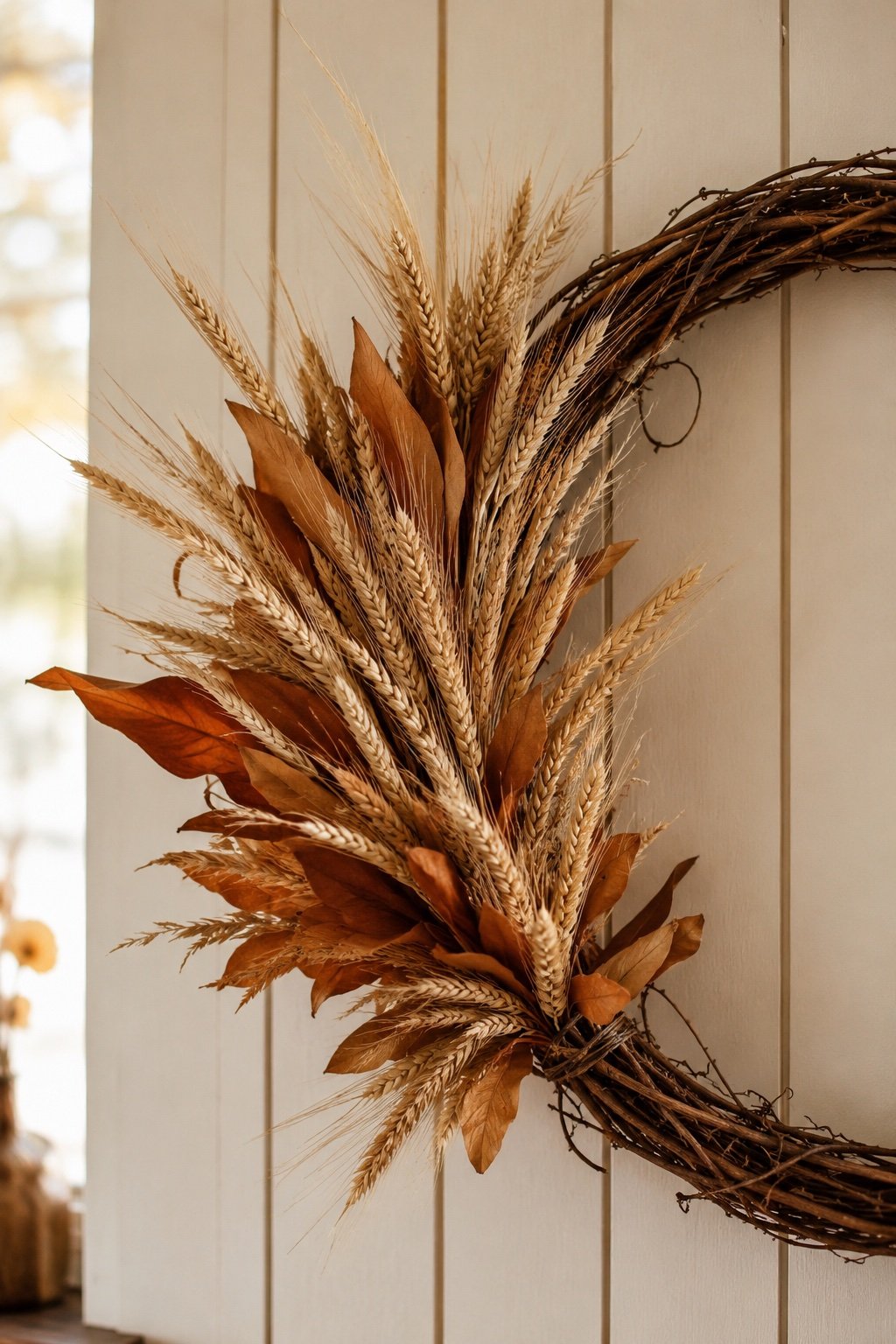
- Work in clusters, not a sprinkle. Group your materials into two or three tight bunches rather than dotting single stems evenly around the ring. Clusters read as intentional; an even sprinkle reads as a wreath-making kit.
- Go asymmetrical. The most elegant wreaths put the weight of the material at one point, often the lower left or lower right, and leave the rest of the ring nearly bare. A wreath decorated evenly all the way around looks stiff.
- Layer big to small. Largest elements down first against the base, then medium, then the small delicate bits last on top. Same principle as styling any seasonal mantel: build in layers, finish with the fine details.
- Point the stems the same way. If your materials have an obvious direction, like wheat, let them all sweep the same way. It looks like wind, not a wreath.
Attach it so it survives a season
Floral wire, not hot glue, for anything on an outdoor wreath. Glue lets go in heat and cold; wire holds through both. Wrap each cluster’s stems together with a few inches of wire, then wire that bundle down into the grapevine, which grips wire beautifully. Tuck the sharp ends back into the base so nothing scratches the door.
Shop the idea
Green 22-gauge paddle wire
Three paddles of flexible florist wire, the kind that holds clusters to grapevine through heat and cold where glue lets go.
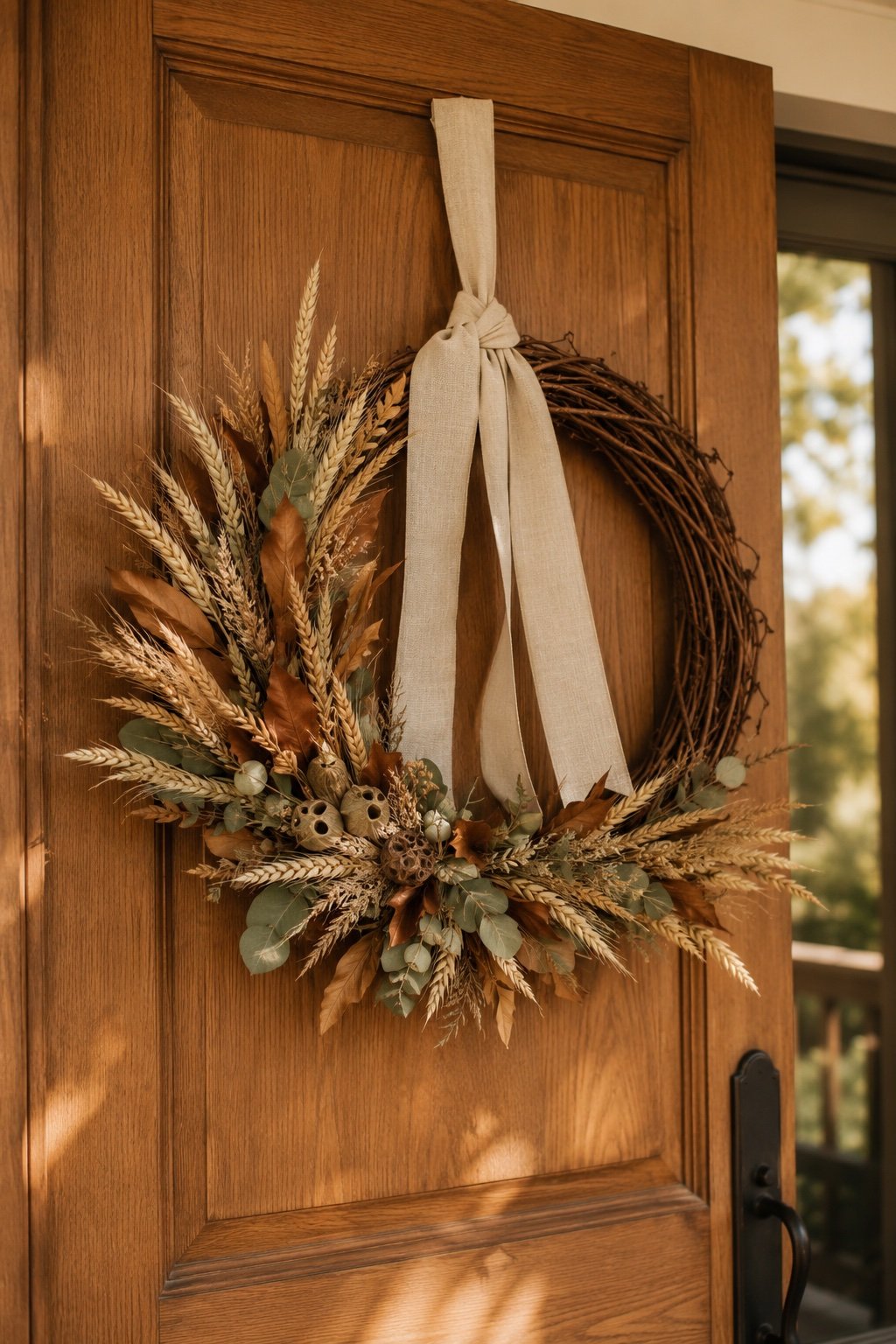
Hang it on the door itself with an over-the-door hook or, better, on the storm door or a nearby wall so it is protected from the weather. A wide ribbon looped over the top of the door is prettier than a metal hanger and holds plenty of weight.
Three wreaths, start to finish
The four-minute one. A plain grapevine base, one cluster of dried wheat and a couple of cotton stems wired to the lower right, one loop of natural linen ribbon. Done, and it looks like sixty dollars.
The full harvest one. A grapevine base wrapped two-thirds of the way around with dried grass, then clusters of wheat, cognac leaves, pods, and a little preserved eucalyptus built up asymmetrically on one side. Fifteen minutes, and it carries a whole porch.
The minimalist one. A bare birch or branch ring with a single sprig of eucalyptus or one dried protea wired at the bottom. Nothing else. For a modern door where less is the whole point.
Make it earn two months
The reason to go neutral is the same reason to go neutral on everything else this season: a wreath in wheat, cognac, and sage does not belong to Halloween or to Thanksgiving specifically, so it hangs from the first cool week straight through late November without ever looking wrong. Add one small pumpkin at its base in October, take it away in November, and the same wreath quietly changes holidays without you touching it.
Keep Reading
📖 Cozy Fall Front Porch Ideas Your Neighbors Will Stop to Look At
📖 Small Porch Fall Decor: 7 Ideas for Stoops, Steps, and Apartment Doors
📖 Dried Flower Arrangements: The Foraged Fall Decor Trend