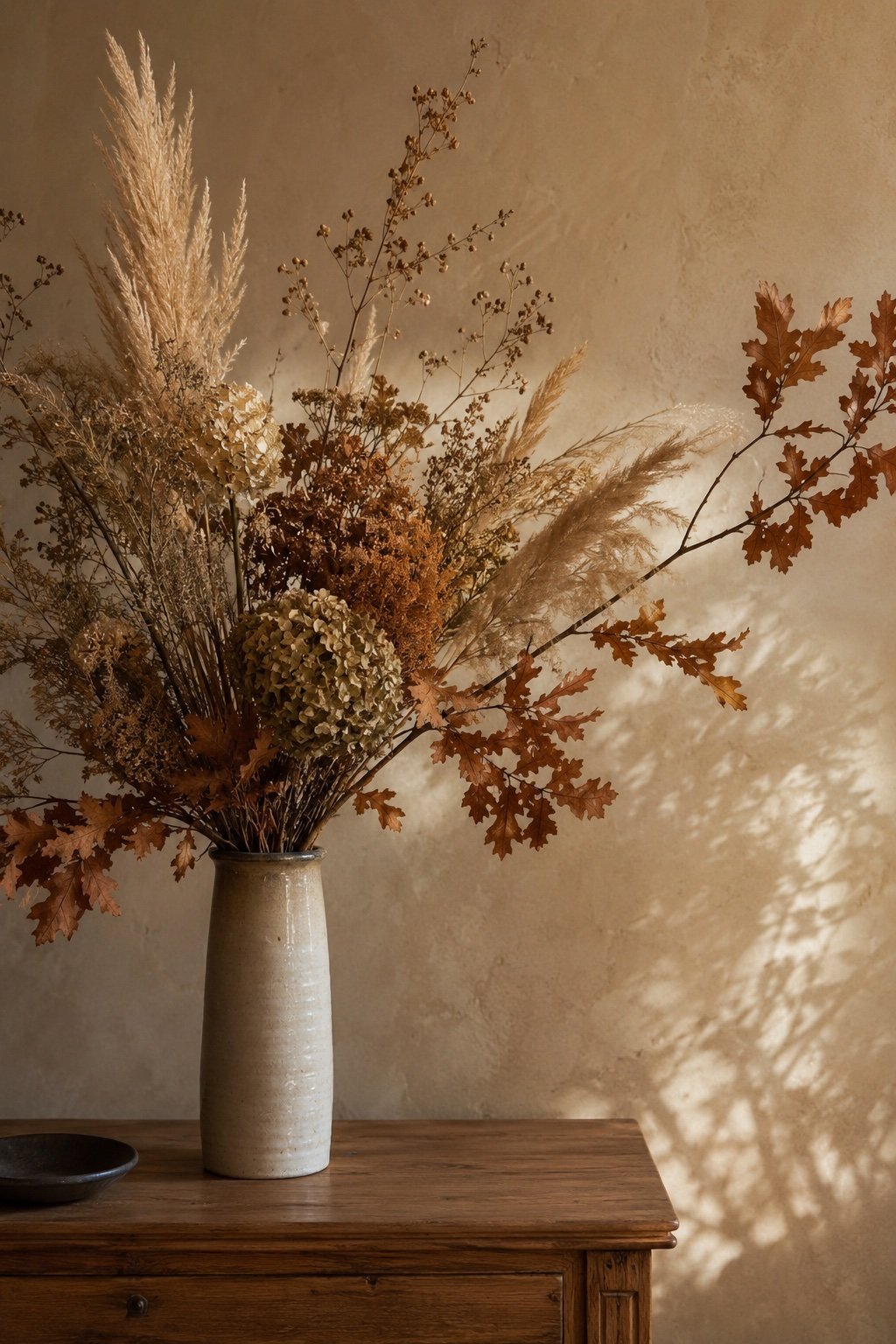
Walk past any design shop window this fall and you will see the same thing: a tall ceramic vase with a few dried branches arcing out of it, and nothing else. Dried flower arrangements last for months, need no water, survive a radiator, and cost close to nothing if you are willing to walk outside with a pair of clippers. Done well they look editorial. Done badly they look like a dusty craft-store leftover. The difference is a few simple rules.
Here is how to build a dried arrangement that looks foraged, not fussy, from what to cut to where to put it.
What to forage, and what to buy
Free from the yard and roadside. Oak and beech branches, wheat and ornamental grasses, seed heads, eucalyptus, hydrangea (cut when the petals feel papery, not fresh), and anything with interesting movement. Cut on a dry day and take about twice what you think you need, because some stems will snap or droop as they dry. Only cut where you are allowed to, and never more than a few stems from one plant.
Worth buying. Pampas grass, bunny tails, palm spear for structure, and preserved eucalyptus if you want it to stay supple. One purchased statement stem mixed with foraged fillers stretches the budget and looks intentional.
How to dry what you forage
Most branches and grasses air-dry beautifully. Bundle the stems loosely with twine, five to ten per bundle, and hang them upside down in a dry, dark spot like a closet or garage for two to three weeks. Dark matters: sunlight bleaches the color while it dries.
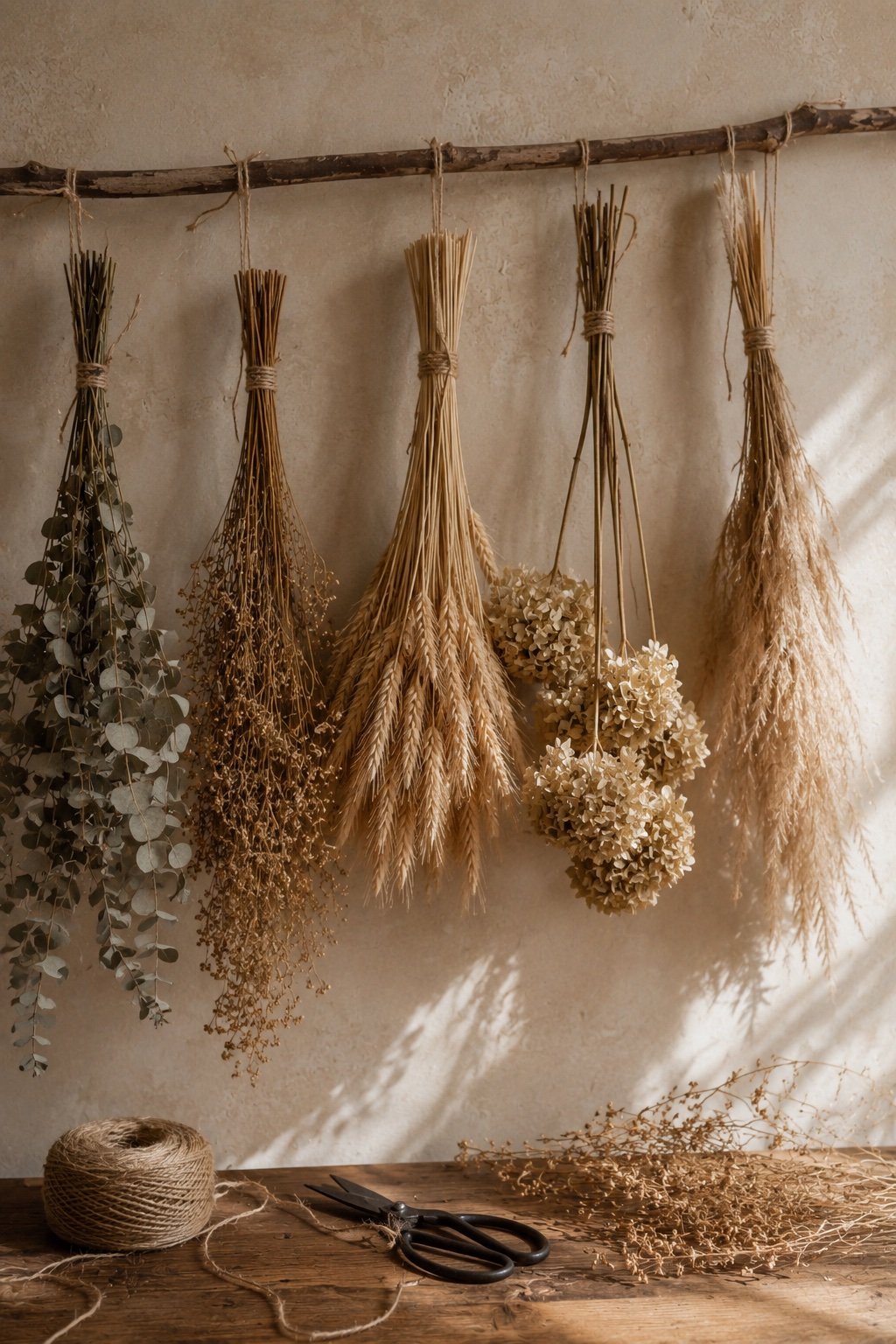
Hydrangeas do best dried upright in a vase with an inch of water that you let evaporate. Skip the microwave and silica tricks for these. The low-effort method is the whole appeal.
The rules that make it look designed
Vary the heights. Nothing kills an arrangement like everything being the same length. Tallest stems in back, medium in the middle, a few short pieces spilling over the rim. A good rule: the tallest stem is about one and a half to two times the height of the vase.
Work in odd numbers and loose groups. Cluster three of one texture, then two of another. Groupings read as natural; one of everything reads as a sample pack.
Give it movement and negative space. Let a branch arc out to one side. Leave gaps. A dried arrangement should look like it is mid-gesture, not packed tight.
Limit the palette. Wheat, cream, soft brown, and one muted accent, dried rust or sage. Three textures and one accent is plenty. Too many colors turns organic into chaotic.
Three arrangements, start to finish
The tall branch. One tall ceramic vase, three oak or beech branches cut to different lengths, and nothing else. Set the tallest straight up and let the other two lean out on opposite sides. Five minutes, and it works on a console or a floor beside a chair.
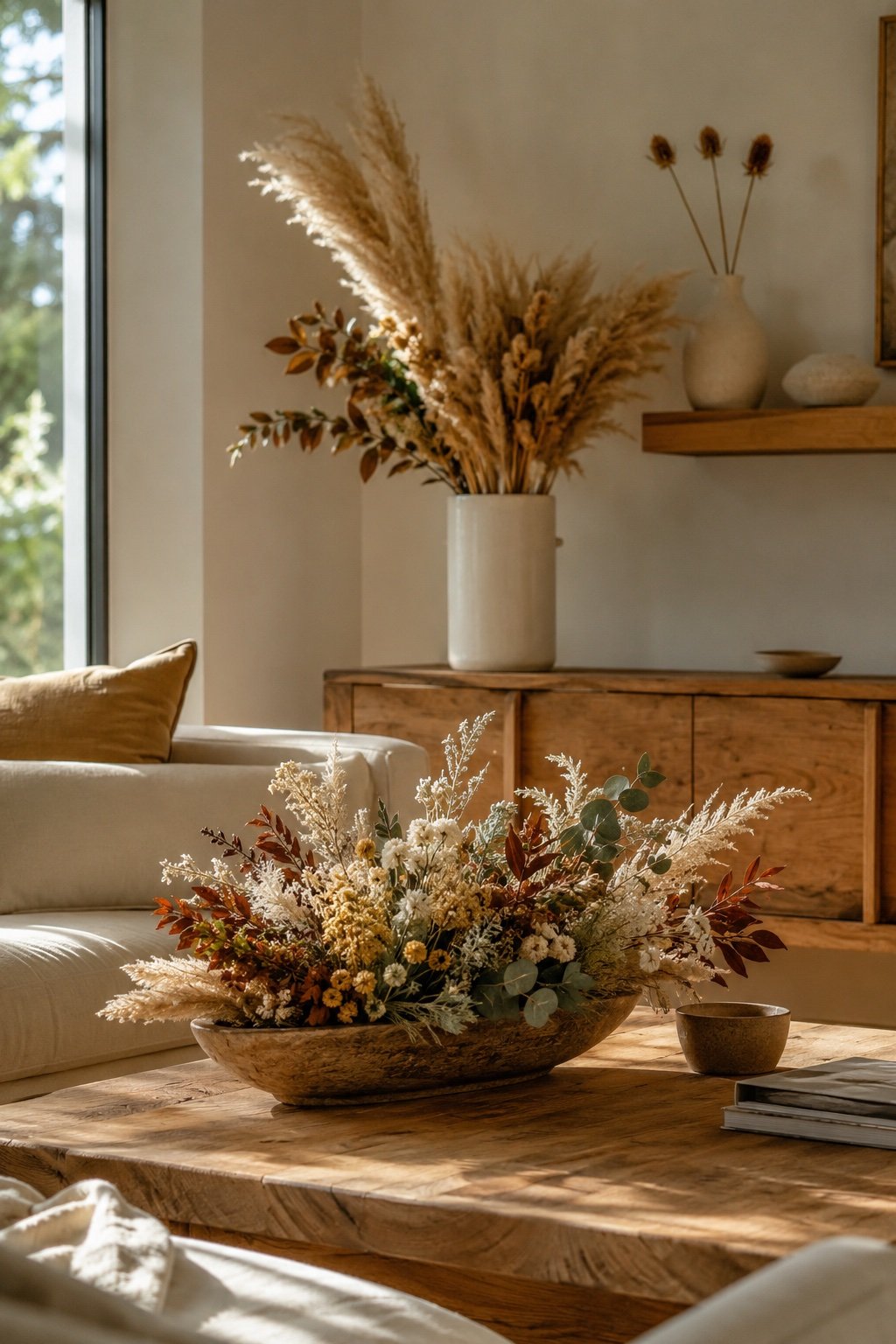
The wheat and grass bundle. A low, wide crock filled with wheat, one kind of grass, and three seed heads. Cut everything to about 12 inches so it spreads sideways. This is the one for a coffee table or a dining table.
The three-stem bud vase. A small bottle or bud vase with a single branch, one grass stem, and one seed head. Make three and scatter them on a shelf. It is the cheapest arrangement here and often the prettiest.
Choosing the vessel
The vase matters as much as the stems. A tall ceramic vase, an amber-glass bottle, or a wide dough bowl all suit dried material. Match the vessel weight to the arrangement: heavy grasses need a vase with a real base so it does not tip. Neutral, matte vessels let the texture of the stems do the talking.
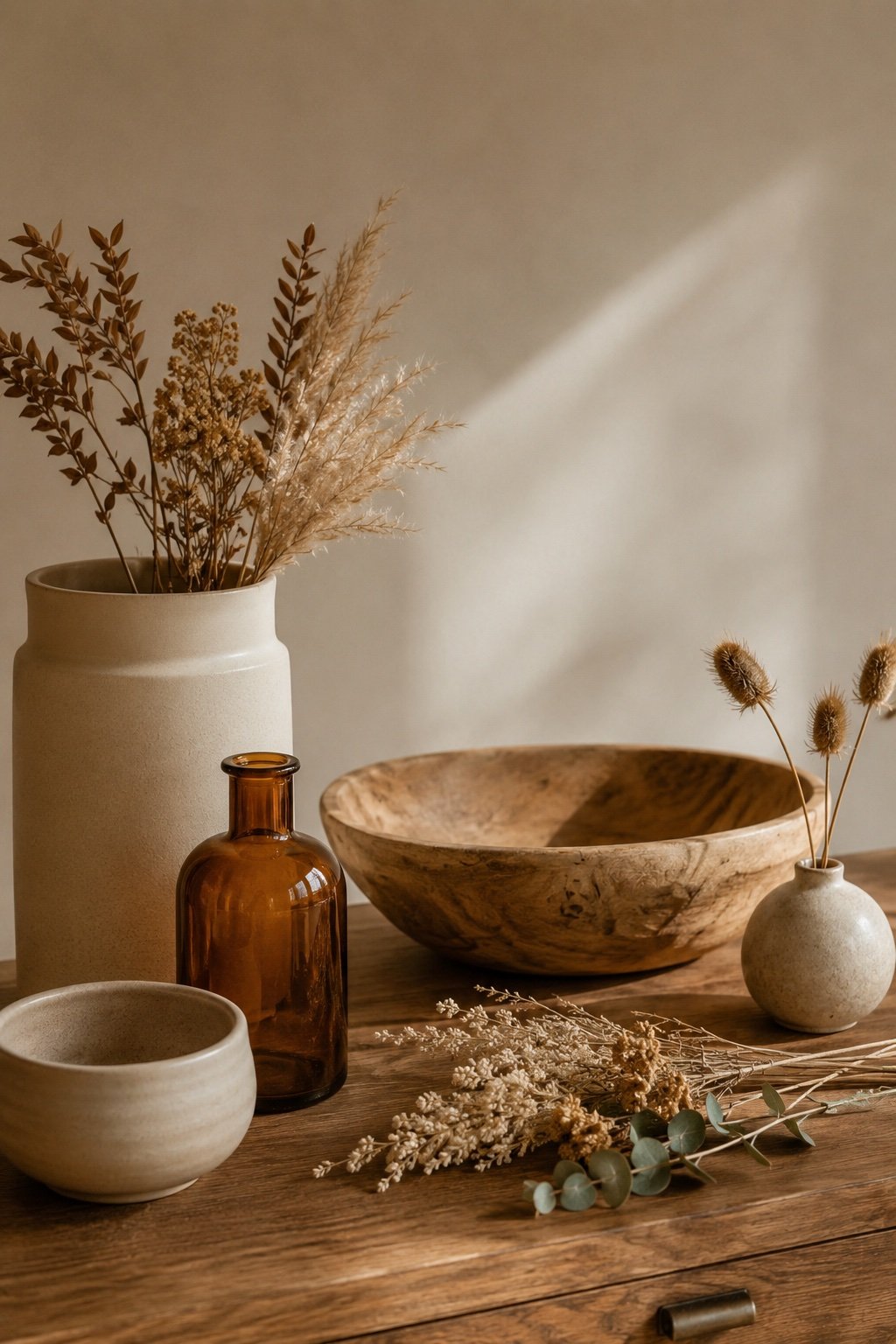
If the stems slide around in a wide opening, crumple a piece of chicken wire into the vase or tie the bundle with twine before you drop it in. Floral foam is not needed for dried stems.
Where to put them
- Coffee table: keep it low and wide, under about 14 inches, so it does not block the sightline across the room.
- Console or entry: go tall and sculptural, a single dramatic spray of pampas or branches.
- Shelves: a small bud vase with three stems softens hard edges.
- Mantel: a loose garland of dried stems laid along the top for the harvest look.
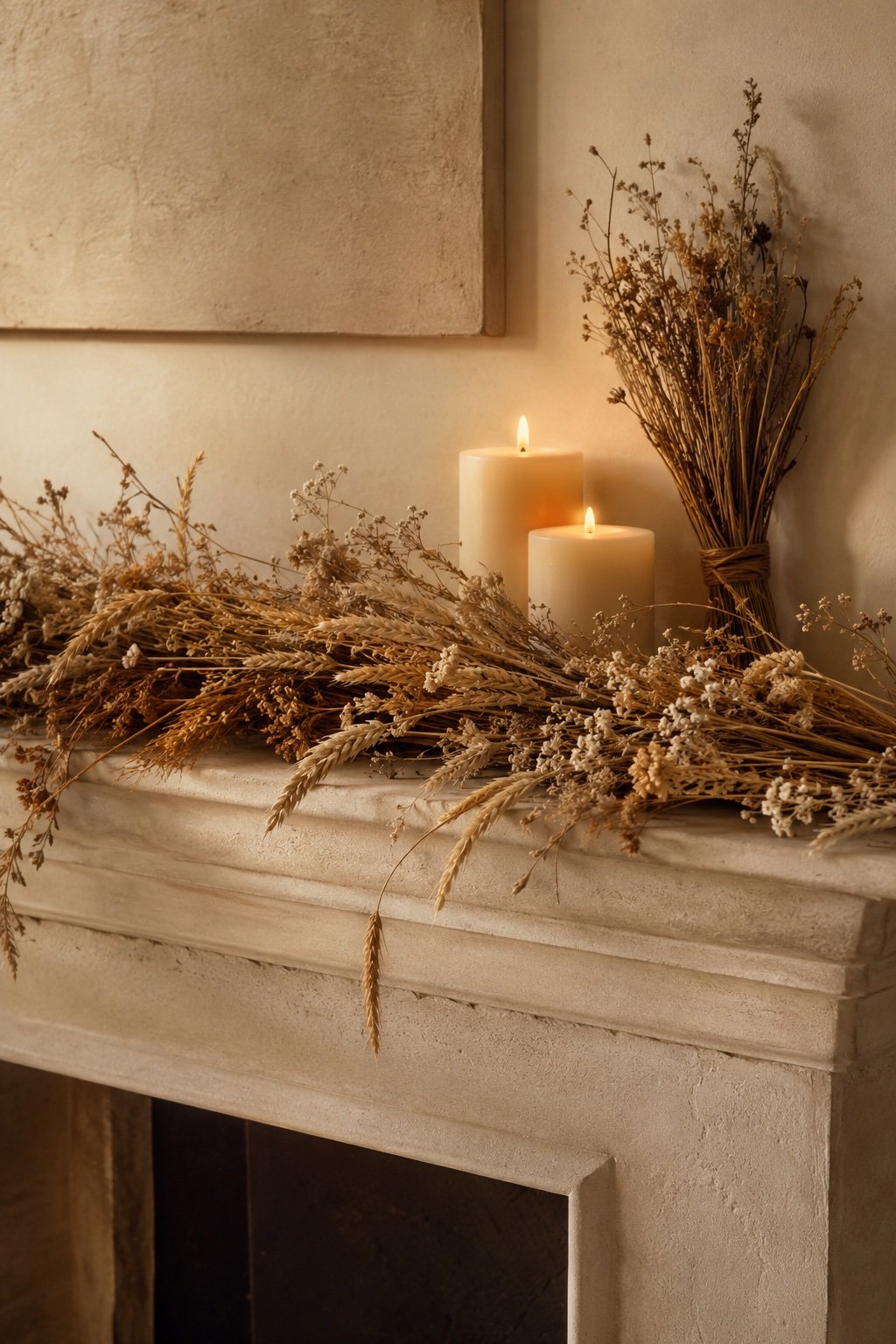
One safety rule: dried material is flammable. Keep it at least a foot from candle flames and out of a fireplace opening that gets used. On a mantel with candles, use flameless ones or keep the stems at the far end.
Keeping them looking good
Dried stems collect dust. Once a month, take them outside and give them a gentle blast with a hairdryer on the cool setting, or a soft shake. Kept out of direct sun, a good dried arrangement holds its color for a full season or longer, which makes it the best value in seasonal decor.
When a stem starts shedding every time someone walks past, it is done. Swap that one stem instead of the whole arrangement, and keep the vase.
For more low-cost warmth, see our fall decor finds under $50. Start with one tall vase and three branches. If it looks sparse, it is probably right.
Keep Reading
📖 15 Cozy Fall Decor Finds Under $50 That Look Expensive
📖 Vintage Halloween Decor: The Antique Look Without the Kitsch
📖 Halloween Decor in Warm Neutrals (No Orange Required)