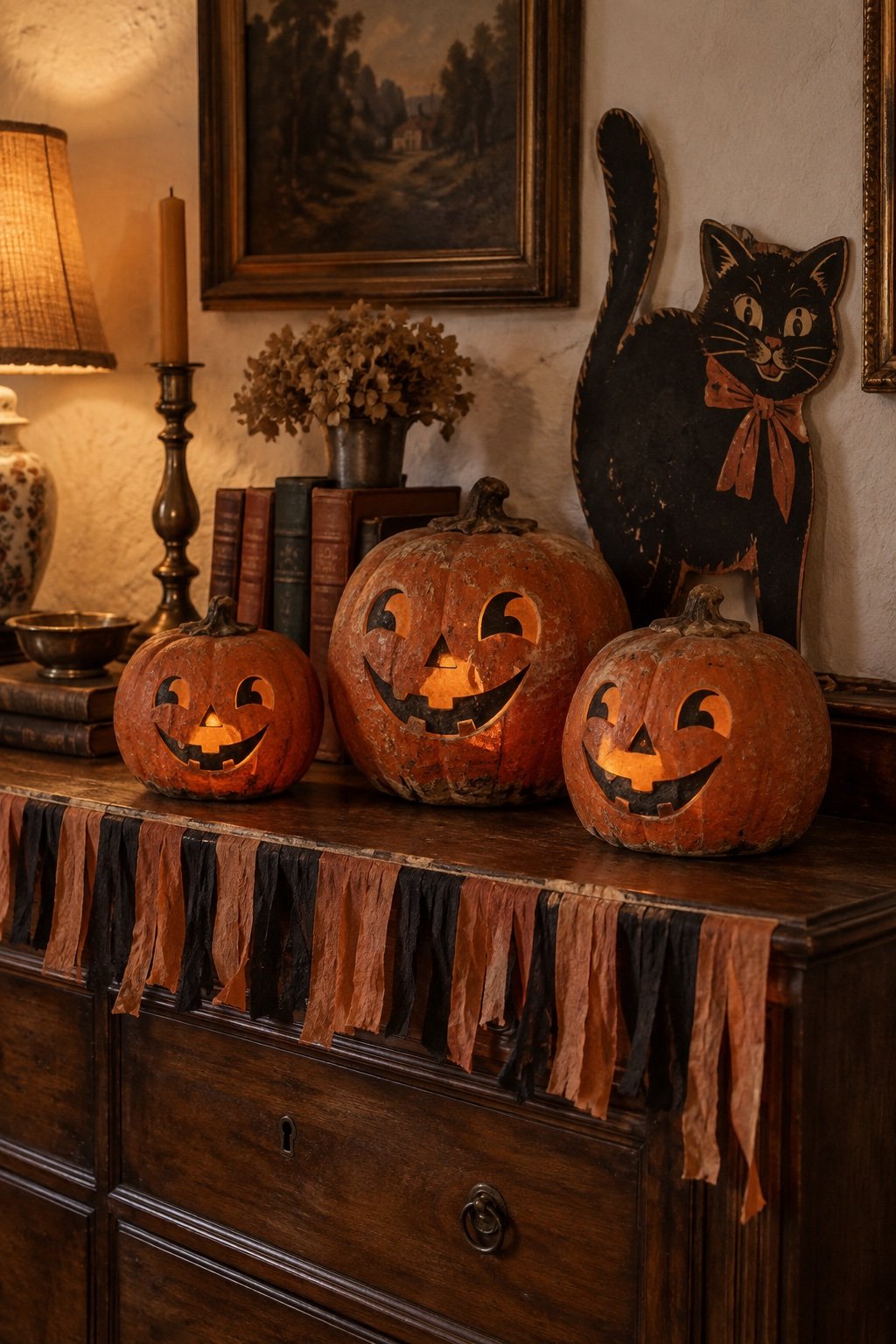
Vintage Halloween is having a moment. Searches for it on Pinterest have roughly tripled this year, and it is easy to see why: the old decorations were stranger, softer, and far more charming than anything sold in a plastic clamshell today. Grinning paper jack-o’-lanterns, embossed cardboard cats, crepe paper in an orange that has faded to something closer to marmalade.
The trick is getting the look without turning your living room into an antique mall booth. Here is how to do it with a light hand.
Know what you are actually looking for
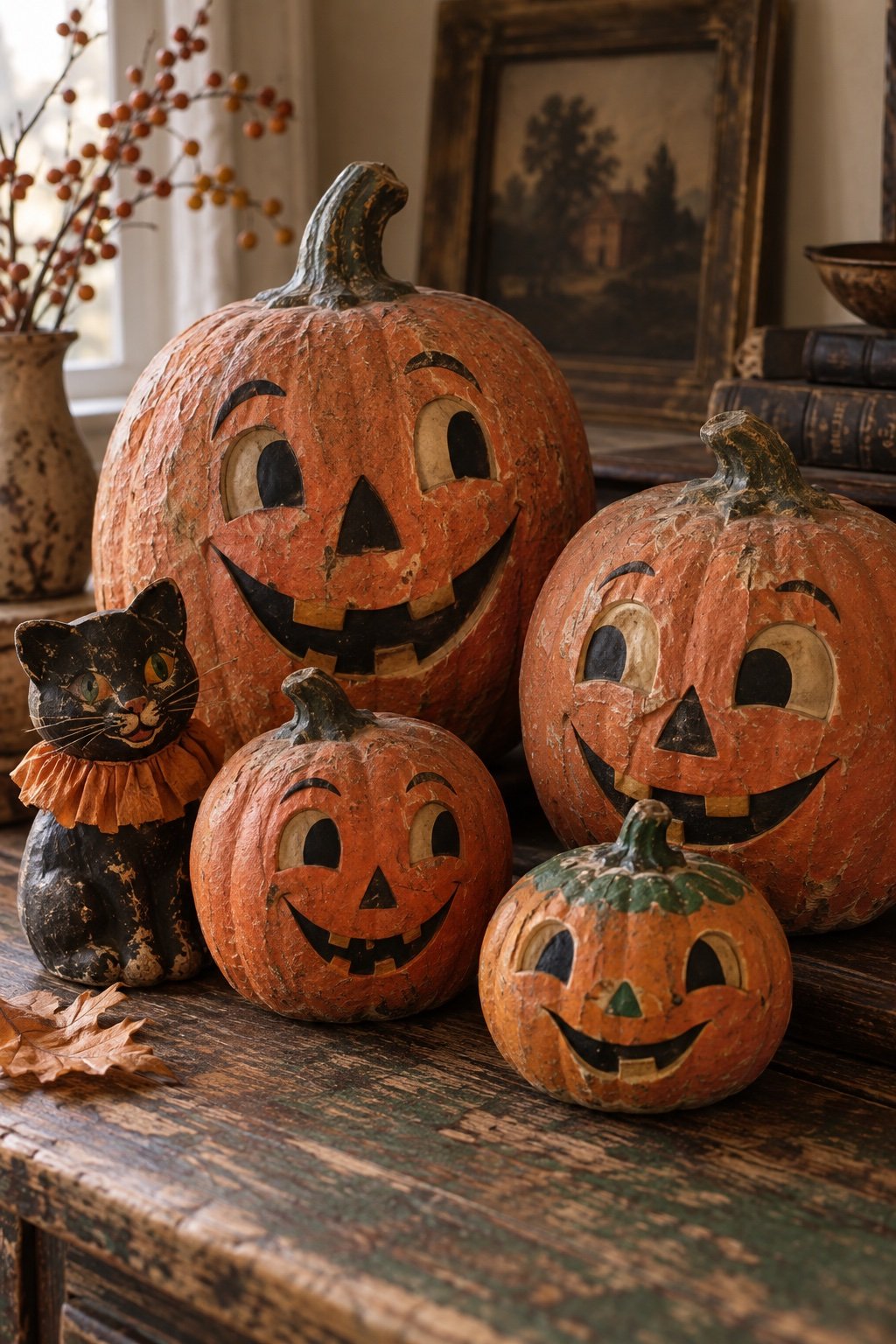
“Vintage Halloween” usually means American and German decorations from about 1910 to the late 1950s. A handful of things define the look:
- Die-cut cardboard. Embossed, printed cutouts of cats, owls, witches, moons, and jack-o’-lanterns, the kind the Beistle Company in Pennsylvania made for decades. Flat, graphic, meant for walls and windows.
- Papier-mâché jack-o’-lanterns. Molded pulp lanterns with a thin paper insert behind the eyes and mouth, lit from inside. The older German ones often doubled as candy containers.
- Crepe paper and honeycomb tissue. Fringed streamers, garlands, and fold-out honeycomb pumpkins and cats.
- Party ephemera. Tin noisemakers, place cards, tally cards, and the Dennison “Bogie Books”, which taught a whole generation how to throw a Halloween party.
- The faces. Vintage jack-o’-lanterns smile more than they snarl. The charm is in the slightly odd, handmade expression.
You do not need all of them. Pick one or two categories and let them lead.
Get the colors right
The reason so many reproductions look cheap is color. The originals were printed with inks that have now aged for seventy or a hundred years, and the look you are after is the aged version.
- Orange that has faded toward mustard, marmalade, and pumpkin pie. Never neon.
- Soot black, slightly gray and matte, rather than glossy black.
- Cream and yellowed paper as the neutral.
- Olive green and faded purple as accents, both common on old die-cuts.
Set those against what is already in the room: wood, brass, old books, a cream wall. Vintage pieces look best surrounded by other old things, not by white lacquer and chrome.
Start with paper on the wall
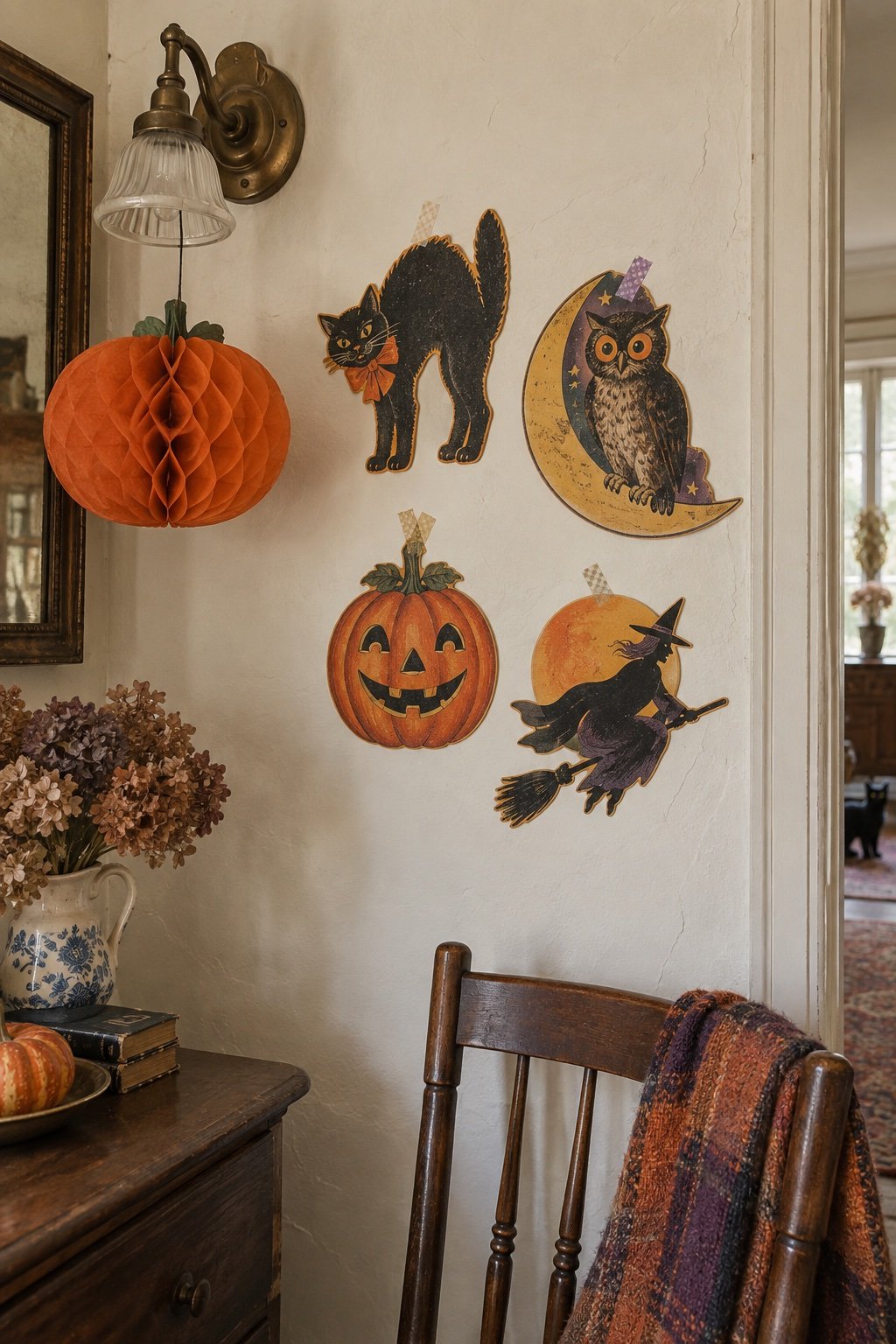
Paper is the cheapest way in, and it does the most work. A few die-cuts on a wall or propped on a mantel read instantly as vintage Halloween.
- Cluster, do not scatter. Three to five cutouts on one wall or one door beats twenty spread across the house.
- Use removable putty or washi tape, never pins through an original. The holes are forever.
- Put a black cat in a window, facing out. It is the most classic image of all, and it shows from the street.
- Hang a single honeycomb pumpkin from a light fixture, or run a fringed crepe garland along the edge of a mantel.
Build a collection on one shelf
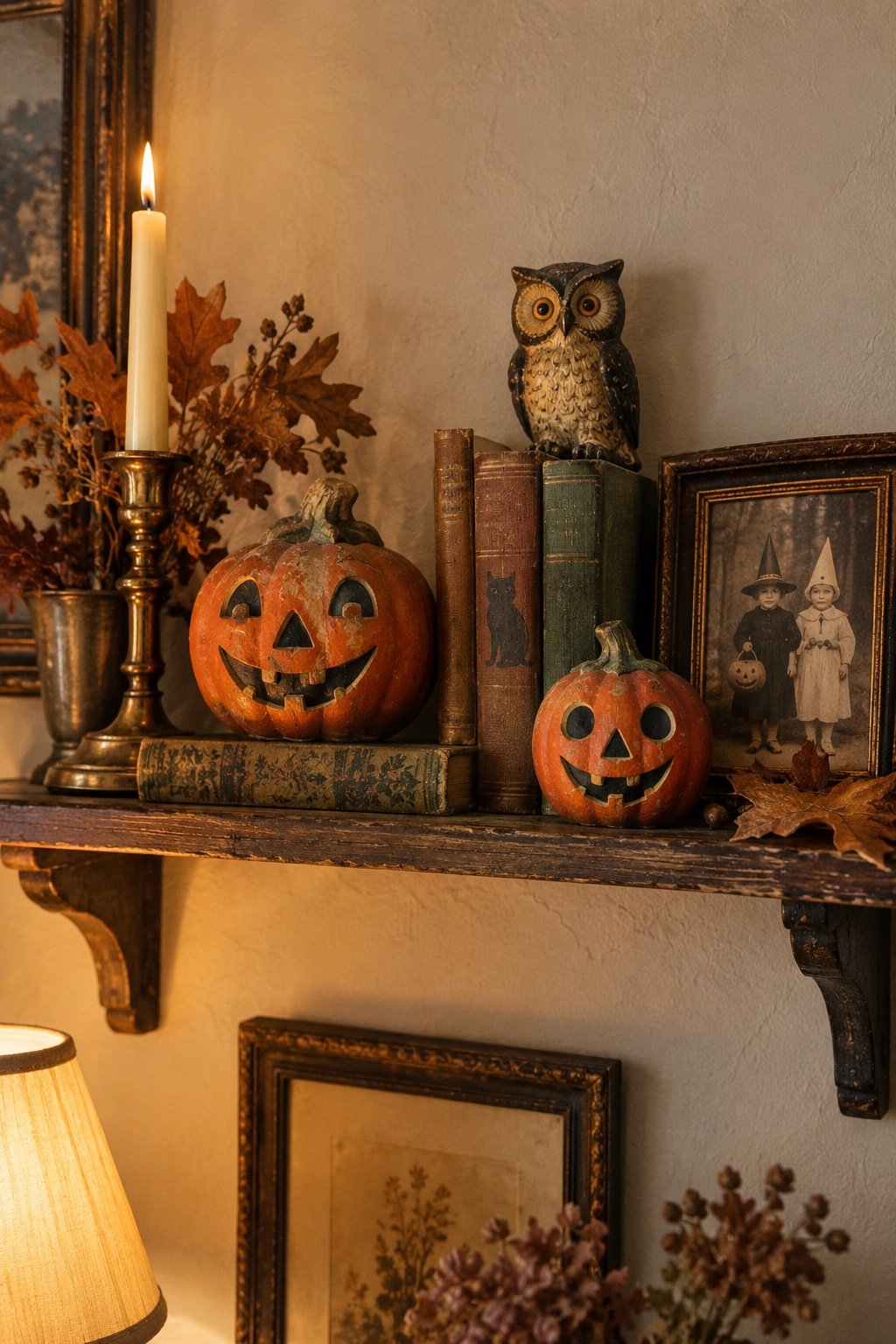
The trinket shelf, one small shelf happily crowded with little objects, is one of the looks of the year, and vintage Halloween pieces are made for it.
- Papier-mâché jack-o’-lanterns in two or three sizes.
- A small candy container or a cat or owl figure.
- A stack of old cloth-spined books, one lying flat as a riser.
- A brass candlestick or a small oil lamp.
- An old snapshot of people in homemade costumes. Flea markets are full of them, and they are the eeriest, loveliest thing you can own.
Grouping turns odd little things into a collection. A single papier-mâché lantern on a big console looks lost. Five on one shelf look intentional.
Light the lanterns, safely
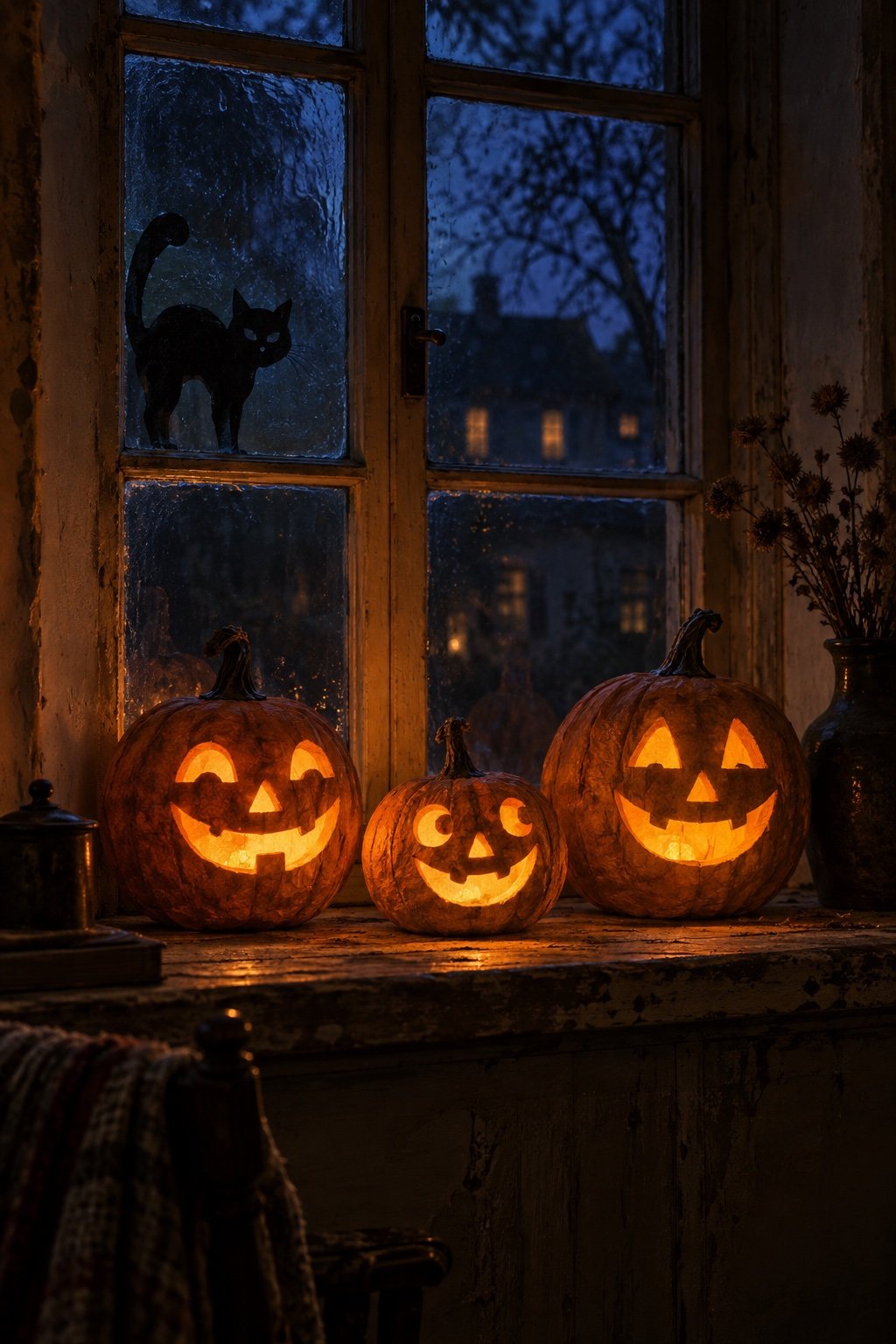
The papier-mâché lanterns were made to glow, and seeing one lit is the whole point. The originals were lit with real candles, which is exactly why so few of them survived.
Use a battery tea light instead, always, in anything made of paper. Group two or three lit lanterns in a window or on a dark sideboard, turn off the overhead lights, and the room goes straight back to 1935.
Real vintage or reproduction?
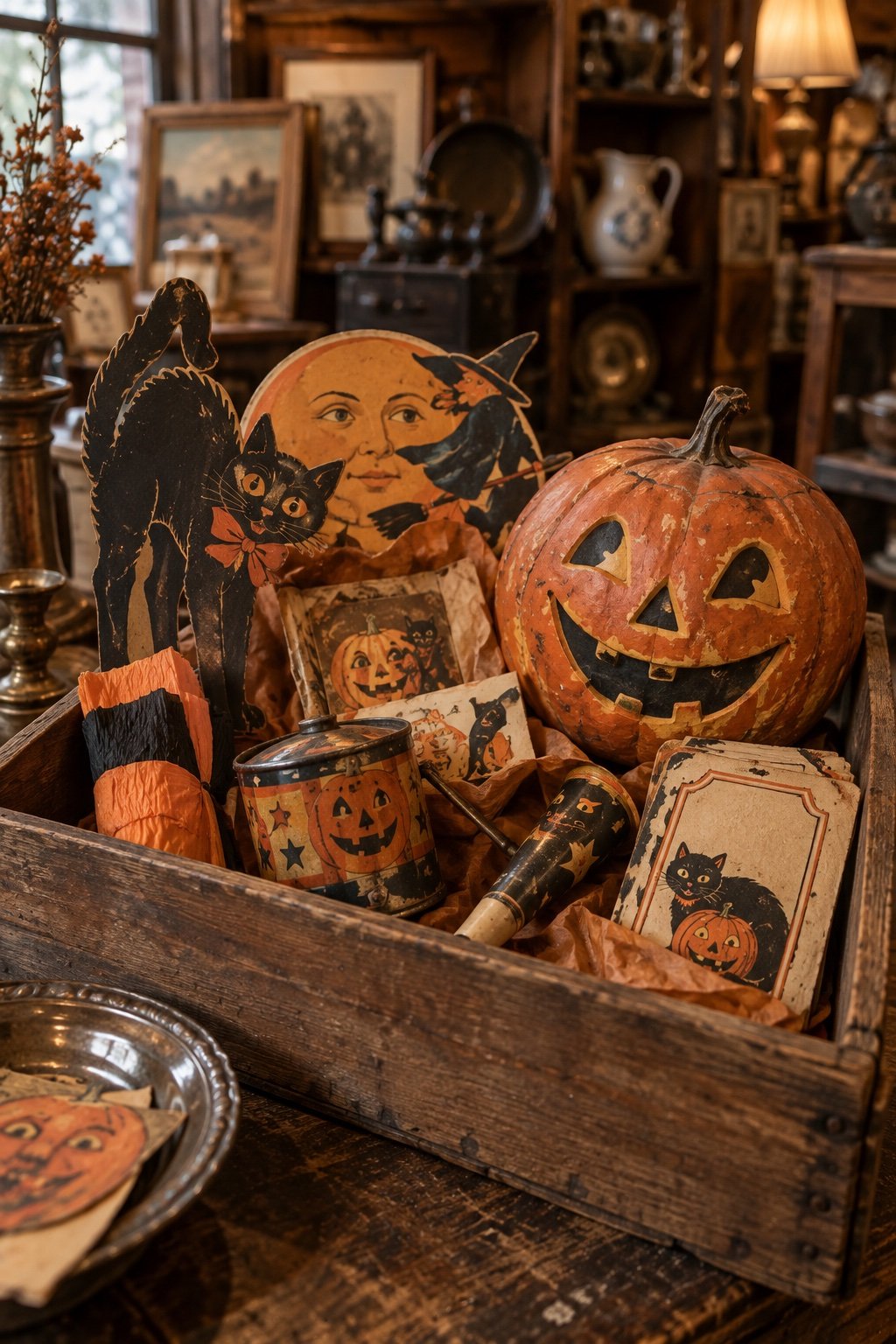
Both are fine. They just belong to different budgets.
- Authentic pieces turn up at estate sales, antique malls, and online auctions. Early German papier-mâché and rare die-cuts can run into the hundreds of dollars, and condition matters more than age. Look for honest wear, not heavy repairs.
- Good reproductions are made from the same materials, molded pulp and printed cardboard, and cost a fraction of that. Makers like Bethany Lowe have built entire collections around the look.
- Watch for new pieces sold as old. New pulp tends to be lighter and cleaner inside, with crisp seams and bright paint. If an “antique” looks brand new, it probably is.
- Mix freely. One real piece surrounded by good reproductions reads as a collection. Nobody is checking.
Put it together in three places
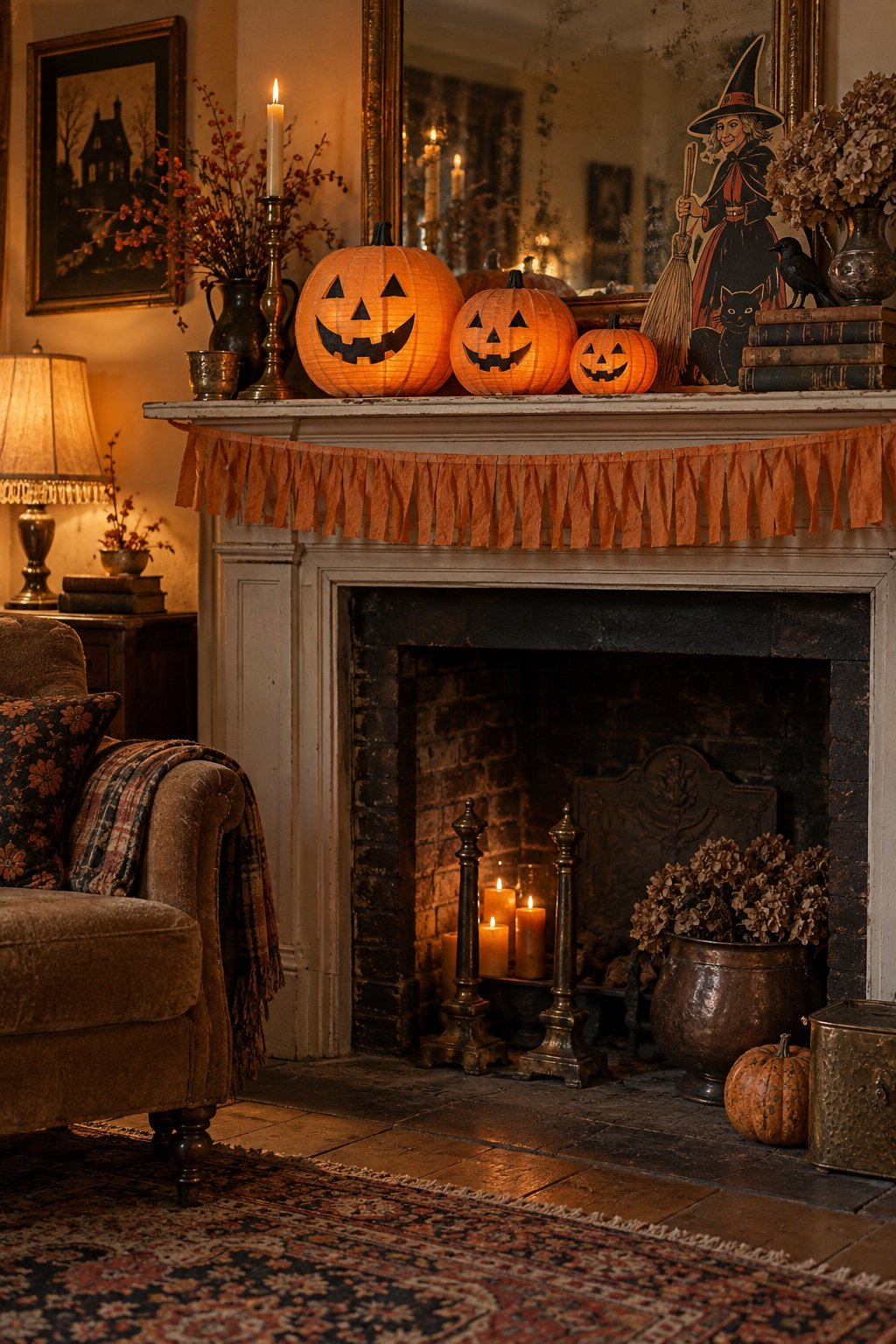
Choose three spots and stop there.
- The mantel or sideboard. A crepe fringe along the edge, a row of lanterns at different sizes, a brass candlestick, one die-cut propped at the back. It follows the same structure as an early fall mantel, one decade older.
- One window. A black cat or a moon facing the street and a lit lantern on the sill.
- The door. A single vintage-style die-cut or a honeycomb pumpkin in place of a wreath.
Everything else in the house stays as it is. The restraint is what makes the old pieces look precious instead of cluttered. And on November first, it all fits back into one shoebox, which is how the originals survived in the first place.
Keep Reading
📖 Halloween Decor in Warm Neutrals (No Orange Required)
📖 15 Cozy Fall Decor Finds Under $50 That Look Expensive
📖 Small Space Halloween Decor: 12 Apartment Ideas That Don’t Take Over