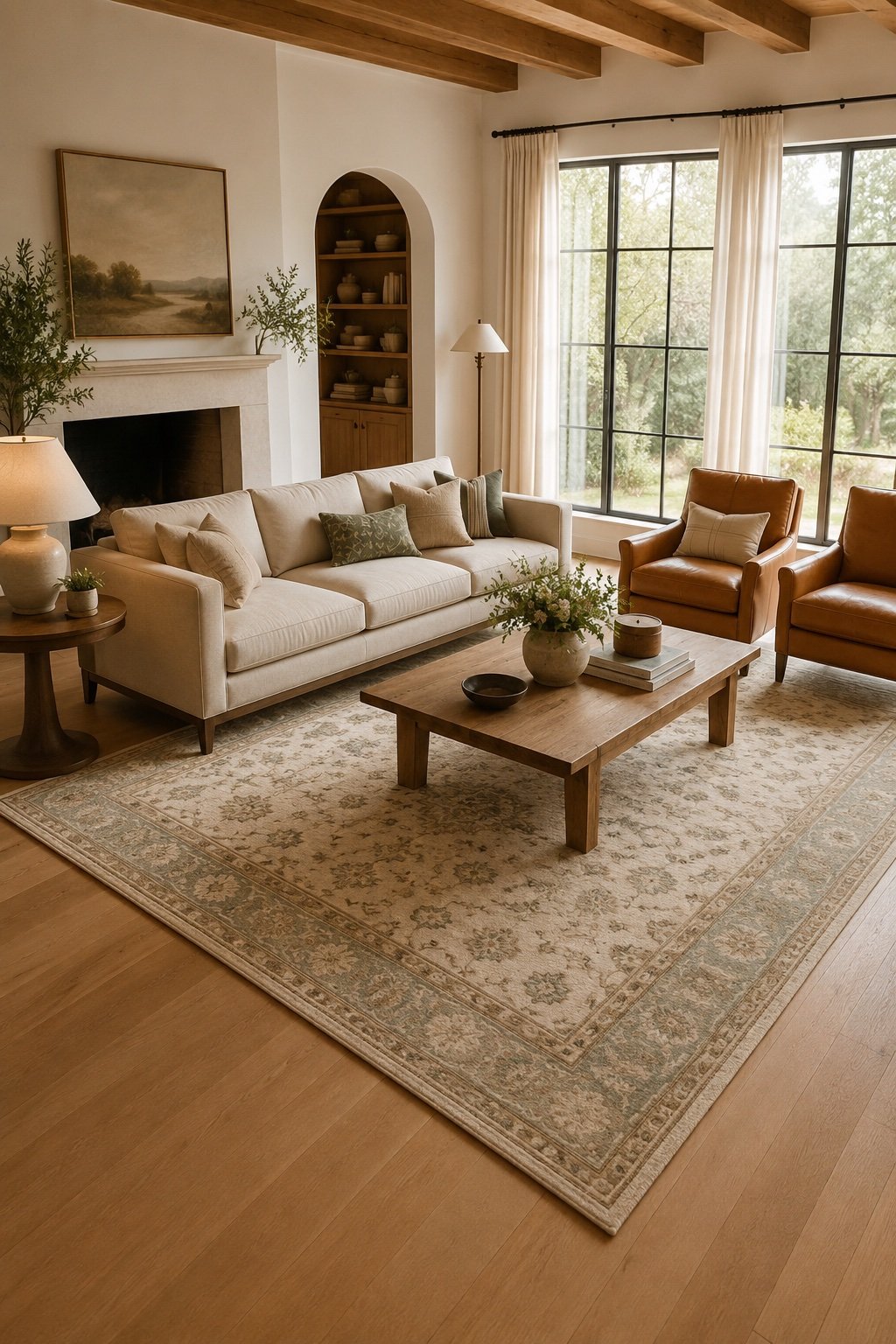
A rug that is too small is the most common decorating mistake there is, and the most expensive to fix twice. The good news is that a living room rug size guide fits on one page. Learn a handful of rules once and you will walk into any room and know exactly what fits.
Here is the size guide by room, plus the front-legs rule that solves most living rooms.
The one rule to remember: front legs on
In any seating area, the rug should be large enough that at least the front legs of every sofa and chair sit on it. This ties the furniture into one group. A rug floating in the middle with everything off it is the postage stamp look, and it makes even a big room feel cheap.
Bigger is almost always better. When in doubt, size up.
Living room
The three sizes that cover most rooms:
- 8 by 10: the everyday living room default. Front legs of the sofa and chairs on it, coffee table fully on.
- 9 by 12: for larger or open-plan rooms. All furniture legs sit fully on the rug, the most luxurious look.
- 5 by 8: only for small apartments, or a rug that lives entirely under the coffee table. Use it knowingly, not by accident.
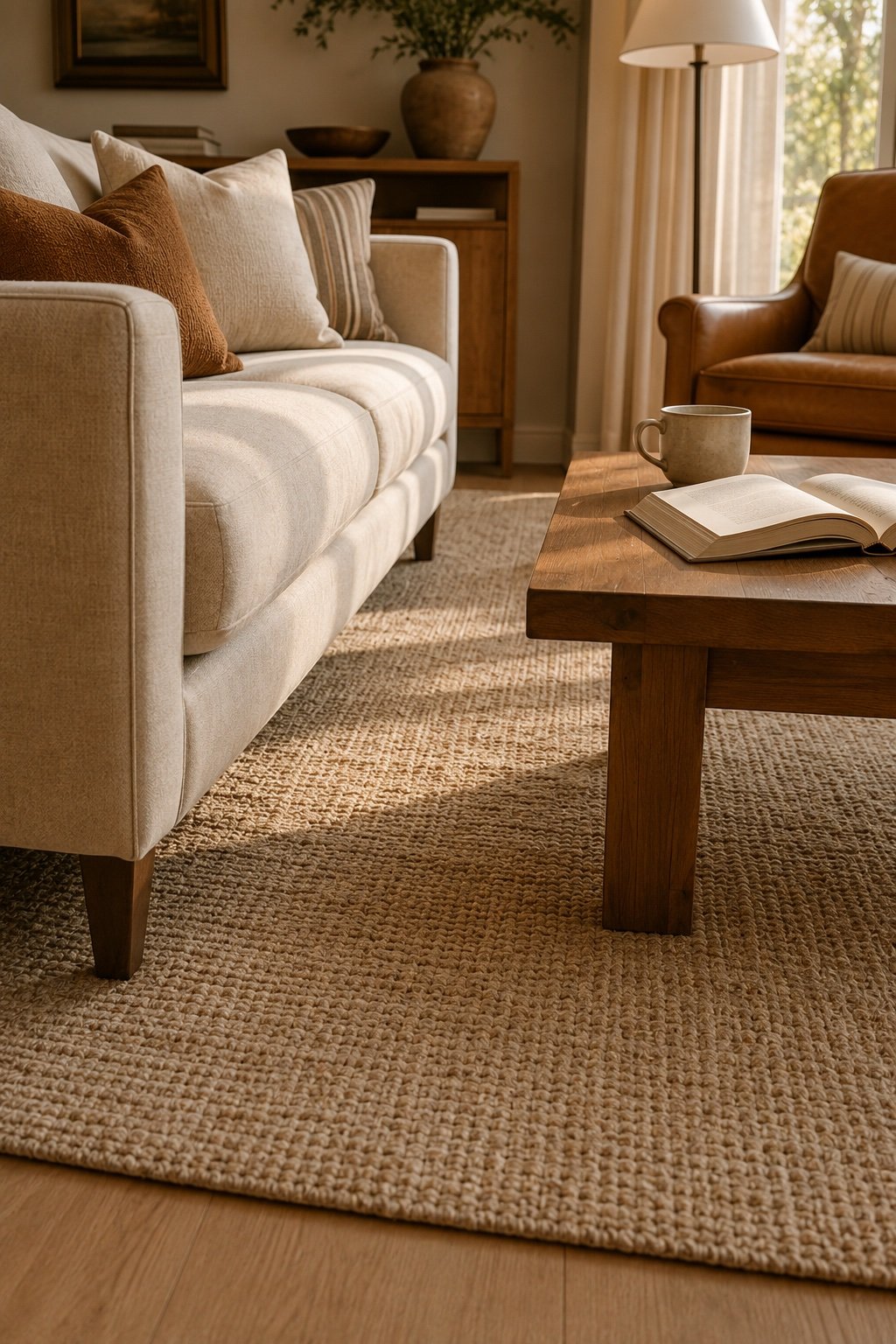
Leave 10 to 18 inches of bare floor between the rug edge and the walls so the room can breathe. In a very small room, 8 inches is fine.
Quick math for any room: measure the seating area from the back of the sofa to the front of the chairs across from it, and the width from arm to arm. Subtract about 12 inches from each direction (the part of the furniture that sits off the rug). That is your rug size.
Sectionals and open plans
A sectional needs a rug that reaches under the front legs on both sides of the L. For most sectionals that means a 9 by 12, or an 8 by 10 turned to run along the longer side. In an open-plan room, the rug is what tells you where the living room ends. Size it to the seating group, not to the whole space, and leave at least 12 inches between it and the dining rug if there is one.
Round rugs
Round rugs work under a round dining table, in an entry with a center table, or to break up a room full of straight lines. They do not work under a standard sofa arrangement, because the corners of the furniture end up off the rug. Size a round rug the same way: table diameter plus 24 inches on every side.
Bedroom
You want the rug to frame the bed with a soft landing on both sides, so your feet hit wool, not cold floor.
- Queen bed: an 8 by 10 under the lower two-thirds of the bed, extending 18 to 24 inches past each side.
- King bed: a 9 by 12, same placement.
- Full or twin: a 5 by 8 under the lower half, or a runner along the open side.
- Budget alternative: two runners, one on each side of the bed.
Skip putting nightstands on the rug. The rug starts about a foot below them.
Dining room
The rule here is about the chairs. The rug must be large enough that chairs stay on it when pulled out to sit down.
Measure your table and add at least 24 inches on every side. For a standard six-seat table that usually means an 8 by 10; for eight seats, a 9 by 12. A rug that catches the back chair legs mid-pull-out is a daily annoyance and a tripping hazard.
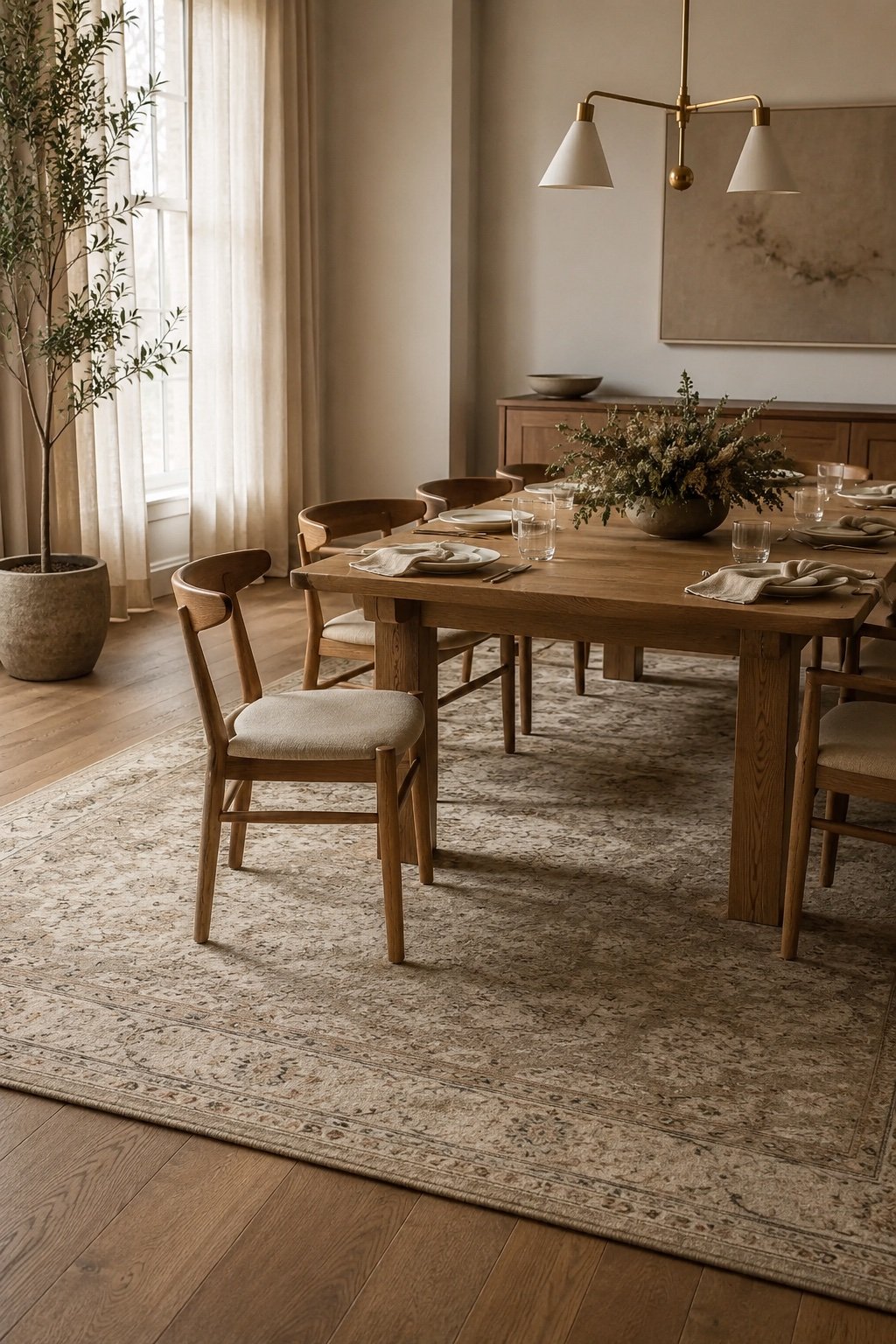
Flat weaves and low pile are easier to slide a chair across and to clean after dinner. Skip shag under a table.
Kitchen
A runner in front of the sink and stove is the most useful rug in the house. Leave about 6 inches between the runner and the cabinet toe kick so doors and drawers clear it. A 2 by 6 fits most galley runs; a 2.5 by 8 suits a longer counter. Washable is the right call here.
Entryway and hallway
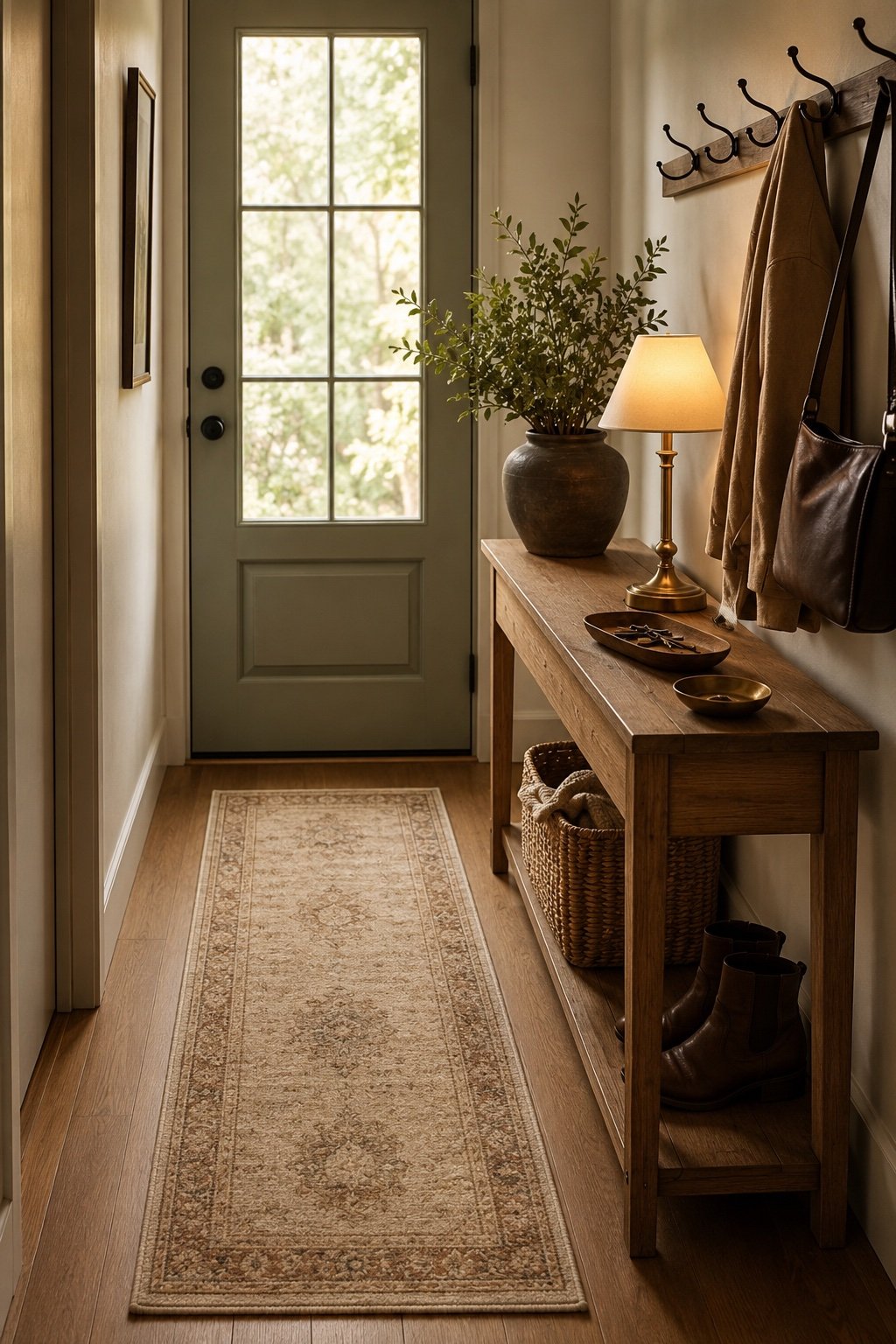
- Entryway: a 3 by 5 or a small runner, durable and washable, since it takes the most dirt.
- Hallway: a runner that leaves 4 to 5 inches of floor on each side and stops about a foot short of each end.
The designer move: layering
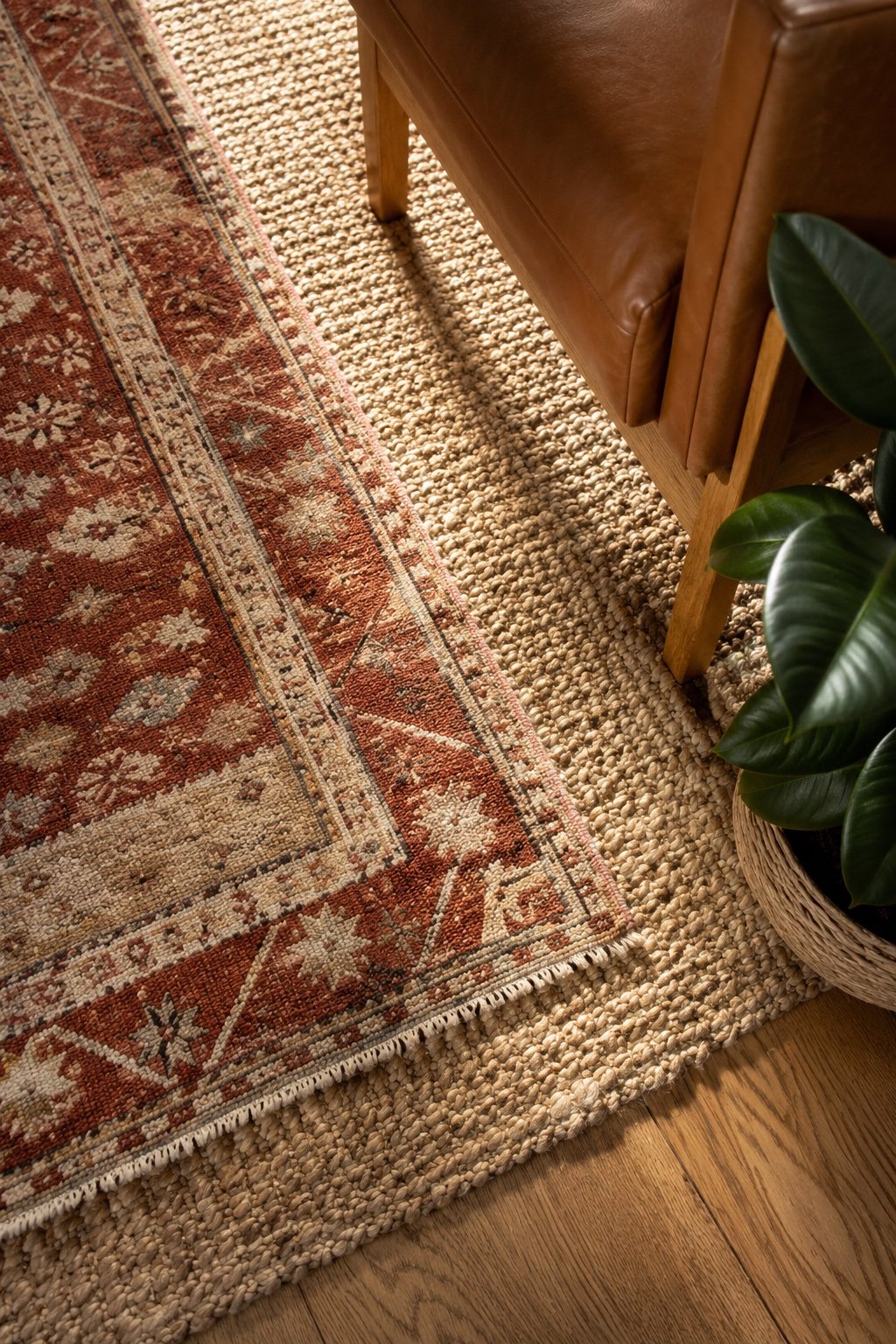
If your room is between sizes, or your rug is a little small, layer it. A smaller patterned or wool rug over a large natural-fiber base (jute or sisal) fixes the scale problem and adds depth. It is also the cheapest way to make a high-traffic room feel warm for fall.
A quick material note
Wool wears best and feels warmest underfoot but costs more. Natural-fiber rugs like jute and sisal are the affordable base for layering. Washable polyester rugs have improved a lot and are the right call for entryways, dining rooms, and homes with kids or pets.
Do not forget the pad
A rug pad keeps the rug flat, stops it sliding, and makes a thin rug feel twice as thick. Buy it about 1 inch smaller than the rug on every side so the edges taper to the floor and the pad never shows. On carpet, use a gripper made for rug-on-carpet, not a standard pad.
Before you buy: tape it out
Put painter’s tape on the floor in the exact rug dimensions and live with it for a day. You will feel immediately whether the furniture relationship works. It takes five minutes and saves a return.
Getting the big pieces right first makes everything else easier, including choosing the sofa itself. If you remember one number from this guide, make it 8 by 10.
Keep Reading
📖 9 Living Room Layout Mistakes (and the Fixes That Cost Nothing)
📖 The Sofa Buying Guide Nobody Gives You: Sizes, Fabrics, and What Things Cost
📖 How to Choose a Dining Table: Size, Shape, Material, and What It Costs