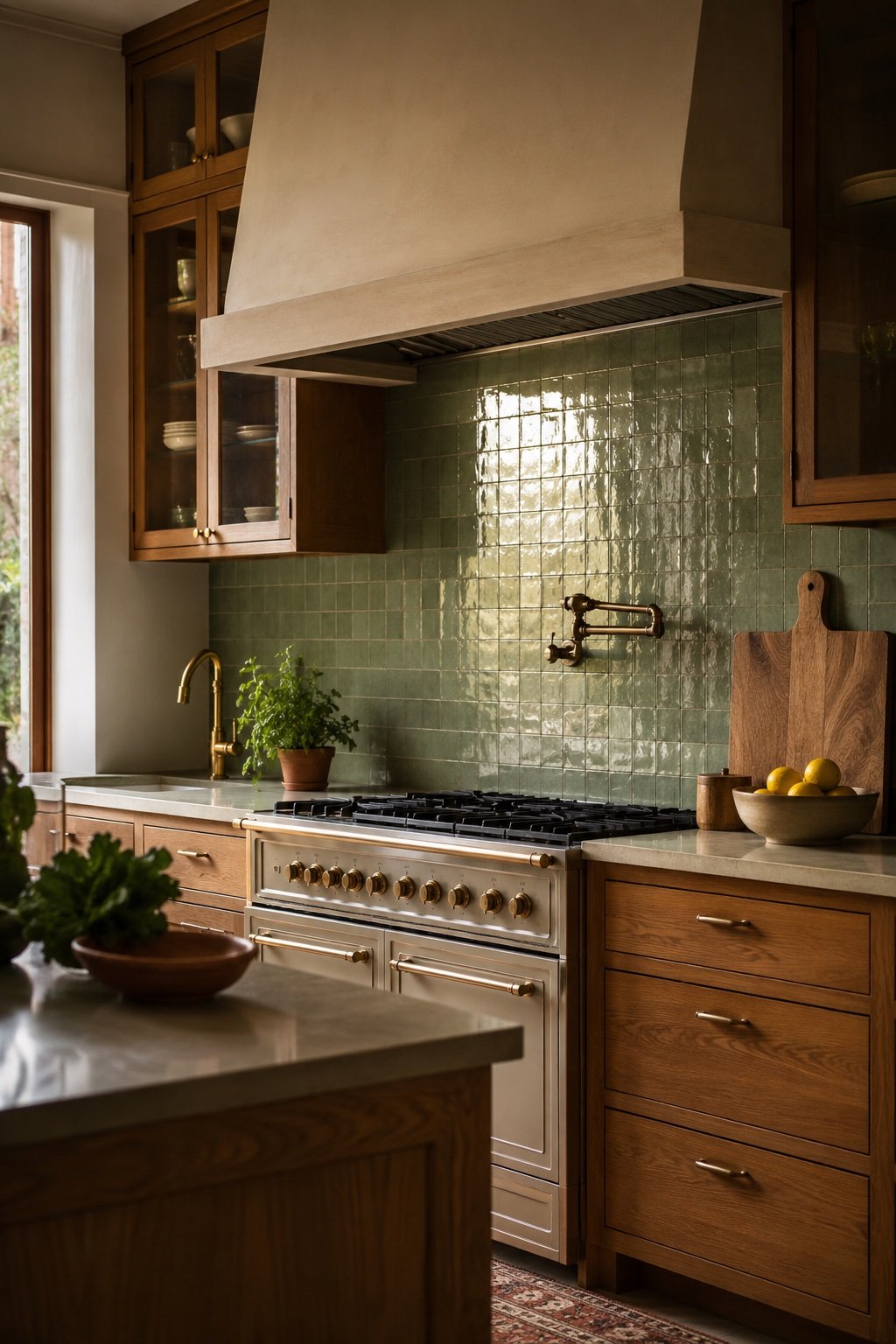
The all-white subway kitchen had a long run. What is replacing it is warmer and older-feeling: the vintage kitchen tile trend, in zellige, checkerboard, and hand-glazed finishes that look like they have been there for a hundred years. It is the biggest kitchen change heading into 2026, and the range runs from a full backsplash to a weekend swap.
Here are 18 vintage tile looks to steal, from the showstoppers to the easy updates, plus what to know before you buy a single box.
The hero: zellige
1. Warm-white zellige backsplash
Hand-glazed Moroccan zellige has subtle color variation and an uneven surface that catches light. Even in white it reads warm and handmade, the opposite of flat subway tile.
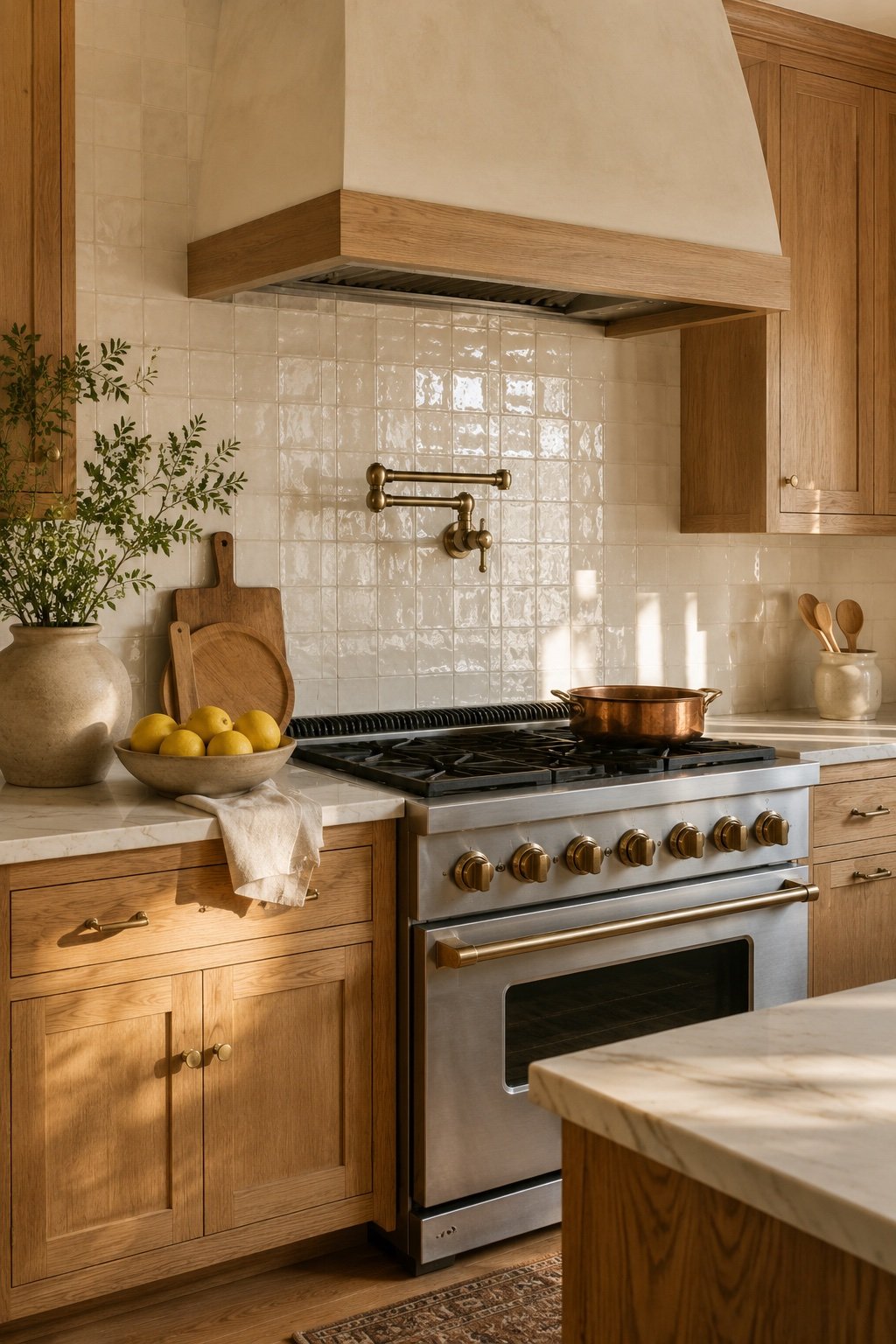
2. Zellige in a warm neutral
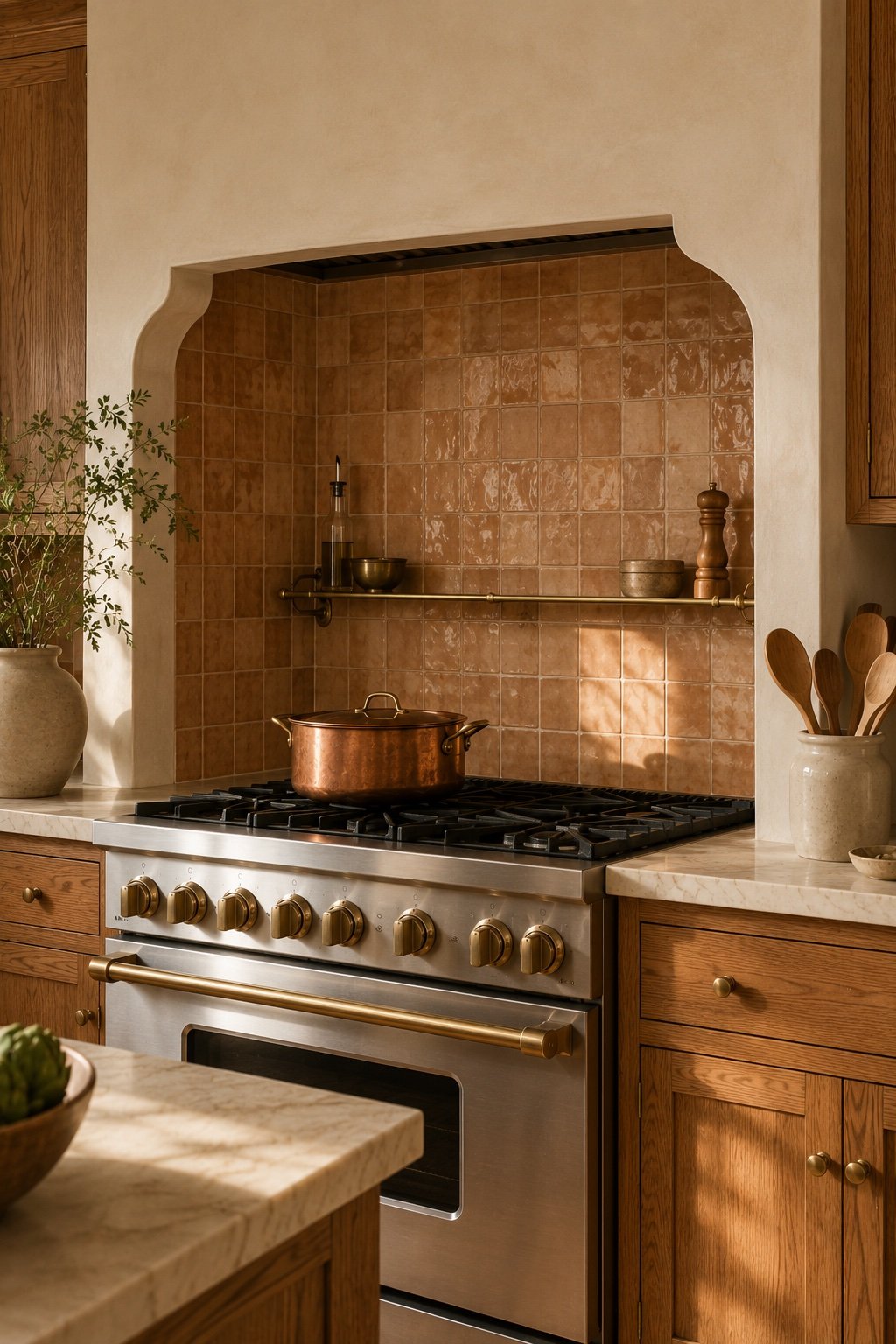
Terracotta, ochre, honey, or a soft olive turns the backsplash into the color story of the whole kitchen. One warm-toned wall of zellige is all a neutral kitchen needs.
3. Green or sage zellige
The most requested color of the year. Sage zellige against wood cabinets and brass hardware is the look defining 2026 kitchens. It works because both the tile and the wood are warm; against cool gray cabinets it goes flat.
4. Zellige set vertically or in a stack
Running the tiles vertically or in a straight stack instead of a brick offset feels more modern while keeping the handmade texture. It also makes a low backsplash look taller.
Pattern plays
5. Checkerboard floor in muted tones
Not black and white. Think terracotta and cream, or sage and oatmeal. A muted checkerboard floor is vintage character without the diner cliché.
6. Classic checkerboard, small scale
In a small kitchen, a smaller checkerboard tile reads charming rather than loud. Six-inch squares or smaller keep the pattern from taking over.
7. A diagonal or diamond layout
Setting square tiles on the diagonal is an old-house move that instantly ages a floor in the best way. It also hides walls that are not quite square.
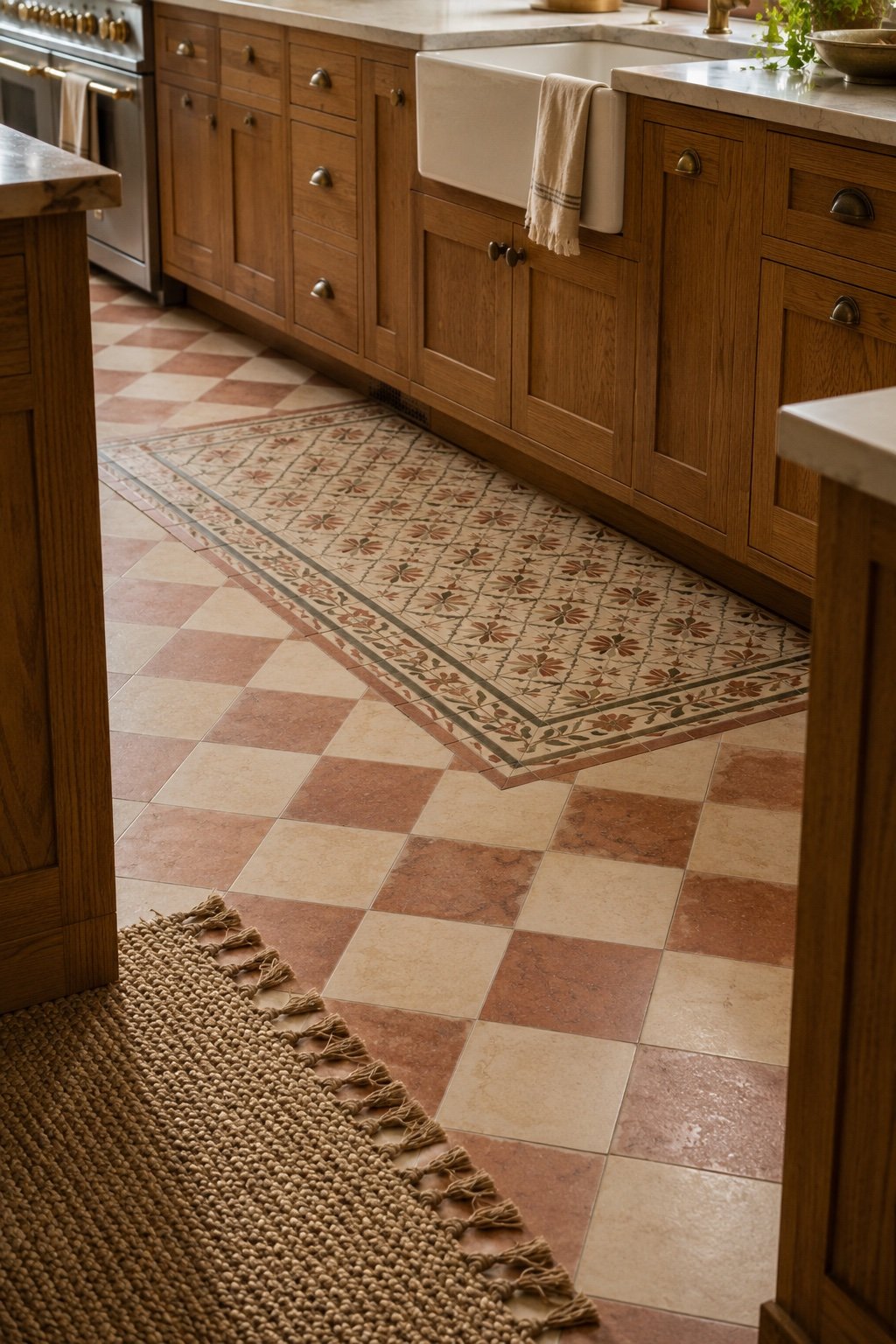
8. Encaustic-look patterned tile
Cement-look patterned tile as a rug under the sink or in front of the range adds vintage European character in one small zone. Frame it with a plain border tile so it reads as intentional.
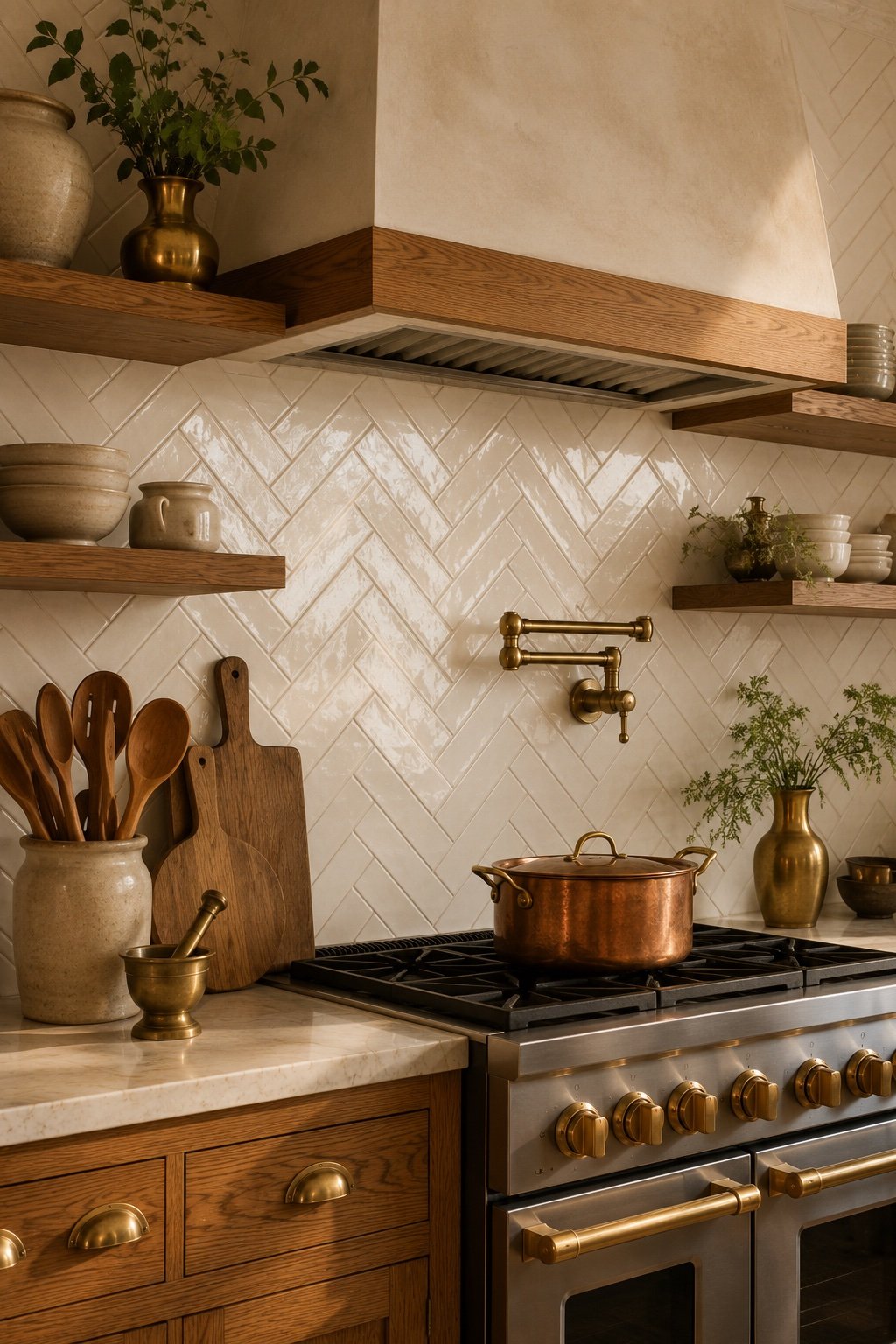
9. Herringbone backsplash
Even plain tile laid in herringbone reads custom and old-world. It is the layout doing the work, not the tile, which makes it one of the cheapest ways into the trend.
Shape and finish
10. Fish-scale or scallop tile
A scalloped backsplash brings a soft, vintage feel, lovely in cream or dusty rose behind a range.
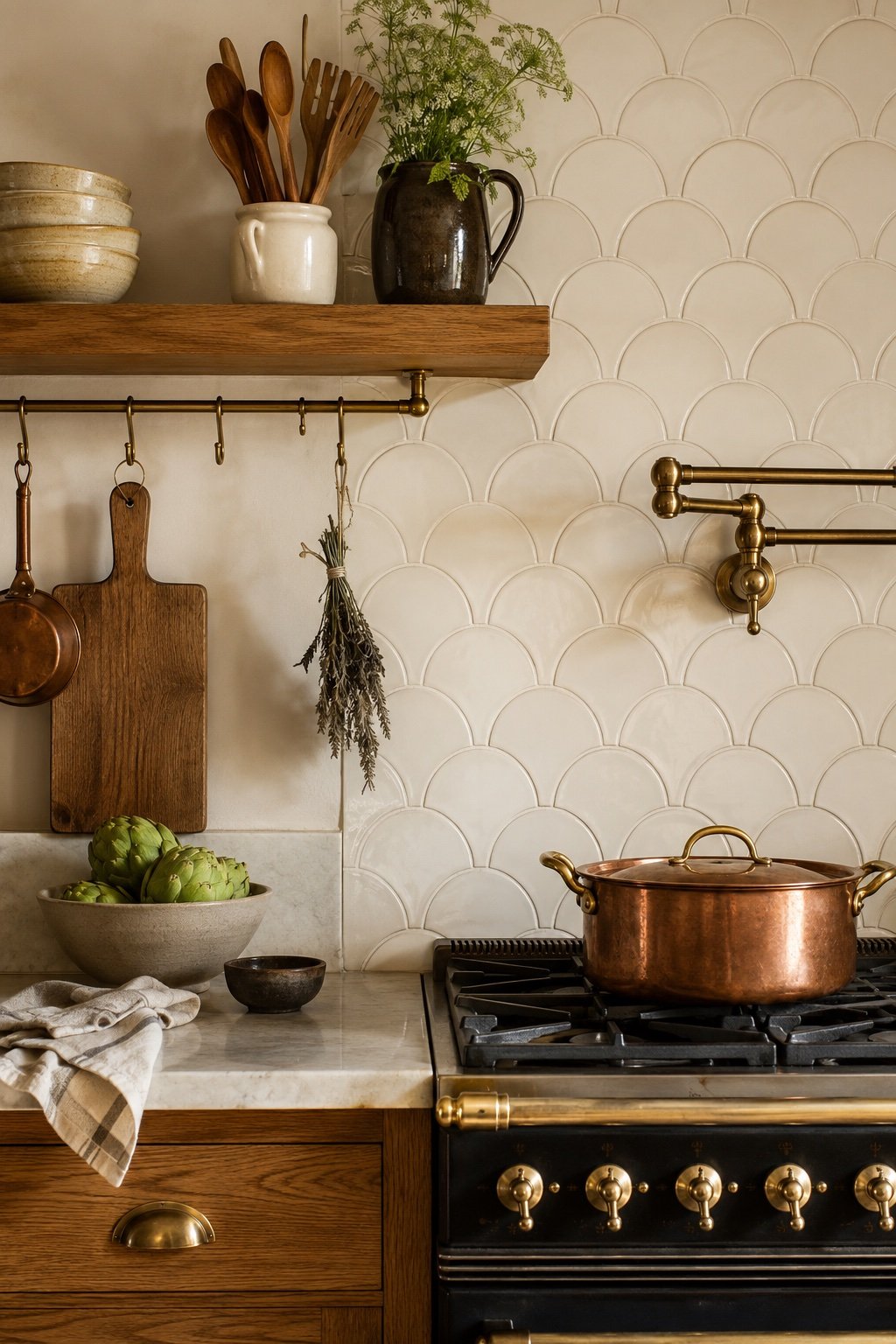
11. Square tile instead of subway
A simple 4 by 4 square in a hand-glazed finish already feels more period-correct than a 3 by 6 subway.
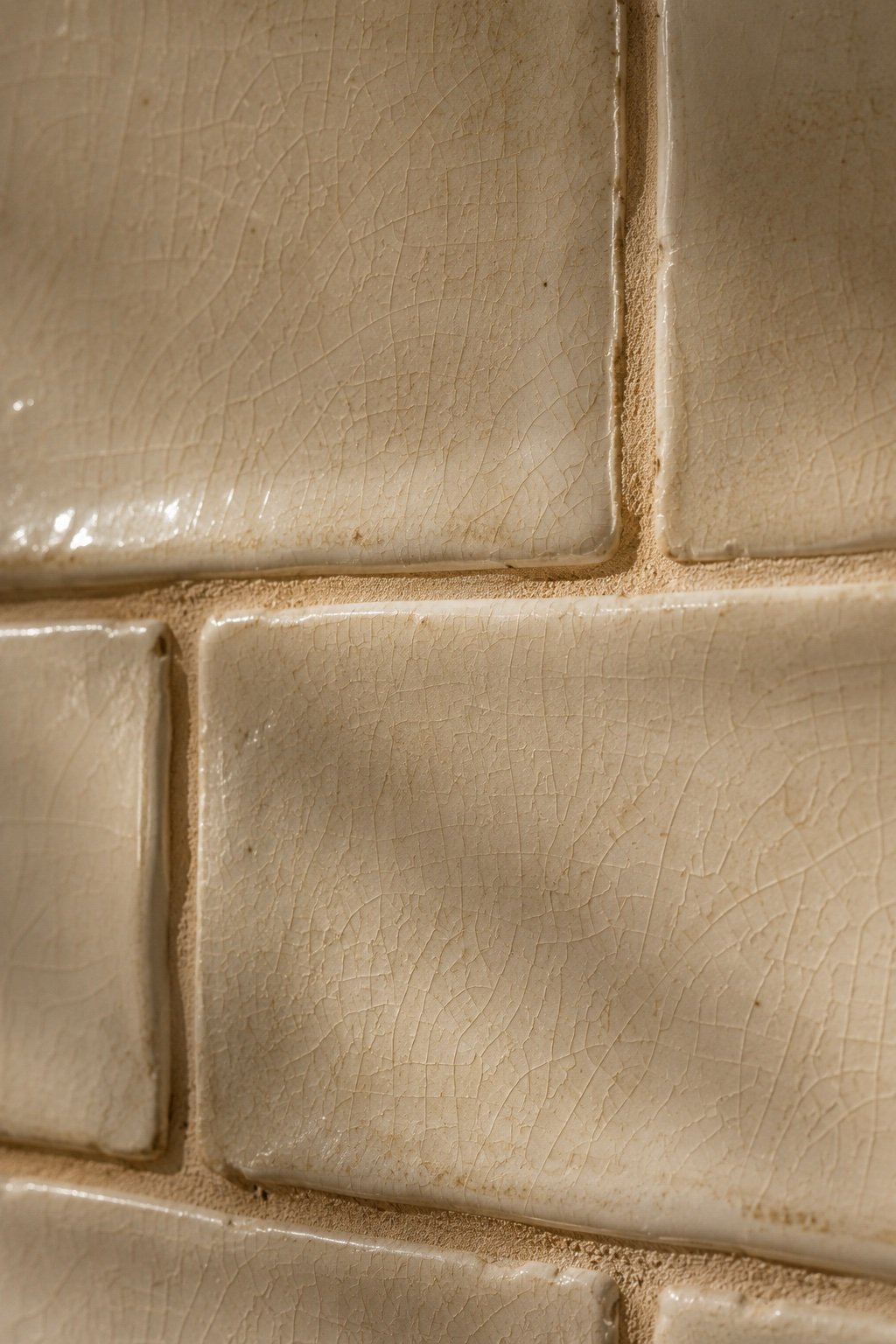
12. Handmade-look crackle glaze
The fine crackle in the glaze is what says this has been here for decades. Affordable ceramic versions are easy to find now.
13. Picket tile
Elongated picket (arrow) tile is a fresh vintage shape that plays well with both modern and farmhouse kitchens.
The details that sell the look
14. Contrasting or colored grout
A warm gray or beige grout against cream tile emphasizes the handmade pattern. Grout color changes everything, so test it on a spare tile before you commit to the wall.
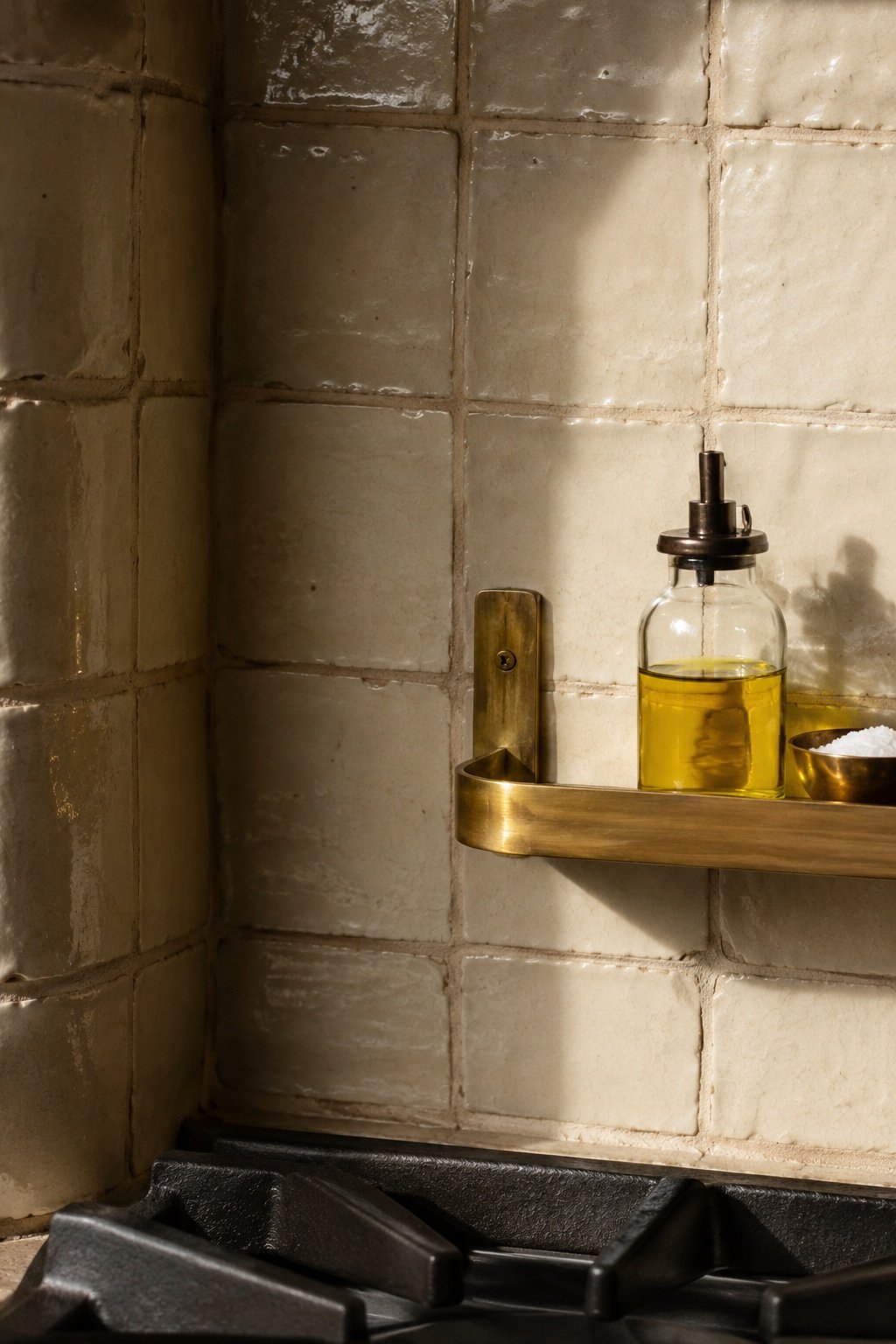
15. Tile all the way to the ceiling
Behind the range or on one full wall, floor-to-ceiling tile feels intentional and old-house grand. It also skips the awkward question of where the tile should stop.
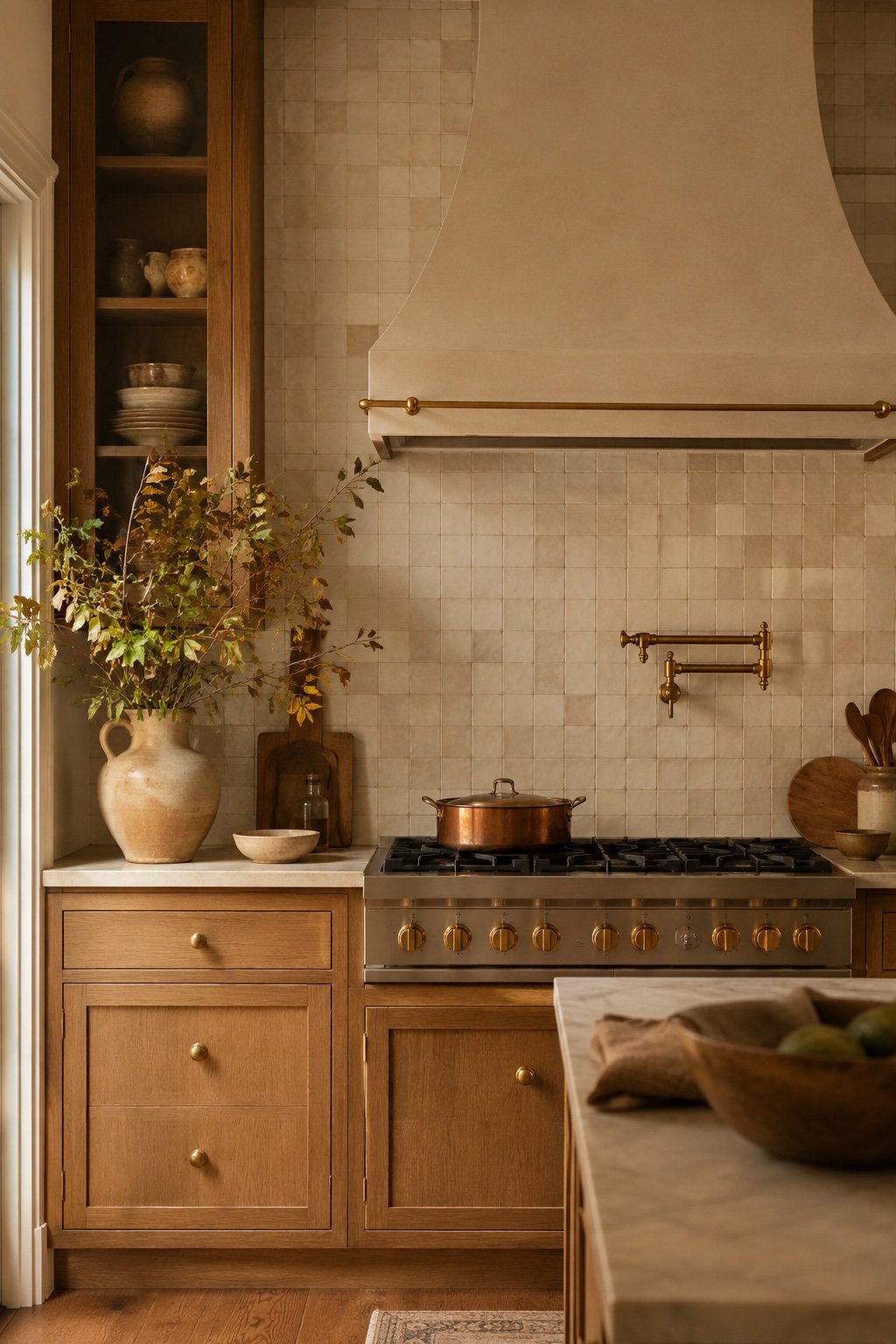
16. A tiled range niche or shelf
Tiling into a niche behind the stove frames it like a hearth, the heart of a vintage kitchen. A small shelf in the niche holds oil and salt within reach.
The renter-friendly versions
17. Peel-and-stick vintage tile
Good peel-and-stick has come a long way. Zellige and checkerboard looks install in an afternoon and come off cleanly, which makes them ideal for renters. Keep it away from the area directly behind a gas burner.
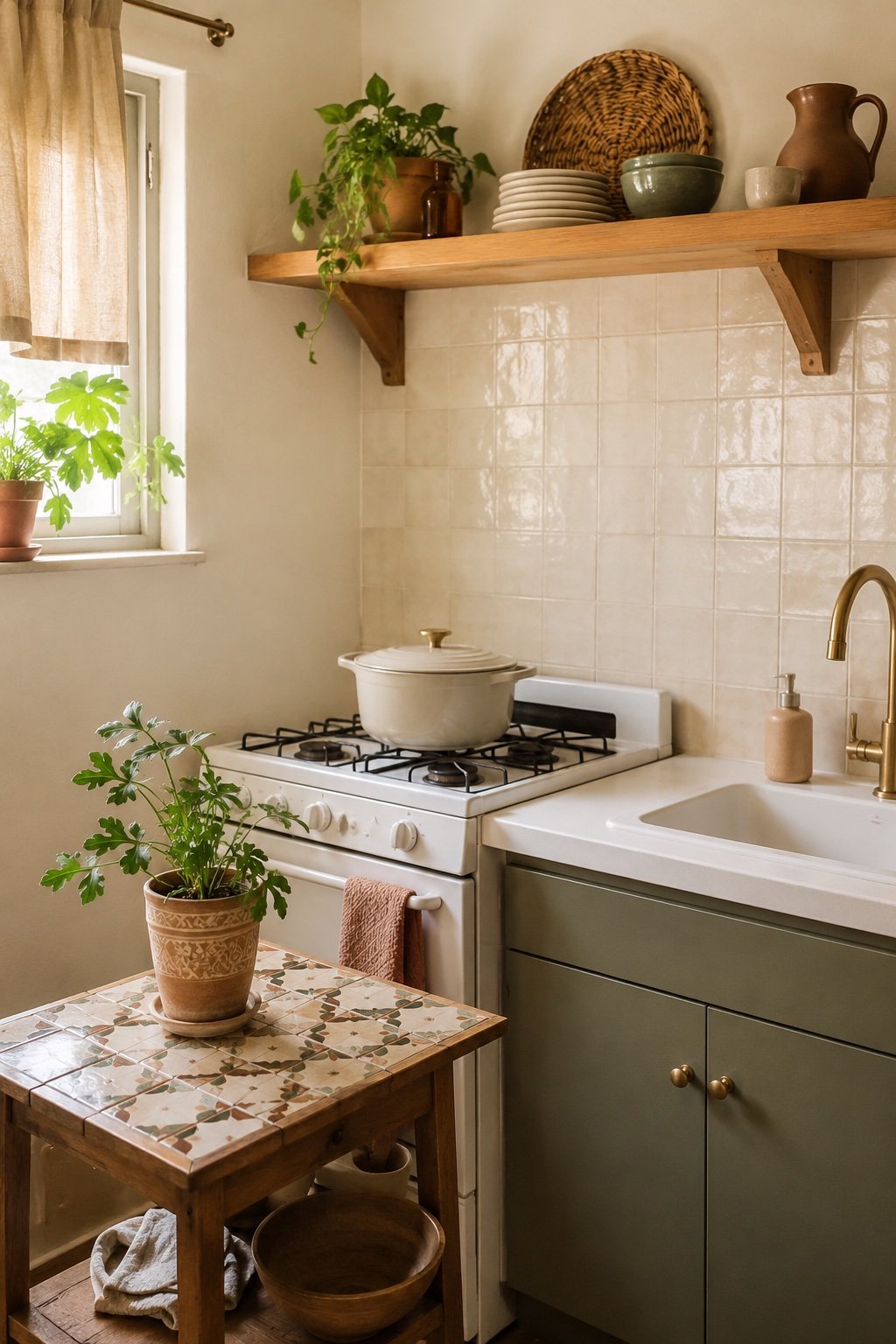
18. A tiled tabletop or tray
Cannot touch the walls? A vintage tile-topped side table or a tile-set tray brings the pattern in with zero commitment.
Before you buy
- Order samples, then a whole box. Handmade tile varies a lot from piece to piece. One sample does not show you the wall.
- Buy 10 to 15 percent extra. More for zellige, where you will set aside pieces that are too chipped or too dark.
- Check the finish against your cabinets in daylight and at night. Warm white next to a cool white cabinet looks dingy.
- Match the tile to the room’s age. A 1920s house takes square and hexagon tile naturally; a new build can carry zellige and picket more easily.
Living with it
Real zellige is porous and should be sealed before and after grouting, then once a year behind the stove. The uneven surface means a slightly thicker grout joint, which is part of the look. Glazed ceramic tile needs nothing more than regular cleaning, so if the kitchen gets heavy use, a zellige-look ceramic gives you the character without the upkeep.
Where to begin
If you are doing one thing, make it the backsplash in a warm-toned or sage zellige. It is the single change that shifts a kitchen from builder grade to full of character, and it anchors every other warm choice you make in the room. Pair it with open shelving and the tile gets to be the star.
Keep Reading
📖 Kitchen Witch Decor: How to Make a Cozy, Witchy Kitchen for Fall
📖 Open Shelving in the Kitchen: The Honest Pros, Cons, and How to Style It
📖 Kitchen Counter Styling: What to Keep Out (and What to Hide)