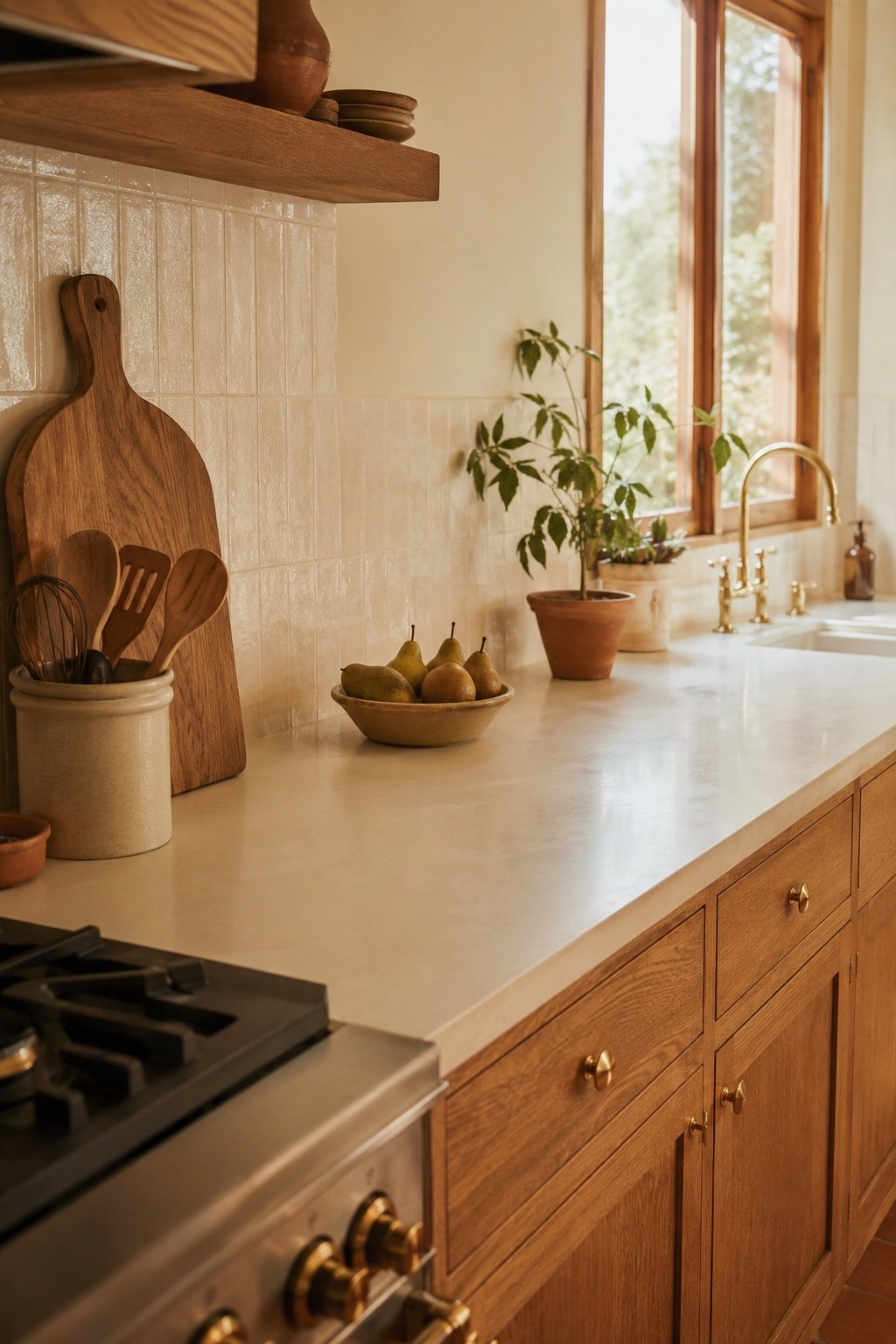
Kitchen counters are where good intentions go to pile up. The mail, the vitamins, the three appliances you use twice a year. Good kitchen counter decor is not more things on the counter; it is the right few things out and everything else gone. Here is the editing formula: what earns its spot, what belongs behind a cabinet door, and how much empty counter you actually need.
The rule: everything out is either used daily or beautiful
That is the whole test. If an item is not used almost every day and is not nice to look at, it goes away. Everything that fails both is what makes a kitchen look cluttered no matter how clean it is. Run every counter object through that filter and you are halfway done.
The numbers: how much counter to keep clear
Cooking needs landing space, and the kitchen design guidelines are a useful floor:
- At least 24 inches of clear prep space, ideally next to the sink. That is the stretch where the cutting board lives while you cook.
- About 15 inches beside the stove on at least one side, for a hot pan or a plate.
- About 15 inches beside the fridge on the handle side, for the groceries.
Whatever is left after those zones is where the styling goes. In a small kitchen that may be one corner. That is fine.
What to keep out
The daily-use workhorses, if they look good:
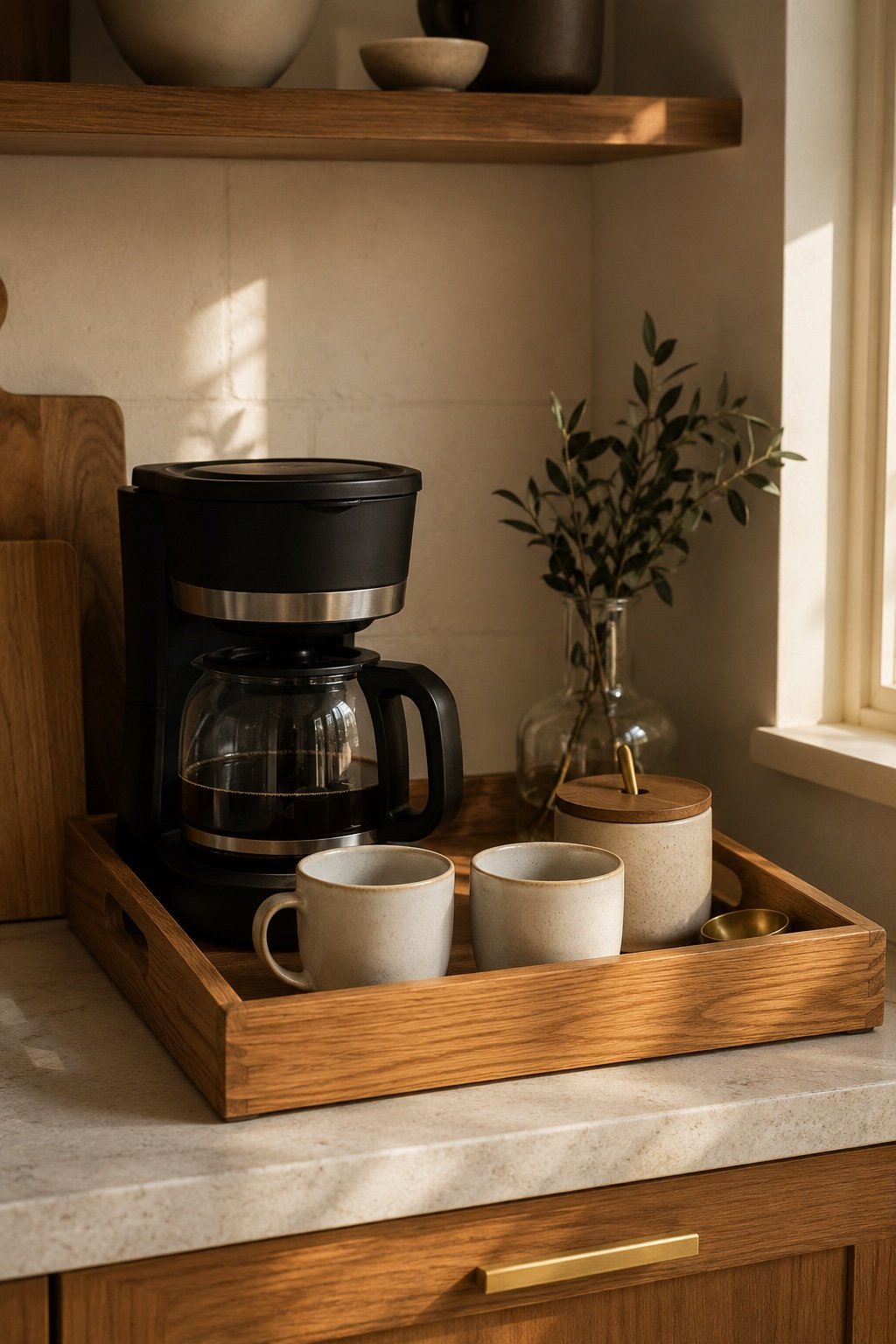
- The coffee setup, if you use it every morning. Corralled on a tray or board, it becomes a coffee station instead of clutter.
- A crock of cooking utensils by the stove, only the ones you reach for constantly. Six to eight tools, not twenty.
- A wood cutting board leaned against the backsplash, both useful and warm.
- Salt, pepper, and oil by the range, decanted into nice vessels if you want the upgrade.
The beautiful pieces that earn their spot:
- A bowl of fruit or produce, the original kitchen decor, adds instant color and life.
- A small plant or herb pot on the windowsill. If the window is dim, a low light houseplant like a zebra haworthia or a heartleaf philodendron will cope better than herbs.
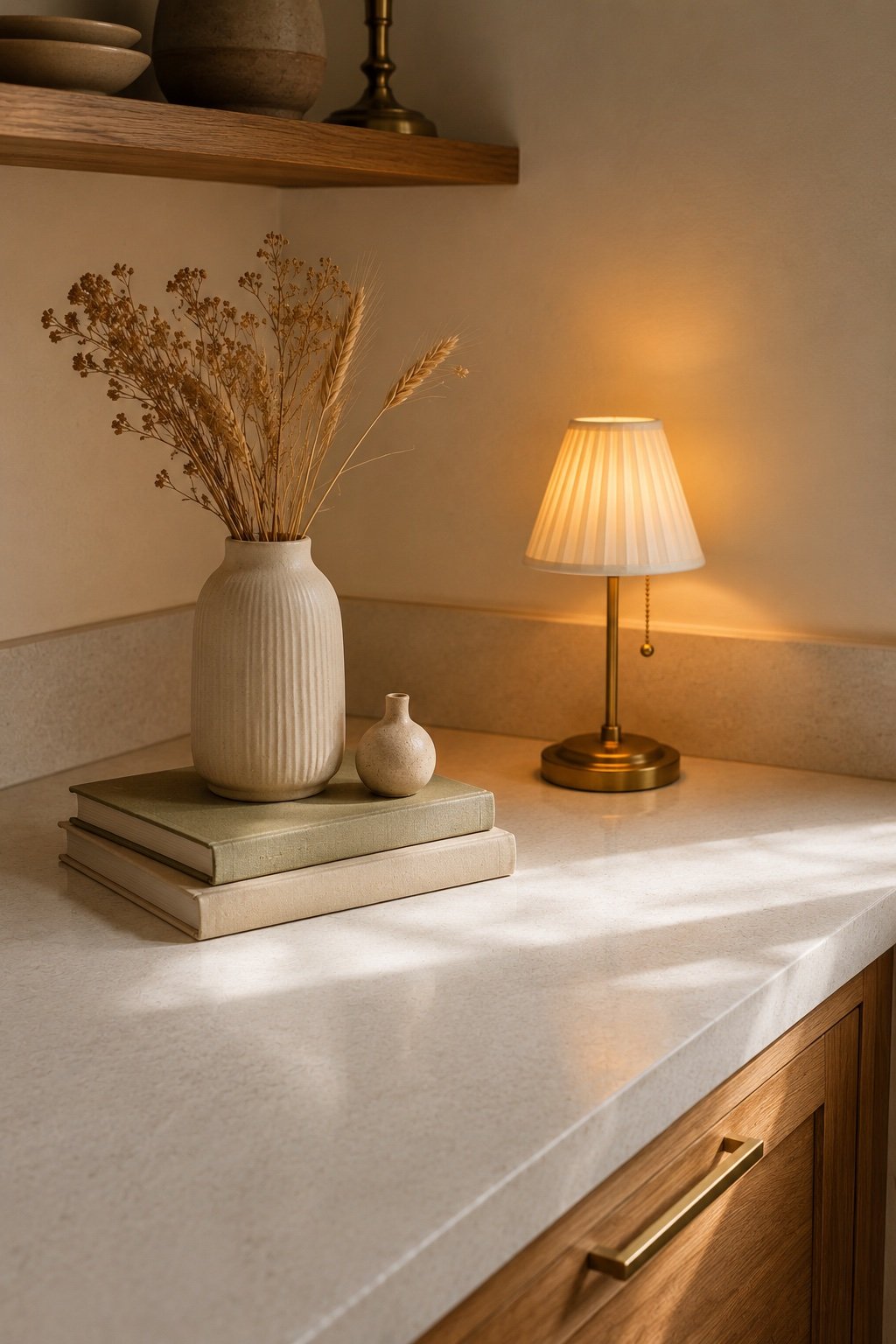
- A stack of two cookbooks with a warm-toned object on top.
- One vase with a few stems, dried or fresh.
What to hide
- Appliances you use weekly or less: the blender, toaster, stand mixer, air fryer. Into a cabinet or an appliance garage.
- The paper pile: mail, school forms, receipts. These need a home outside the kitchen, like a wall file by the door.
- Vitamins, medications, chargers: a small drawer or a lidded box.
- Cleaning supplies: under the sink, not on the edge of it.
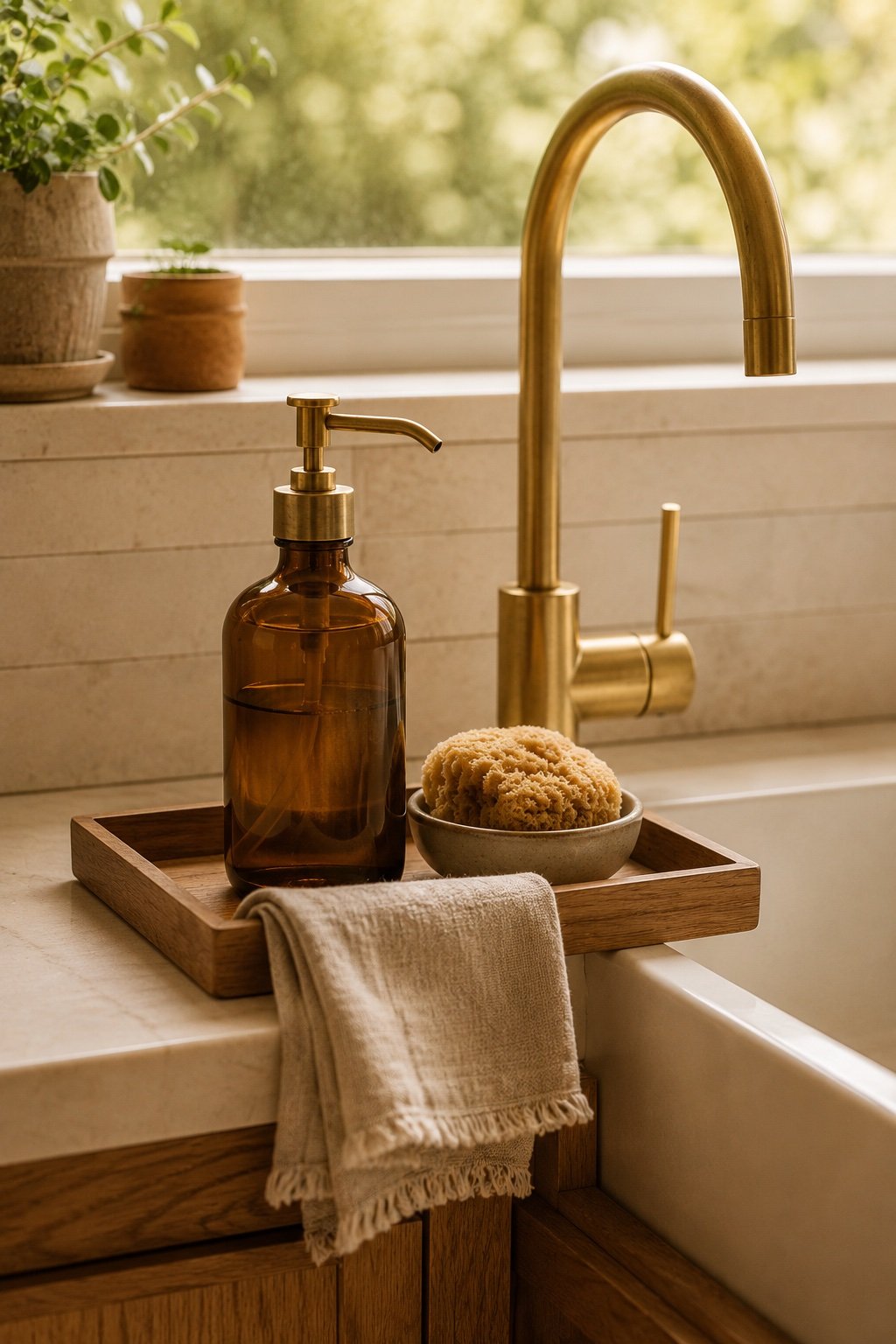
- Dish soap and sponge: at minimum, decant the soap and use a small tray so the sink zone reads tidy.
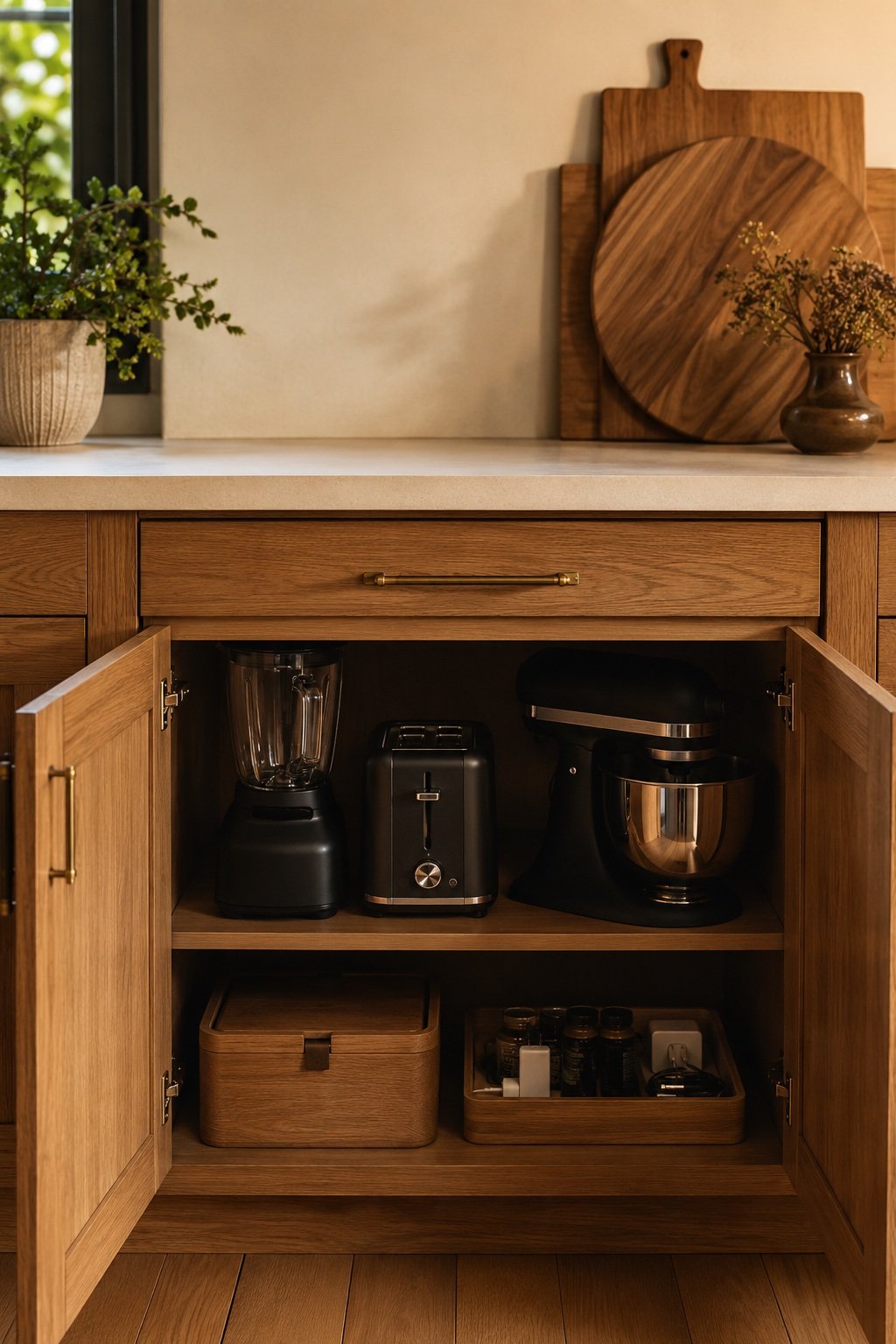
If there is no cabinet space for an appliance you use weekly, put it on a lower shelf in a pantry or on a rolling cart. It is still out of sight, and one step away.
The styling formula for what stays
Group into zones and trays. A tray under the coffee things, a board under the oils. Corralling loose items into a defined zone is what turns stuff on the counter into a station. Your eye reads one object instead of six.
Use the rule of three and vary the height. A styled corner: a stack of cookbooks (low), a plant or vase (tall), and one small object between them (medium). Odd numbers, different heights, done.
Leave real working space empty. At least one large stretch of counter should stay completely clear for cooking. Empty counter is a feature, not a gap, and it is what makes the styled zones look intentional.
By kitchen type
- Small galley: one zone only, usually coffee or the sink. Everything else lives on a wall rail or in cabinets.
- L-shape: style the corner, where it is hardest to work anyway, and keep the long runs clear.
- Island: a bowl of fruit or a single vase in the middle, nothing else. The island is the main prep space; treat it that way.
- Open shelving above the counter: if the shelves are styled, the counter under them should be almost bare, or the wall gets busy. Our open shelving guide covers the balance.
Small upgrades that make a big difference
- Decant what stays out: soap, oils, and dish detergent in simple glass or ceramic bottles instantly upgrade the sink and stove zones.
- A warm wood or marble board as a landing spot adds texture against hard surfaces.
- Matching or neutral canisters if you keep coffee, sugar, and flour on the counter. Three at most.
- A small lamp on the counter. Warm light in a kitchen at night is a designer trick that costs very little.
What to skip
- Word art and signs. Eat, Gather, and friends date a kitchen faster than anything.
- A knife block you do not use. A magnetic strip on the wall frees a whole square of counter.
- Decor in the prep zone. If you move it every time you cook, it is in the wrong place.
The five-minute reset
Once a day, clear everything that does not belong to a zone, wipe the surface, and return only the daily-use and beautiful items to their homes. The pile never builds because it never gets a foothold.
Building toward a full kitchen refresh? See the backsplash trend everyone is copying in our vintage kitchen tile guide. And if you only do one thing today, take the appliances you did not use this week off the counter.
Keep Reading
📖 Coffee Bar Ideas That Fit in Two Feet of Counter
📖 Open Shelving in the Kitchen: The Honest Pros, Cons, and How to Style It
📖 Kitchen Witch Decor: How to Make a Cozy, Witchy Kitchen for Fall