This post contains affiliate links. If you buy through them, I may earn a commission at no extra cost to you.
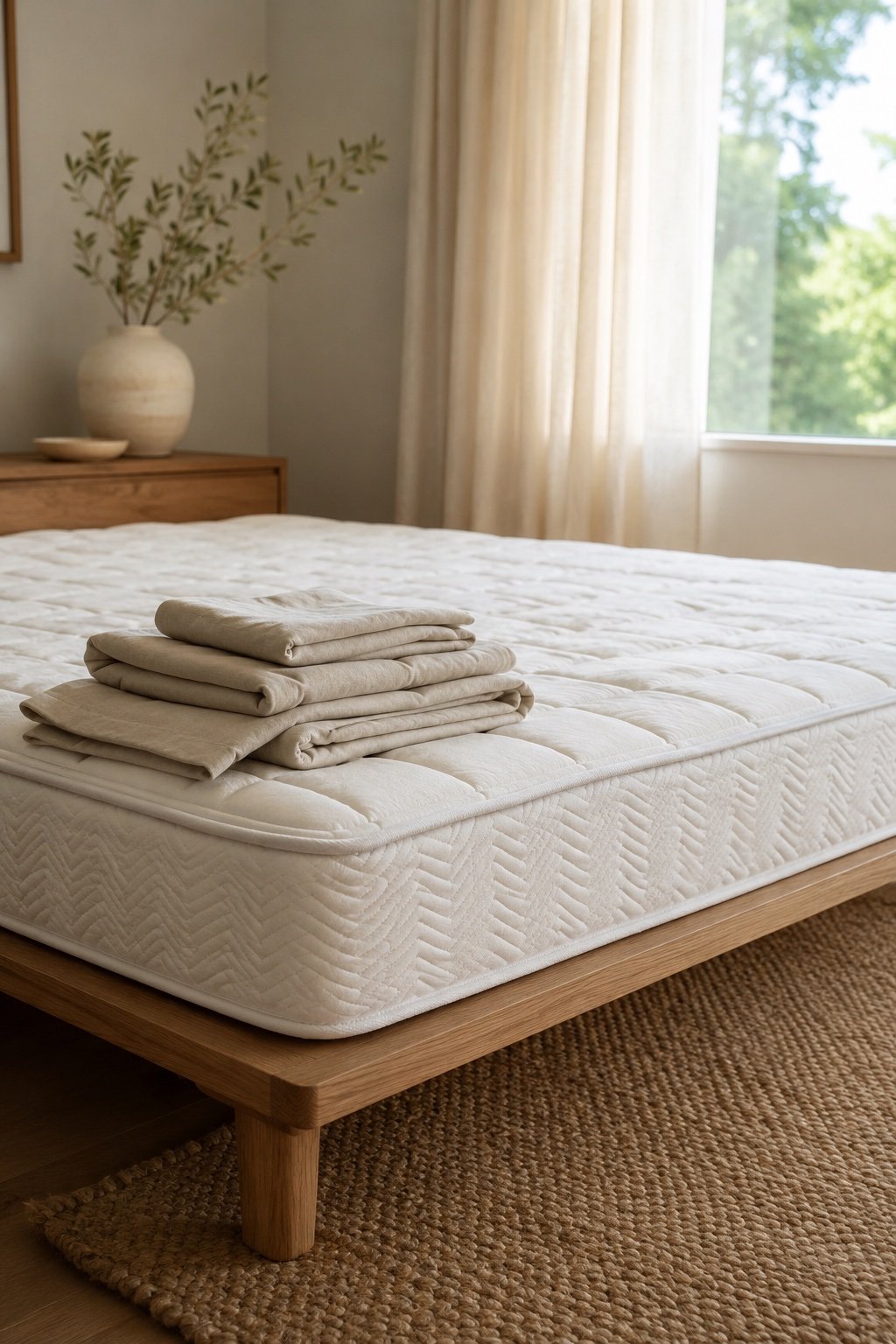
A mattress is the most expensive thing in a bedroom and the one people research the least, usually because the process is exhausting. Every brand claims to be the best, every review site ranks a different winner, and the prices run from a few hundred dollars to several thousand for what looks like the same white rectangle. So is an expensive mattress worth it, or are you paying for marketing?
The answer comes down to what the money buys (materials, edge support, cooling) and one number almost nobody calculates: what the mattress costs per year you actually sleep on it. Here is how to work it out, and which tier fits the way you sleep.
The short answer
Sometimes. Above a certain floor, roughly the mid-range, you are paying for durability, edge support, cooling, and better materials, not for a dramatically different night’s sleep on night one. A great budget mattress can feel wonderful for the first year. The gap shows up at year three to five, when cheaper foams soften and sag while better ones hold their shape. So the honest question is not cheap versus good. It is how long you need it to last, and how particular your body is.
The four types, in one paragraph each
| Type | Typical queen price | Realistic lifespan | Sleeps hot? | Motion isolation |
|---|---|---|---|---|
| All-foam | $250 to $900 | 5 to 7 years | Often | Excellent |
| Hybrid | $600 to $2,000 | 7 to 10 years | Rarely | Good |
| Innerspring | $300 to $1,000 | 5 to 8 years | No | Poor |
| Latex | $1,200 to $3,000 | 10 to 15 years | No | Fair |
All-foam. Memory foam or poly foam layers, no springs. Quiet, good at isolating motion, and usually the cheapest to ship. It can sleep warm, and budget versions soften fastest.
Hybrid. Pocketed coils under a few inches of foam or latex. The most balanced option for most people: support and bounce from the coils, pressure relief from the top layers.
Innerspring. Mostly coils with a thin comfort layer. Bouncy and cool, but less pressure relief. Rarer now outside of budget and hotel models.
Latex. Natural or blended latex foam. Responsive, cool, and the longest lasting of the foams, and priced to match.
What actually drives the price
Materials and density. Higher-density foam and individually pocketed coils cost more and last longer. Low-density foam is where budget mattresses cut corners, and it is exactly what causes the body impression that ruins a mattress by year three. If a listing does not state foam density, assume it is on the low side.
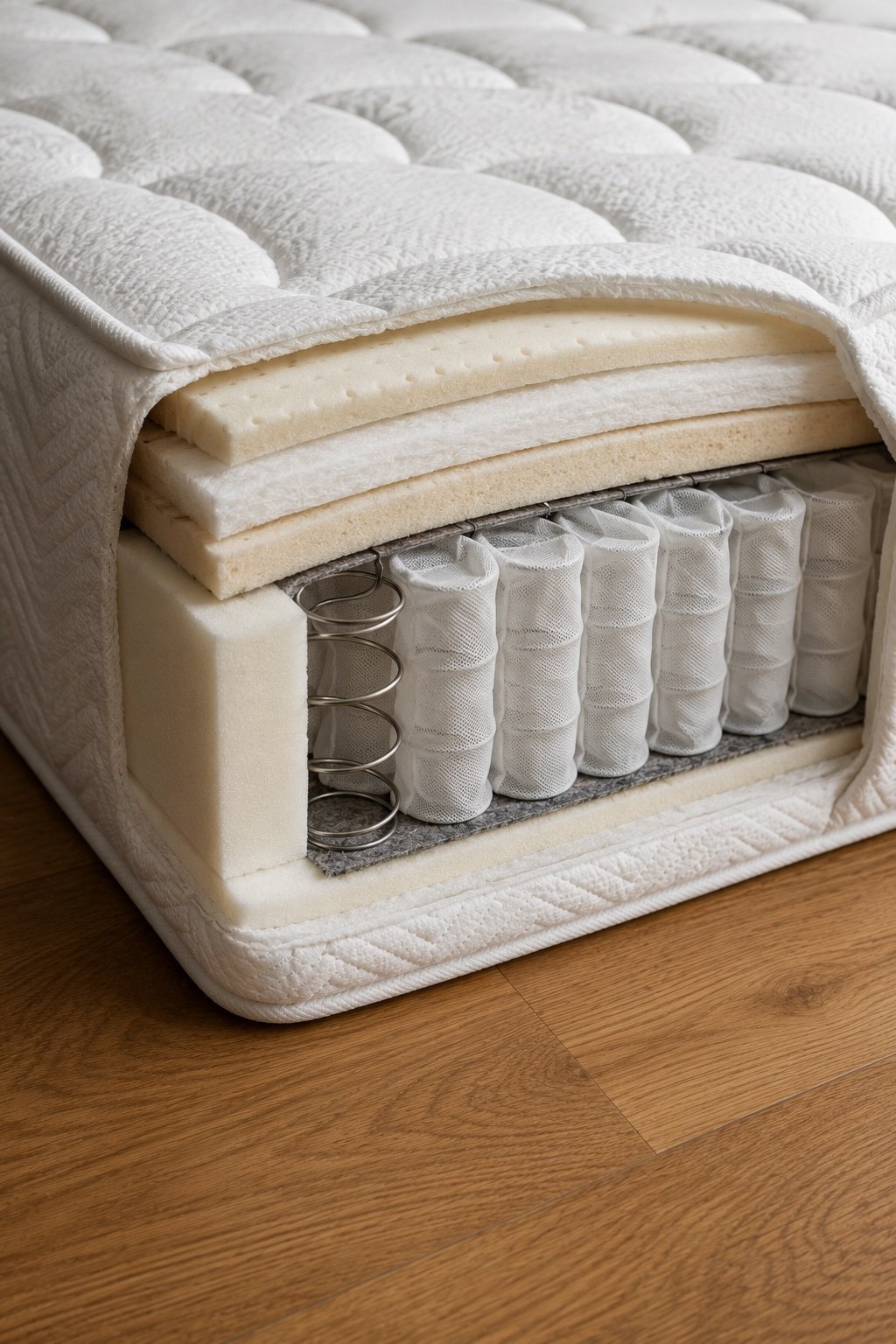
Edge support. Reinforced edges, usually on hybrids and pricier models, mean you can use the full surface and sit on the side without rolling off. It is a quiet luxury you notice every day and never see in a photo.
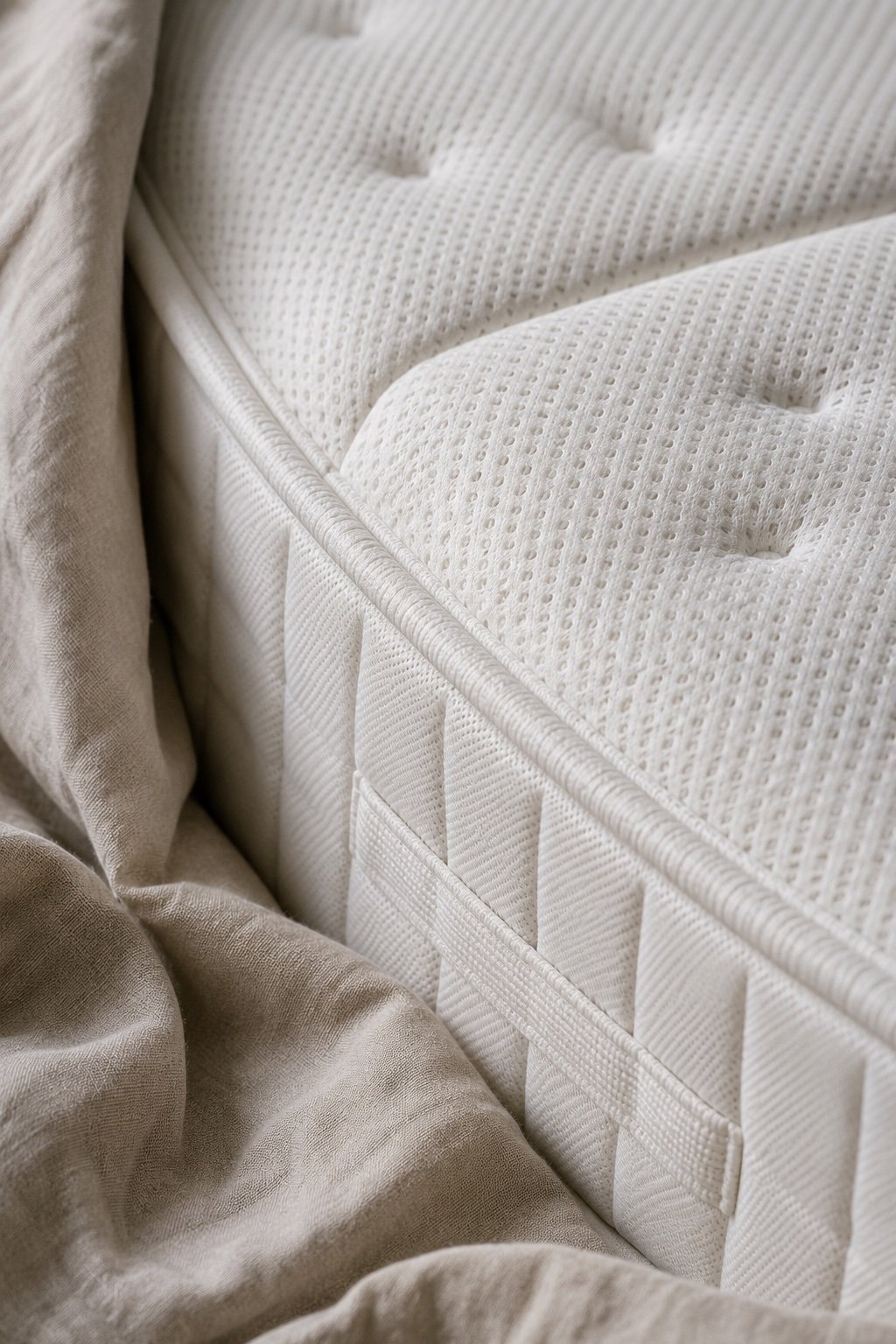
Cooling. Gel, copper, and breathable covers add cost. If you sleep hot, this is one upgrade that genuinely changes your night. Coils help more than any cooling gel, because air moves through them.
Warranty and trial. Longer warranties of 10 to 25 years usually track with better construction. A generous sleep trial of 100 nights or more is the feature that matters most, because a mattress can only be judged in your own bed over weeks.
The three tiers, and who each is for
Budget bed-in-a-box. Best for guest rooms, kids, renters, or a first apartment. The trade-off: comfortable early, but expect to replace it in five to seven years. A smart buy when longevity is not the priority. A 12-inch memory foam model like the Signature Design by Ashley Chime is the classic example: tens of thousands of owner ratings, soft and quiet, and exactly the kind of mattress that is perfect for a guest room and a compromise for your own bed.
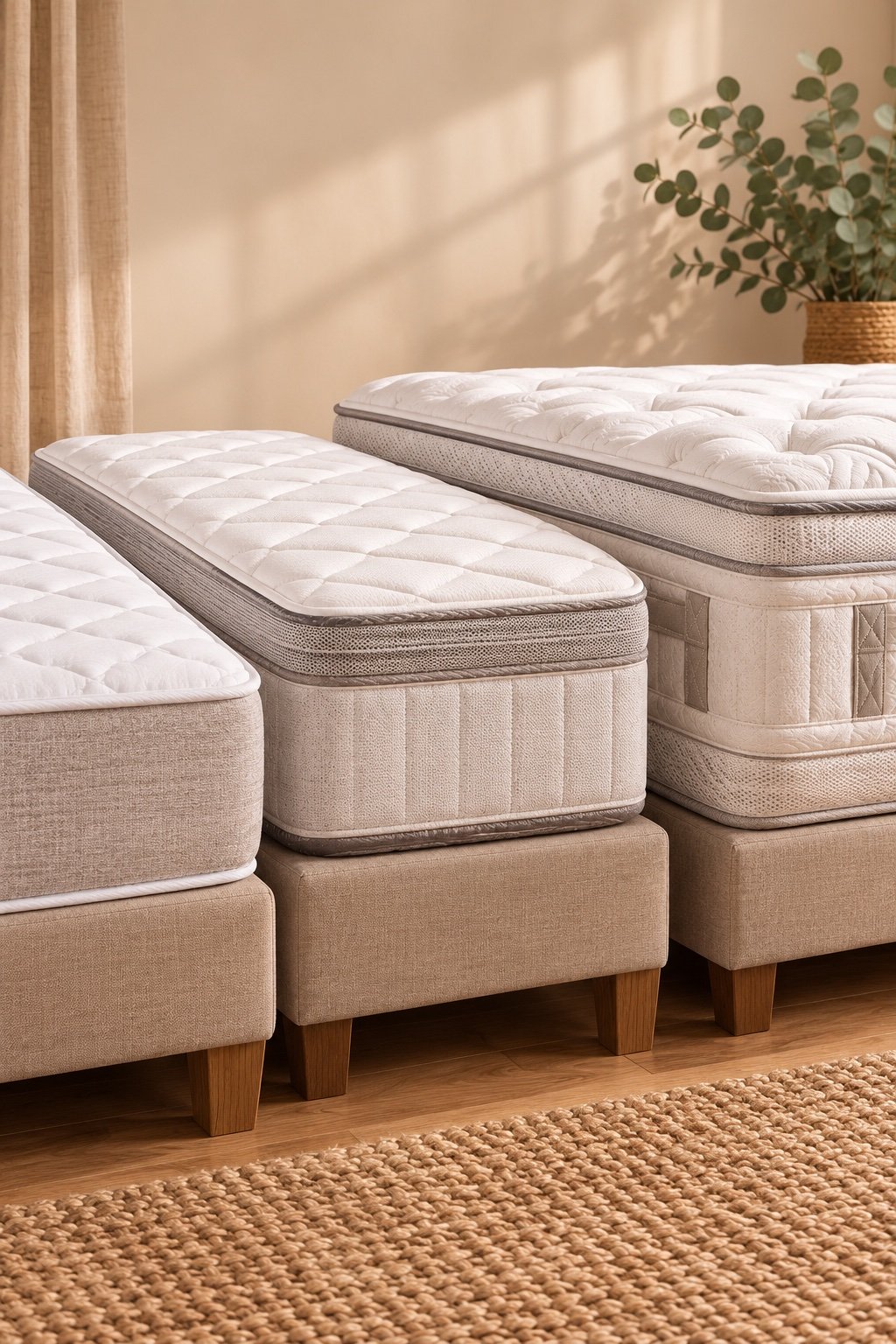
Mid-range hybrid. Best for most people, most of the time. This is the sweet spot where you get pocketed coils, decent edge support, and real durability without luxury pricing. If you buy one mattress and want it to be the right call, start here. The Casper Original Hybrid is a good reference point for this tier: zoned support, pocketed coils, and a 100-night trial.
Luxury hybrid or specialty. Best for particular sleepers (chronic back or hip pain, very hot sleepers, couples with different needs) and people who keep a mattress a decade or more. The materials last longer and the pressure relief is better. The cost per year can beat a budget mattress you replace twice.
Do the cost-per-year math
Divide the price by the years you will realistically keep it. A mattress that costs twice as much but lasts twice as long costs the same per night. One that costs twice as much and lasts three times as long is the cheaper mattress. For the bed you sleep on every night, run this number before you look at anything else.
| Mattress | Price | Years it holds up | Cost per year | Cost per night |
|---|---|---|---|---|
| Budget all-foam | $400 | 5 | $80 | about 22¢ |
| Mid-range hybrid | $1,200 | 9 | $133 | about 37¢ |
| Luxury hybrid or latex | $2,400 | 13 | $185 | about 51¢ |
| Budget, replaced twice | $800 total | 10 | $80 | about 22¢, plus two bad years |
The budget mattress looks like the winner on paper, and for a guest room it is. For your own bed, the real cost hides in the last year or two of each cheap mattress, when it has already softened and you are sleeping on the dip. The mid-range hybrid costs about 15¢ more a night and skips those years.
Match the mattress to how you sleep
- Side sleepers need more give at the shoulder and hip: softer, or a hybrid with a plush top.
- Back and stomach sleepers need firmer support to keep the spine aligned.
- Hot sleepers should prioritize coils and cooling covers over all-foam.
- Couples benefit most from pocketed coils, which isolate motion so one person turning does not wake the other.
- Heavier sleepers should look for a hybrid with thicker coils and a firmer feel; all-foam budget models wear out fastest under more weight.
Signs it is time to replace yours
- A visible dip of more than about an inch where you sleep.
- You sleep better in a hotel or on the guest bed than in your own.
- You wake up stiff and it eases within half an hour of getting up.
- It is over eight years old and none of the above surprises you.
How to buy smart, whatever your budget
- Prioritize the trial period. 100 nights or more. It is the only real test. Read the return terms: some charge a pickup fee.
- Buy during a sale. Mattresses go on major sale several times a year; almost no one should pay full price.
- Do not over-buy for a guest room. A budget mattress is the right call for a bed slept on twenty nights a year.
- Check the foundation. A new mattress on a sagging box spring or slats more than 3 inches apart will sag too, and it can void the warranty. A steel platform frame like the Zinus SmartBase replaces both box spring and frame, and leaves storage space underneath.
- Protect it from day one. Most warranties are void if the mattress has a stain. A waterproof mattress protector is the cheapest insurance in the bedroom.
- Invest in the bed you sleep on nightly. Spread over years of use, the mid-range to luxury difference is pennies a night.
Quick answers
How long should a mattress last? Seven to ten years for a good hybrid, five to seven for budget foam, and up to fifteen for latex. Replace it sooner if it has a visible dip or you wake up sore.
Is a $2,000 mattress worth it? If it is your primary bed and you will keep it ten years or more, it costs about 55¢ a night. That is worth it for a particular sleeper, and more than most easy sleepers need.
Hybrid or memory foam? Hybrid if you sleep hot, share the bed, or are a heavier sleeper. Memory foam if you want the deepest pressure relief and the lowest price, and you sleep cool.
Does a firmer mattress mean better support? No. Support comes from the core (coils or dense foam). Firmness is just how the top feels. A medium mattress with a good core supports better than a firm one with a cheap core.
The verdict
An expensive mattress is worth it when you sleep on it every night, keep it for years, or have a body that needs specific support. For everything else, like guest rooms, short-term needs, and easy sleepers, a good mid-range mattress bought on sale is the smart money. The worst buy is the cheapest one for your primary bed, replaced twice in the time a better one would have lasted.

Once the mattress is sorted, dress it well with our guide to boutique hotel bedding on a budget. Spend on the bed you sleep in; save on the one your guests do.
Keep Reading
📖 Bedding That Feels Like a Boutique Hotel (Real-Budget Edition)
📖 21 Warm Minimalist Bedroom Ideas for Better Evenings
📖 7 Dreamy Bedroom Ideas for a Room That Feels Like a Slow Sunday Morning