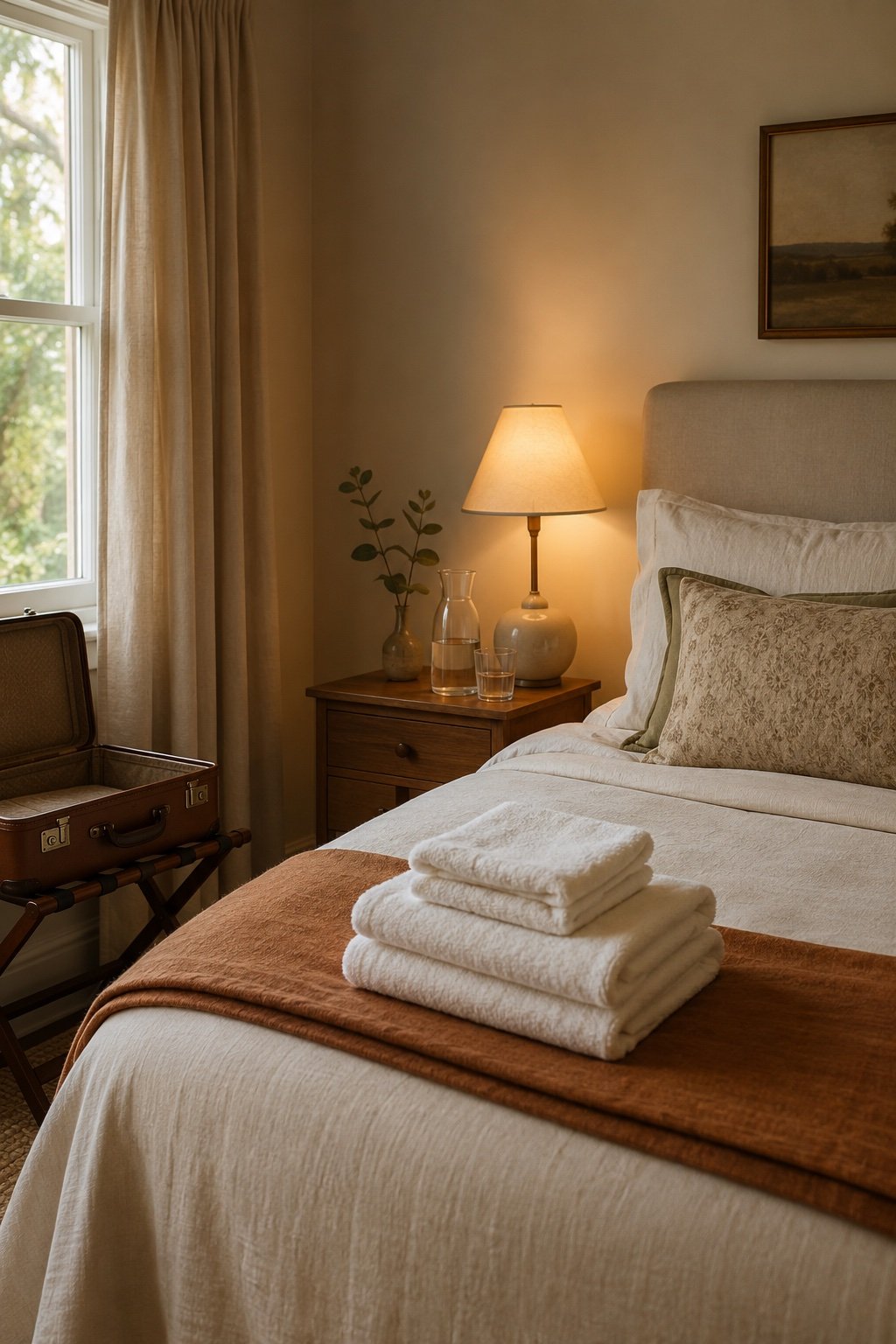
Nobody remembers what color your guest room walls were. They remember whether they could find a towel, whether the light by the bed was bright enough to read by, and whether they had to ask you for a phone charger at eleven at night. A good guest room is almost entirely logistics wearing a nice quilt.
This is the checklist I run before anyone stays over, top to bottom, and most of it costs nothing.
Sleep on the bed yourself first
One night. Not a nap, a full night. It is the only way to find the things a guest will never tell you about: the mattress that dips on the left, the streetlight through the gap in the curtain, the radiator that clanks at six, the pillow that has gone flat and papery.
What usually turns up:
- The pillows are dead. Fold one in half. If it stays folded, it is done. Two good pillows per person, one firm and one soft, covers almost everybody.
- The room is too dark or too bright at the wrong times. A blackout liner behind the existing curtain is a twenty dollar fix and the single biggest upgrade to a guest room.
- There is nowhere to put a glass of water. If the bed has no nightstand, a stool or a stack of books solves it tonight.
The bedside is the whole experience
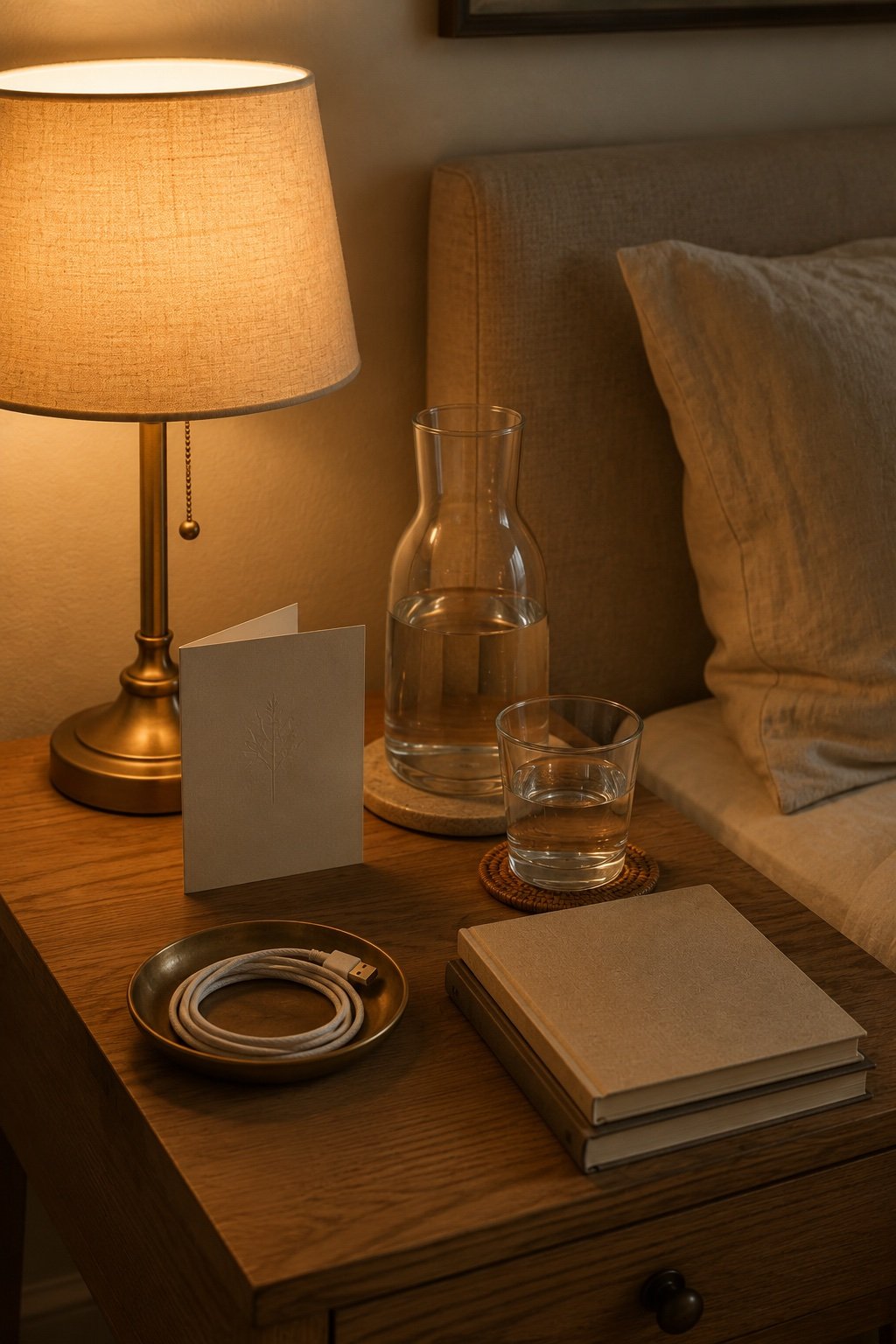
Everything a person needs between getting into bed and falling asleep should be within arm’s reach without getting up. That means a surface, a light they can turn off from the pillow, and a place to plug in a phone.
- A lamp with a switch they can find in the dark. A touch lamp or a lamp with a cord switch beats a fixture controlled from across the room.
- 2700K bulb, dimmable if possible. Warm light at night, always.
- An outlet or a power strip within reach. If the only outlet is behind the dresser, run an extension and clip it to the nightstand leg. Guests will not move furniture.
- A spare charging cable you leave in the room. Both types. It costs ten dollars and it is the thing people mention afterward.
- A carafe and a glass. Filled the day they arrive, so nobody navigates a dark kitchen at two in the morning.
Layer the bed so they can adjust it
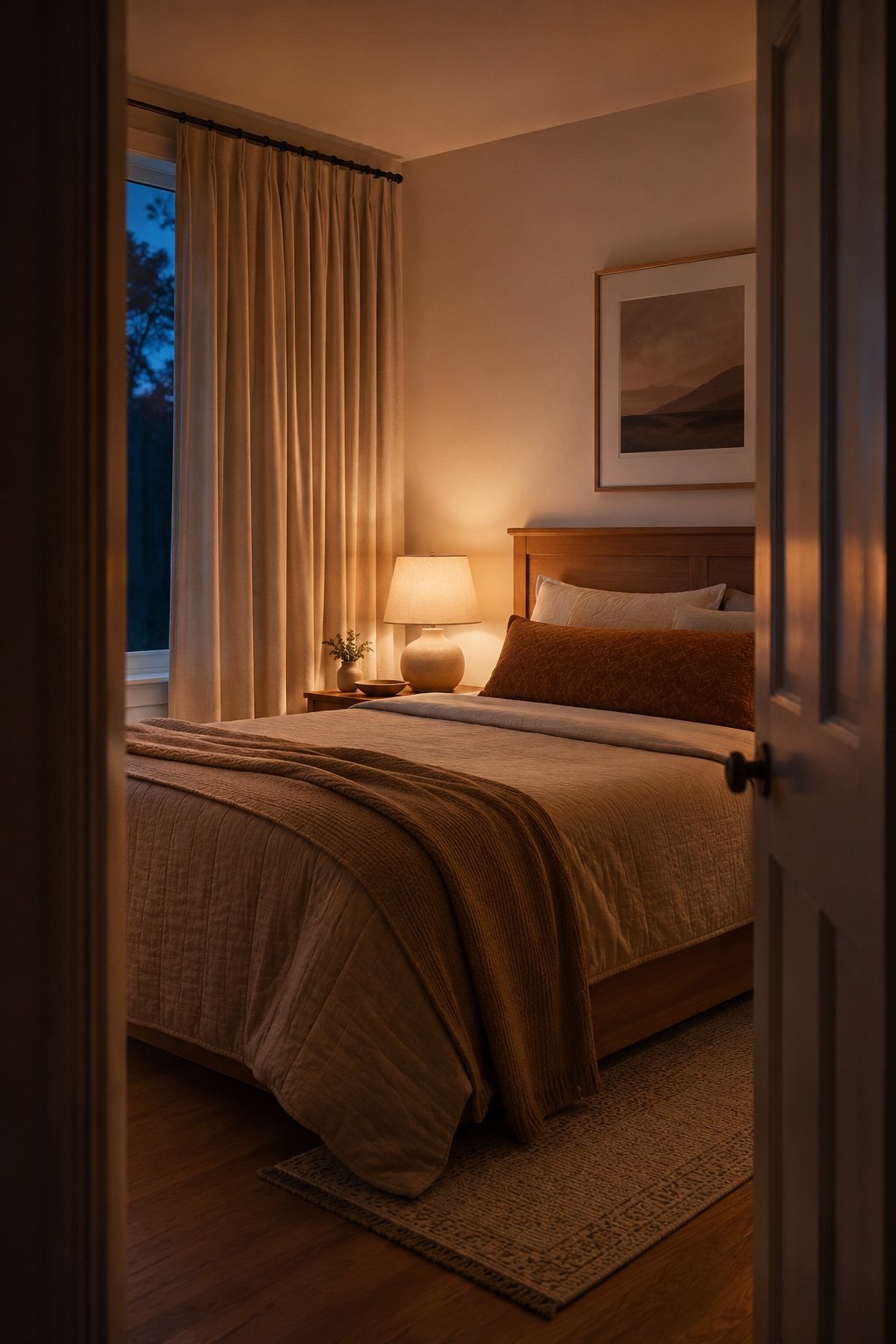
You do not know if your guest sleeps hot or cold, so give them the choice. The same layering logic that makes hotel bedding work applies here, just with fewer pieces. A sheet, a light blanket or quilt, and a folded heavier throw at the foot of the bed covers both people without asking anyone anything.
Wash everything the week before, not the day of, and put the linens on the day they arrive so the bed does not sit made and dusty for a month. If you keep a set specifically for guests, store it inside one of its own pillowcases so it stays together and smells like nothing in particular.
One more thing that sounds fussy and is not: iron or steam the top edge of the top sheet and the pillowcases. It takes four minutes and it is the entire difference between a made bed and a hotel bed.
Give them somewhere to put their things
Most guest rooms are secretly storage rooms, which means the guest lives out of a suitcase on the floor for four days. Clear real space before they come:
- One empty drawer. Actually empty, not empty-ish.
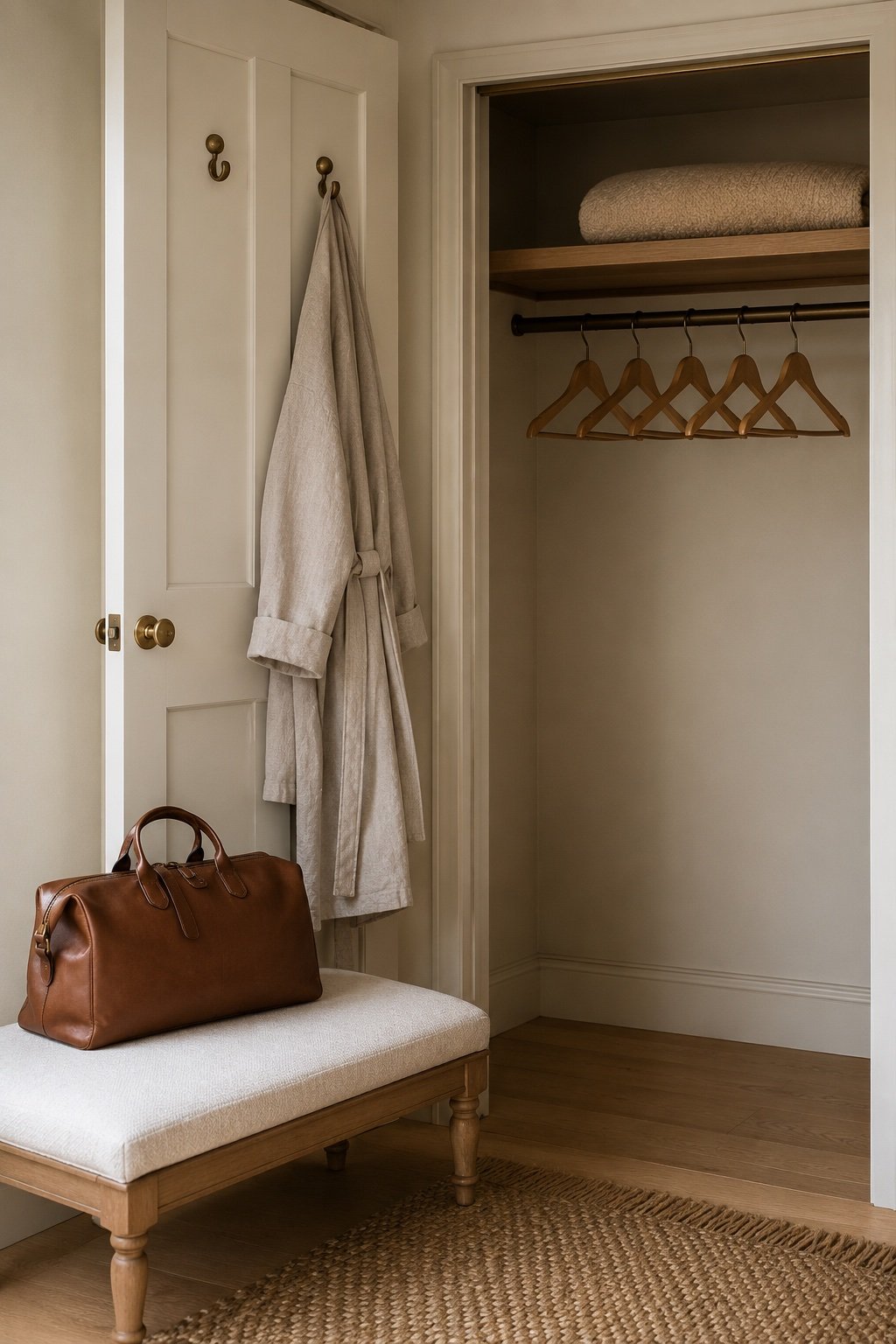
- Six inches of hanging rail and five hangers. Matching hangers if you have them, because a closet reads as available when the hangers match and as occupied when they do not.
- A luggage spot. A bench, a low stool, an ottoman, or just a clear rectangle of floor that is obviously for the suitcase. Nobody wants to put a bag on a bed.
- A hook on the back of the door. For the robe, the coat, the tote. Two hooks are better.
The bathroom part
Whether they get their own bathroom or share yours, stage it the same way, and if it is a dedicated guest bath, the full refresh is worth an afternoon. Guests will not open your cabinets, so anything hidden does not exist.
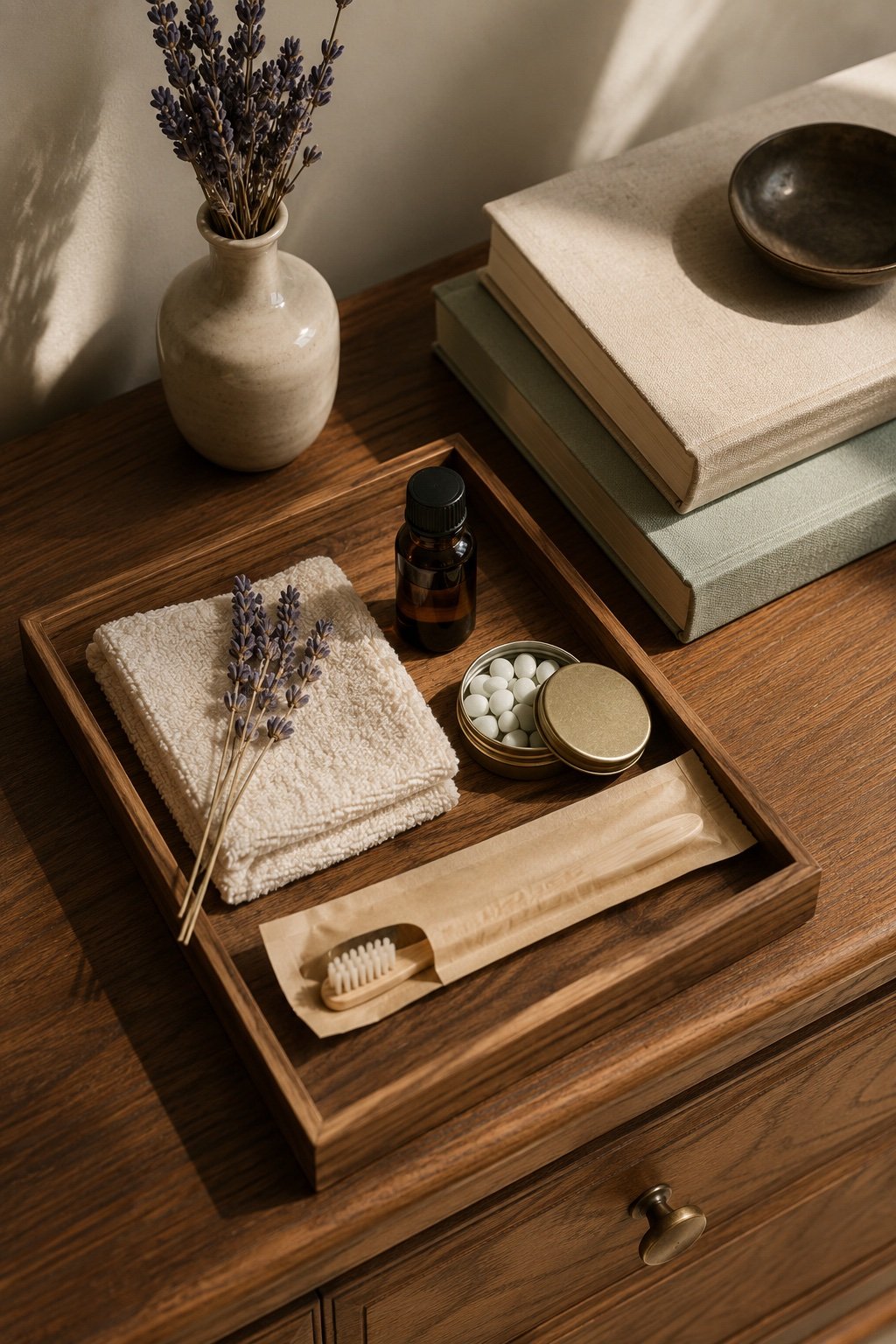
- A stack of towels left in the room, not in the linen closet. One bath towel, one hand towel, one washcloth per person, folded on the end of the bed or on the dresser. This is the clearest possible way of saying these are yours.
- Basics on the counter: hand soap, a fresh bar or bottle in the shower, tissues, and a small tray with a new toothbrush, toothpaste, and a couple of pain relievers.
- Where things live. Tell them, or leave the extra toilet paper visible. Hunting for it is the most avoidable indignity in hosting.
- A hook or bar for a wet towel. Not a shared rail already holding three of yours.
The small things that read as generous
None of this is required. All of it is remembered.
- A carafe of water and a small dish of something simple, dried apricots or chocolate, on the nightstand.
- Two or three books or magazines that are actually good, not the ones you did not want.
- One stem of something living in a bud vase. Eucalyptus lasts weeks and needs no care.
- The wifi name and password written on a card and left on the dresser, so nobody has to ask.
- A small note with the practical stuff: what time you get up, where the coffee is, how the shower handle works. Every house has one strange handle.
Make it a room, not a spare room
The guest room is usually the last room in the house to get any attention, which is exactly why a little makes such a difference. You do not need to redecorate. You need it to look like a room somebody chose, rather than a place things ended up.
Three moves do most of the work. Put one piece of art on the wall at eye level from the bed. Add a rug big enough that both feet land on it when you get up, even if it is a small one on each side. And take out anything that is stored there rather than used there, or at least move it into a closed bin so the room reads as finished.
If the room doubles as an office or a workout space during the rest of the year, give it a five minute conversion routine: laptop and papers into one basket, basket into the closet, screen off, chair pushed under. It does not need to stop being a useful room. It just needs to stop looking like one for a weekend.
The night before, in ten minutes
Put the linens on. Fill the carafe. Set out the towels. Turn on the bedside lamp and leave it on so the room glows when they walk past it. Open the window for twenty minutes, because a closed room smells closed no matter how clean it is. Then close the door so the cat does not claim the bed.
That is the whole thing. The decorating is optional. The lamp, the towels, the empty drawer, and the water are what make somebody sleep well in a house that is not theirs.
Keep Reading
📖 7 Dreamy Bedroom Ideas for a Room That Feels Like a Slow Sunday Morning
📖 Nightstand Styling: The Five-Item Formula
📖 Bedding That Feels Like a Boutique Hotel (Real-Budget Edition)