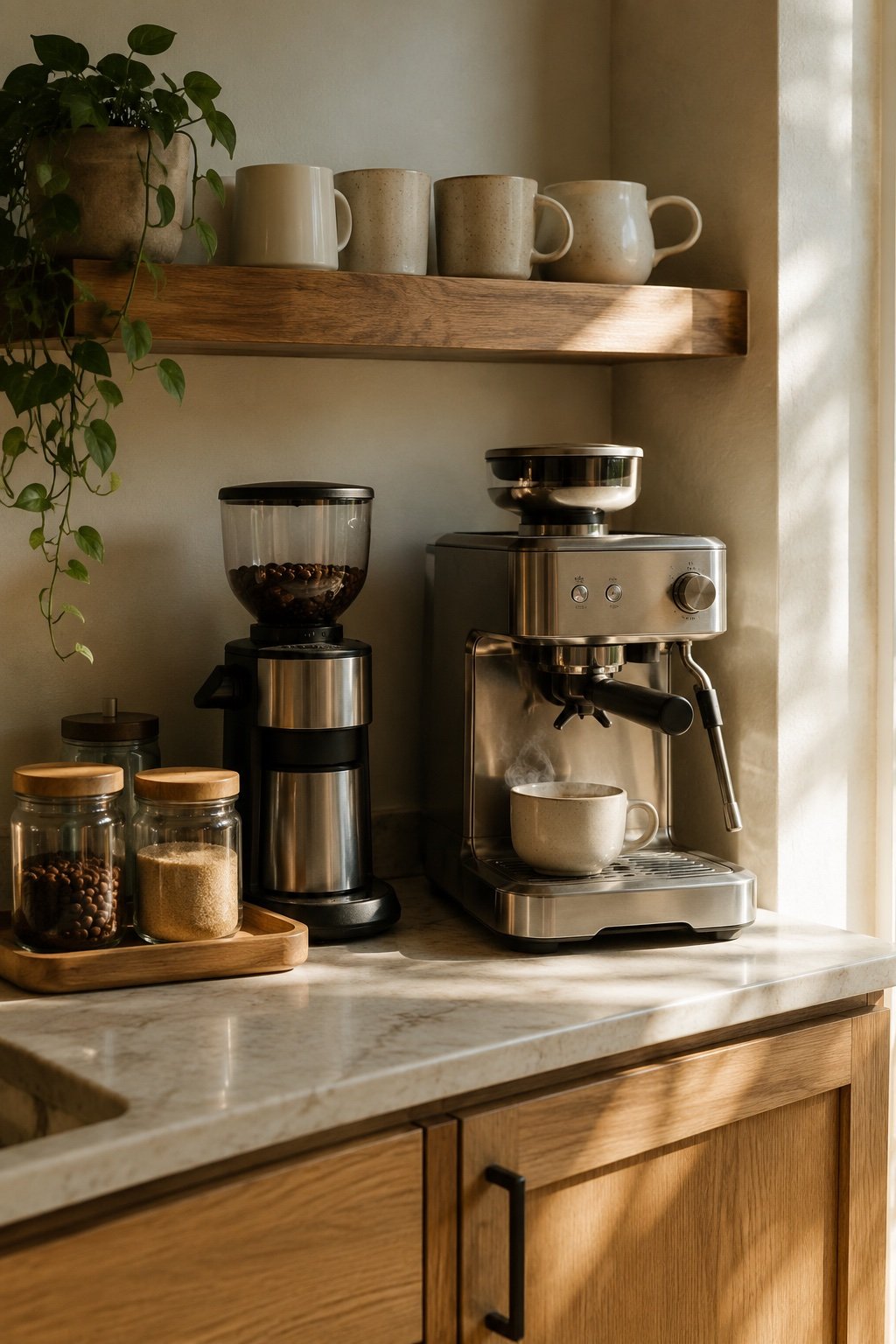
A coffee station is the rare piece of kitchen decorating that pays for itself in mornings. It takes one of the most cluttered corners in the house, the one with the machine, the bag, the mugs, the sugar, the three kinds of spoon, and turns it into something that looks deliberate and works faster than what you had.
It also does not require a butler’s pantry or a dedicated cabinet. Two feet of counter is enough.
Pick the spot before you pick anything else
The coffee station has three requirements, and every good version of it satisfies all three.
- An outlet. Obvious, and still the thing that ruins most plans.
- Water within a few steps. Not next to the sink necessarily, but not across the room from it either.
- Out of the cooking triangle. This is the one people miss. If your coffee spot sits between the fridge, the sink, and the stove, you will be in someone’s way every morning, or they will be in yours.
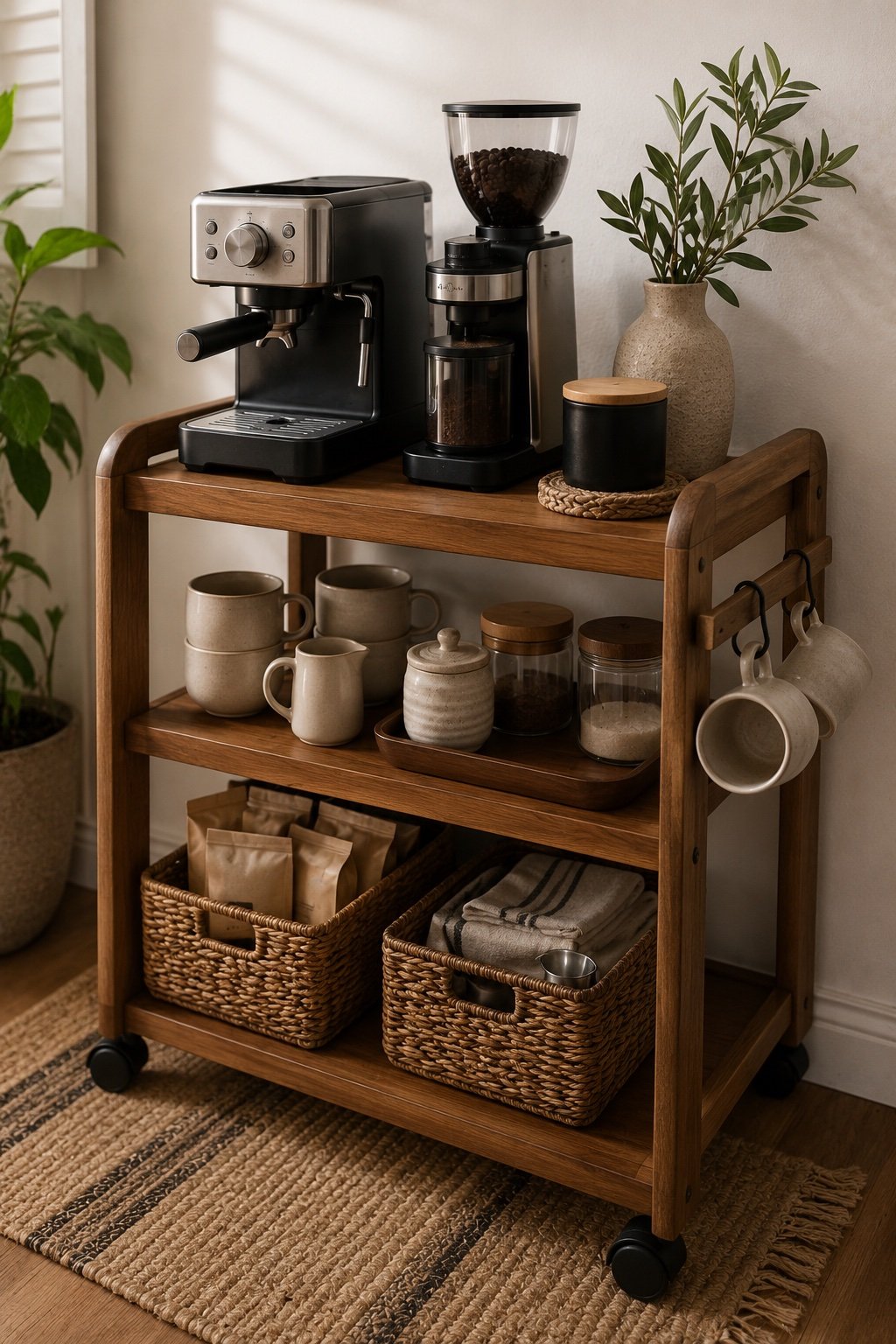
The best locations in a normal house, in order: the end of a counter run, a corner the cooking never uses, the top of a low cabinet or sideboard just outside the kitchen, or a rolling cart parked against a wall. A cart is genuinely a good answer, not a compromise, because it moves for parties and it puts the whole operation on one object.
The five zones
Every coffee setup that works is organized the same way, in the order your hands move at seven in the morning. Lay it out left to right the way you actually make coffee, and the counter stops needing to be tidied.
- 1. The machine. Whatever it is. It gets the most counter space and the outlet.
- 2. The beans and the grinder. Immediately beside the machine, so nothing crosses the counter.
- 3. The vessels. Mugs within reach, either on a shelf above or hanging on hooks under a cabinet.
- 4. The additions. Sugar, honey, cocoa, sweetener in matching jars on a small tray, so all of it moves as one piece when you wipe the counter.
- 5. The waste. A small lidded container for grounds, or a compost tin. Grounds are why coffee corners get grim, and having somewhere for them within arm’s reach is the entire fix.
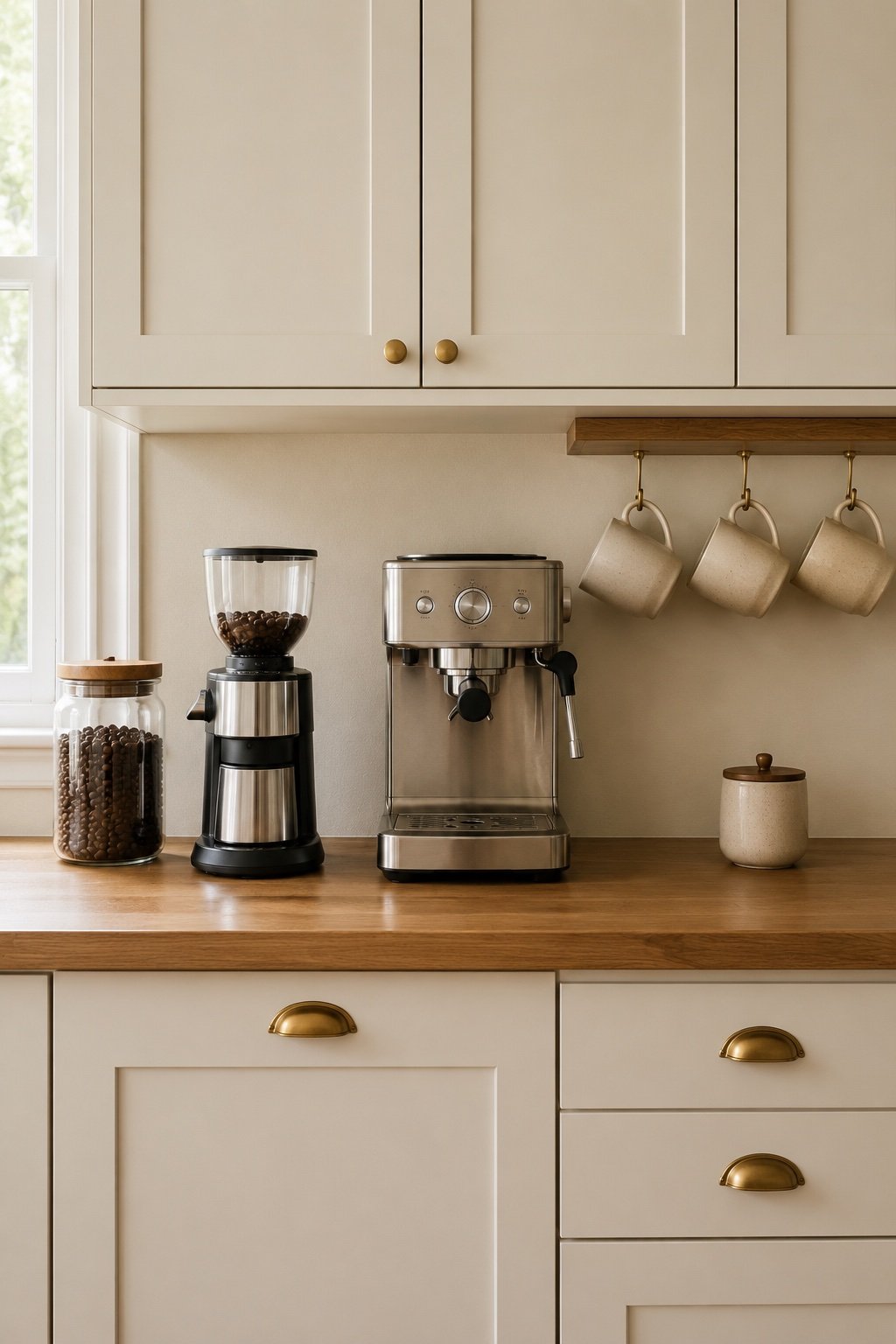
Get things off the counter and onto the wall
A coffee station is a small footprint problem, so everything you can move vertically buys you counter space you did not have.
- One floating shelf above the machine. (The same rules for open kitchen shelving apply, at a much smaller scale.) Mugs on it, or a canister and one small plant. A single shelf twelve to eighteen inches above the counter is the whole difference between a corner and a station.
- Hooks. Under a cabinet or on a small rail. Four to six mugs hanging reads as intentional; twelve reads as a diner.
- A wall-mounted rack or a picture ledge if you have no upper cabinets at all.
Keep the counter itself to the machine, the grinder, and one tray. Everything else lives above or below.
The tray is doing more than you think
If you take one thing from this: put the small stuff on a tray. Jars of sugar, the honey, the spoons in a little crock, the salt-and-pepper-shaped things that multiply.
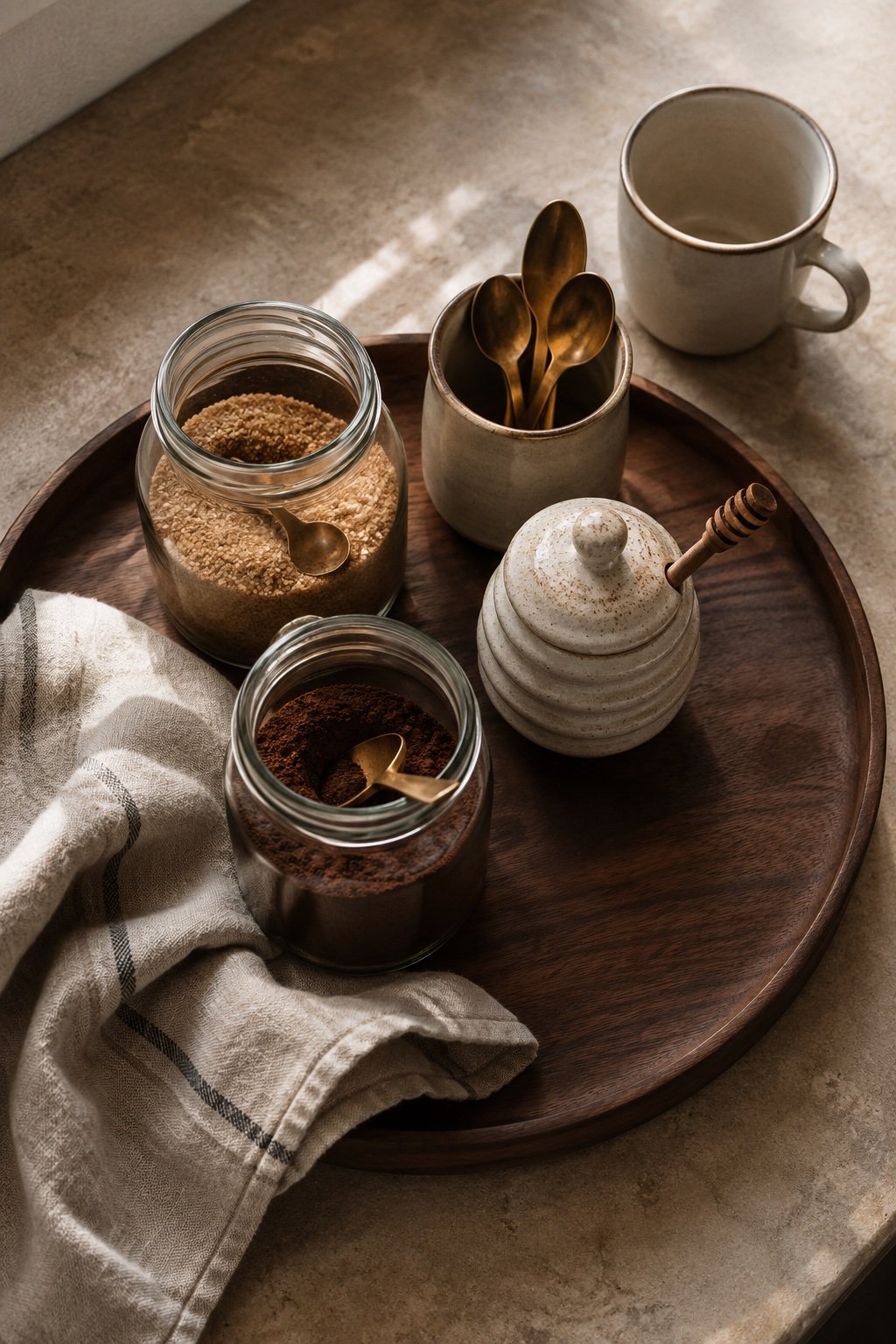
A tray does three jobs at once. It contains the mess so five small objects read as one object. It lets you lift the whole station in one hand to wipe the counter, which means you will actually wipe the counter. And it draws a visual boundary that tells everyone else in the house where the coffee things belong when they put them back.
Wood, rattan, or a shallow ceramic tray. Metal ones ring and slide.
Decant, but only what stays out
Matching jars are the reason coffee stations photograph well, and they can also be an expensive way to make more dishes. The compromise that holds up in real life: decant the two or three things that live out permanently, and leave everything else in its packaging behind a cabinet door.
- Worth decanting: sugar, whatever you use daily, and beans if you go through them in under two weeks.
- Not worth decanting: beans you keep longer than that (the bag has a valve for a reason), tea assortments, anything with instructions on the package.
- Labels: only if you have more than three jars. Two labeled jars looks like a display. Six looks like a system.
Make it look like a room, not an appliance
The difference between a machine on a counter and a coffee bar is about four small decisions, none of them expensive.
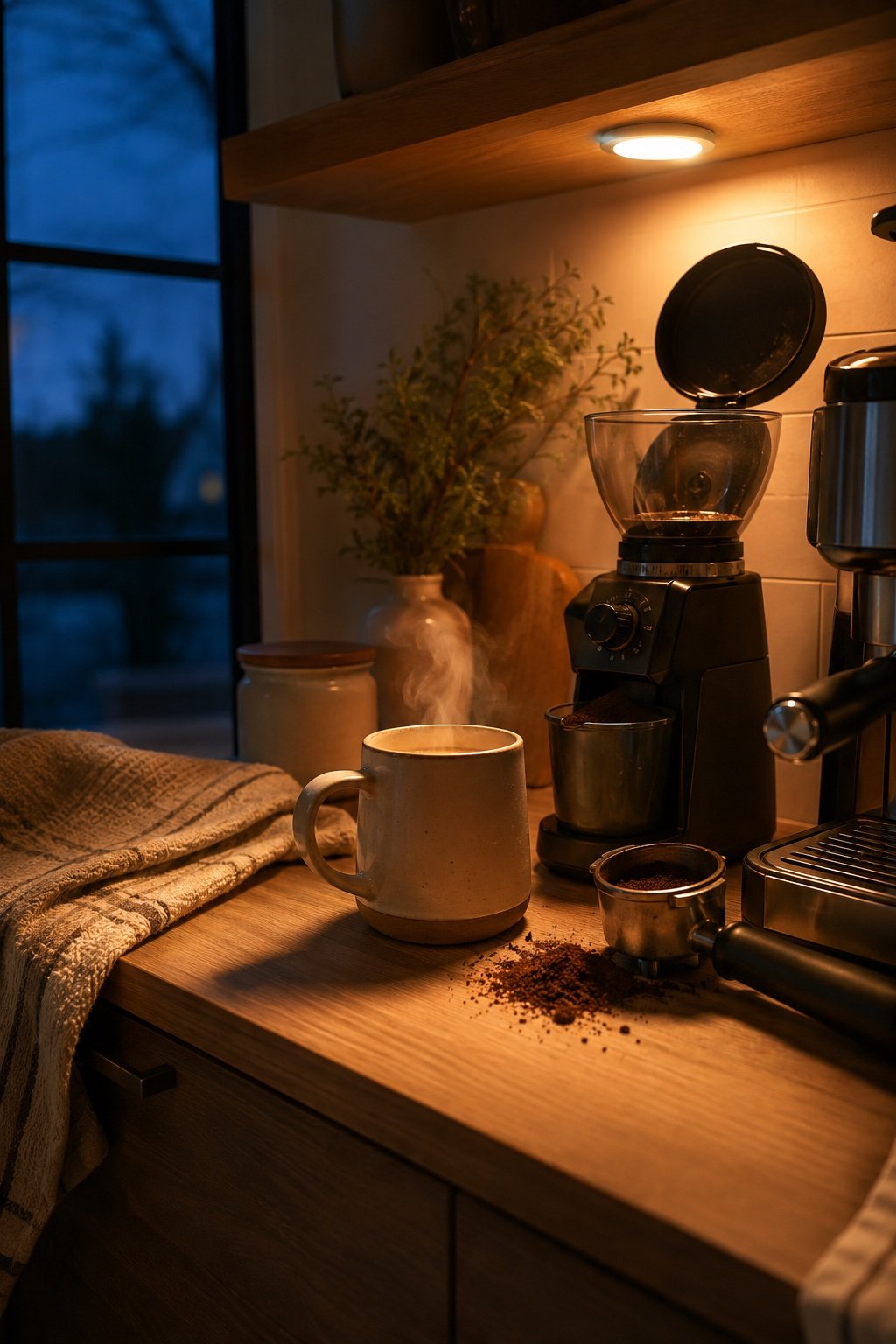
- A backdrop. A small framed print leaning against the wall, a strip of tile, or a piece of peel-and-stick backsplash behind the machine. It gives the station edges.
- Something living. One small plant, a bud vase, a sprig of eucalyptus. Coffee corners are all hard surfaces and they need one soft thing.
- Warm light. A small plug-in sconce, a picture light on the shelf above, or a puck light under the cabinet, at 2700K. Morning light in most kitchens is bad, and a warm pool of light on this corner at six in the morning is a genuine quality of life upgrade.
- Texture underfoot or underneath. A small runner if it is a floor-standing setup, or a linen towel folded beside the machine.
Versions by space
Two feet of counter. Machine, one shelf above with six mugs, one small tray with two jars. That is a complete station and it fits in nearly every kitchen.
A cart. Machine and grinder on top, mugs and tray on the middle shelf, beans and backup supplies on the bottom, hooks on the side rail for mugs or a towel. Roll it into the corner and it disappears; roll it out when four people want coffee at once.
A cabinet or sideboard outside the kitchen. The nicest version, because it takes the morning traffic out of the kitchen entirely. Run an outlet or use an extension cord routed down the back. Drinks in the evening, coffee in the morning, same piece of furniture.
A dedicated cabinet with doors. If you have one, put a small light inside, add a shelf riser to double the mug capacity, and drill a hole in the back panel for the cord. Closing the door on the whole thing at night is the luxury version of clean.
Keep it working
The station will only stay nice if resetting it takes under a minute. That means the grounds container has to be right there, the mugs have to be easier to hang than to leave in the sink, and the tray has to be liftable in one hand.
Wipe the counter under the tray on Sundays, wash the mug rack, and once a month run whatever descaling cycle your machine wants. A beautiful coffee corner with a scaled up machine is just a nice shelf.
Keep Reading
📖 Kitchen Counter Styling: What to Keep Out (and What to Hide)
📖 Open Shelving in the Kitchen: The Honest Pros, Cons, and How to Style It
📖 Kitchen Witch Decor: How to Make a Cozy, Witchy Kitchen for Fall