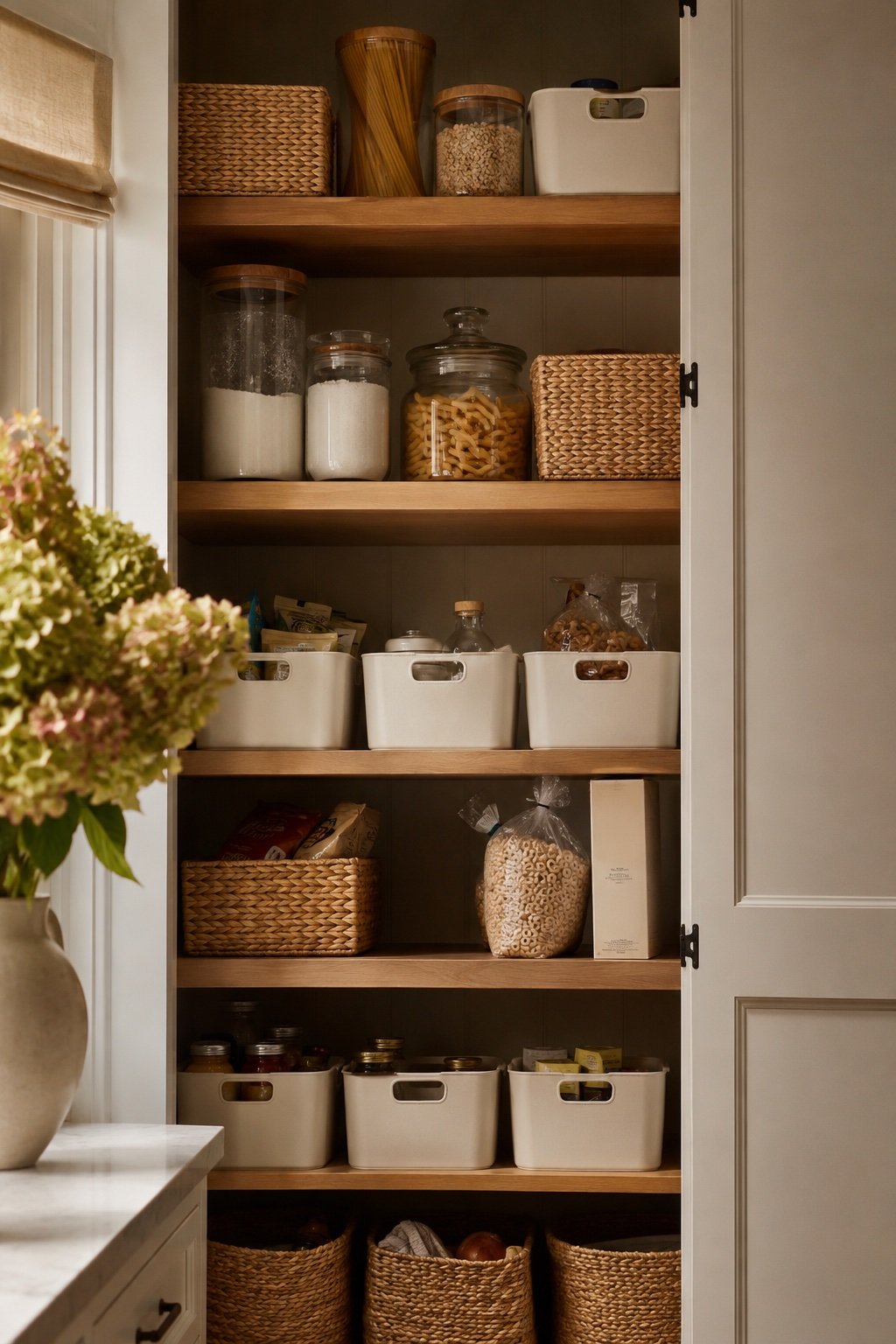
Most pantry organization advice is really pantry photography advice. Everything decanted into identical glass jars, labeled in one typeface, arranged by height. It looks wonderful for about eleven days, which is roughly how long it takes to buy groceries twice and discover there is nowhere to put a box of cereal that does not fit the system.
A pantry that works is organized around how food arrives and how it leaves, not around how it photographs. Here is the version that survives a real week.
Empty it, and be honest about what comes out
Everything on the floor or the counter. It is the only way to see what you actually own, and every pantry contains at least one of these:
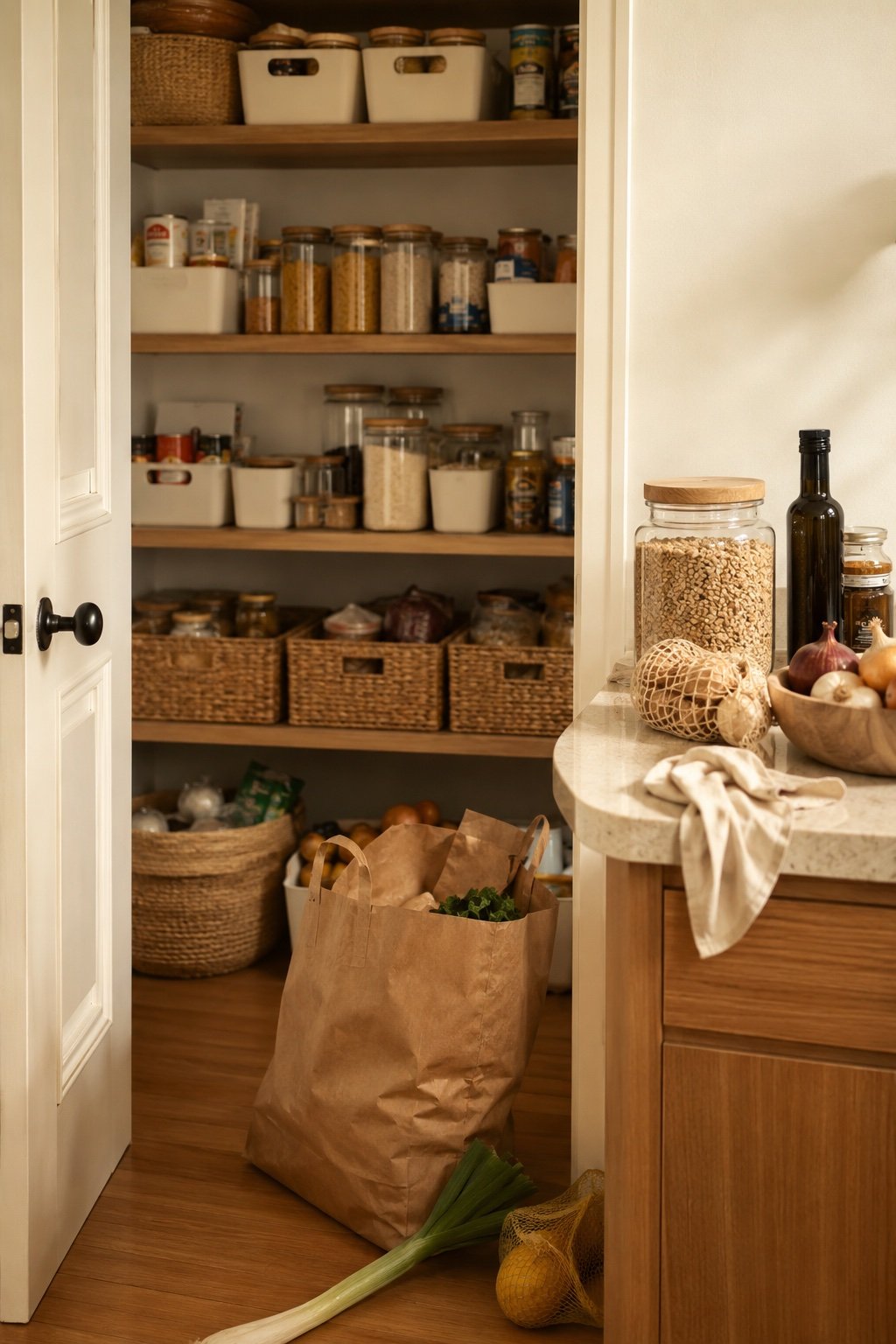
- Three open bags of the same thing
- Something bought for a recipe you made once in 2023
- Two expired cans of something you do not like
- A category you did not know you had, usually snacks or baking
Toss what is expired, group what is left into piles by how you use it, and pay attention to which piles are biggest. Those piles are your zones, and they will not match the zones in any article, including this one. If your baking pile is enormous and your canned goods pile is four items, build the pantry around baking.
Zone by use, then by height
Once you have piles, they get placed by how often you reach for them and by who reaches.
- Eye level: the things used daily. Coffee, cereal, snacks people take themselves, the oil and vinegar if they live here.
- Waist to chest level: weekly cooking. Pasta, rice, cans, jars, sauces.
- Top shelf: light and occasional. Paper goods, party supplies, backup packages of things.
- Floor and bottom shelf: heavy and bulky. Bulk bags, water, appliances, the potato and onion bins.
- Lowest reachable shelf, if there are kids: their snacks, in a bin they can carry. This one change ends more kitchen negotiation than any other.
Never store anything heavy above shoulder height. It is the rule everybody knows and nobody follows until a bag of flour lands on the counter.
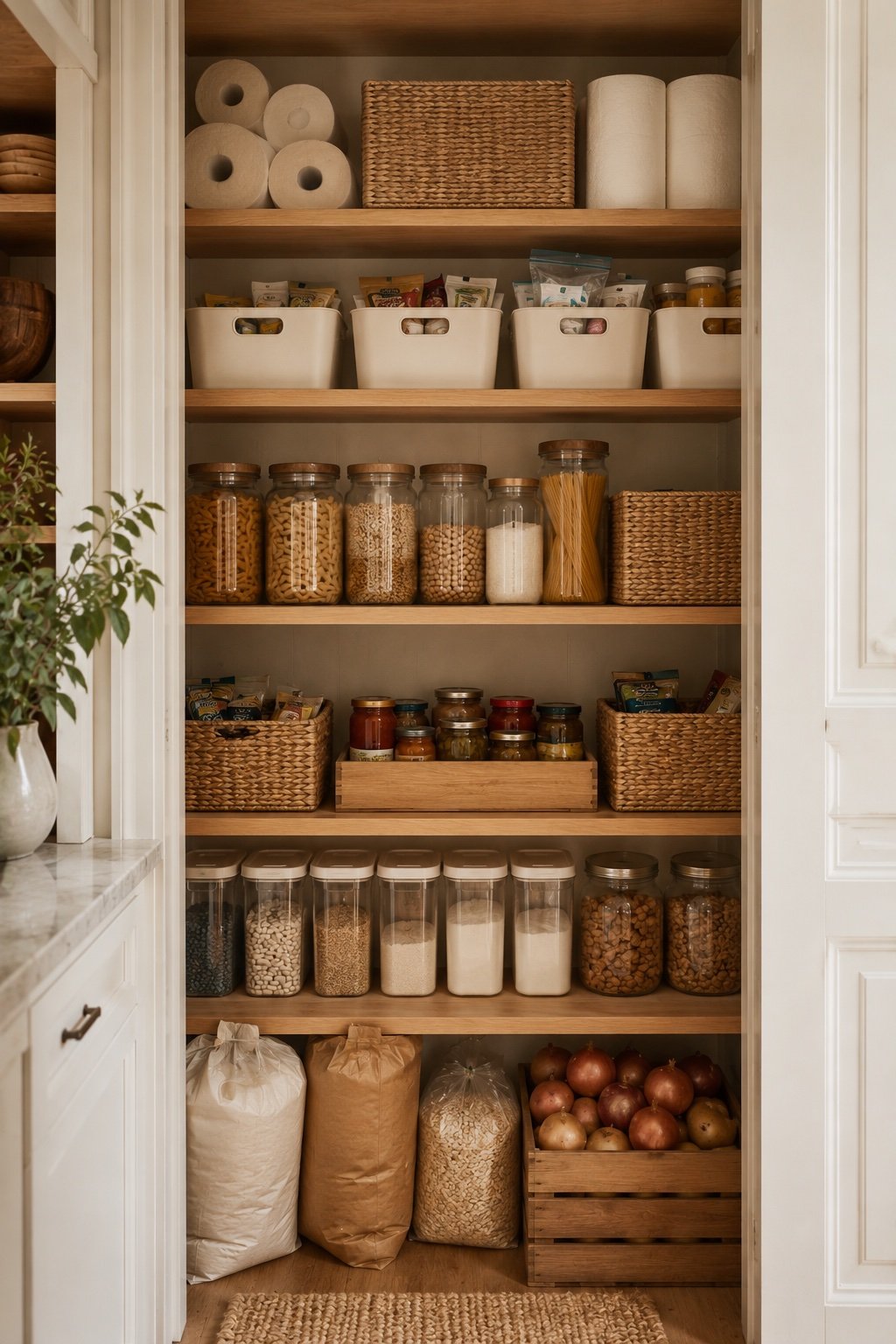
Bins beat jars for almost everything
The decant-everything approach fails because it demands work at the exact moment you have the least of it, when you come home with eleven bags of groceries. Bins do not.
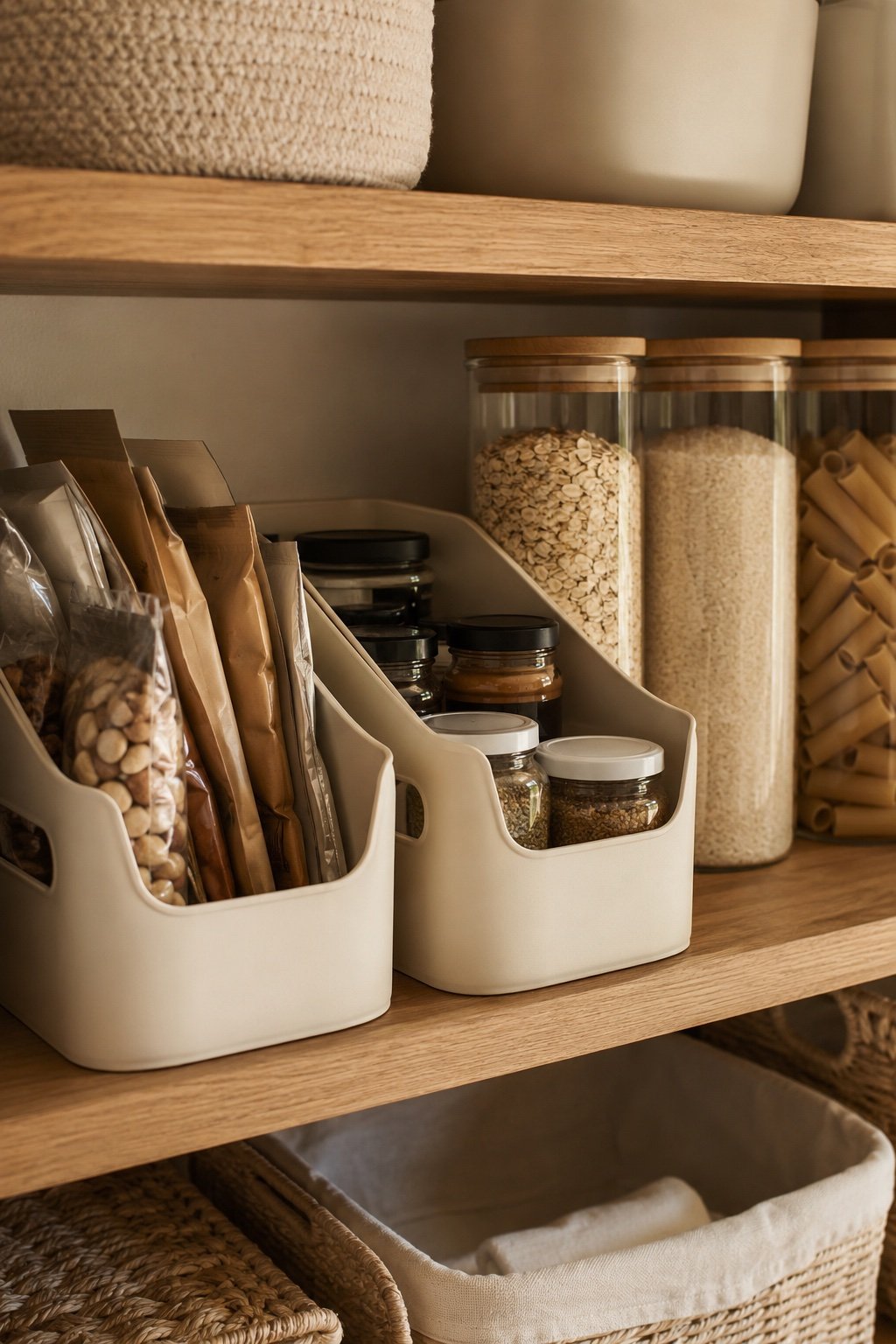
A bin is a container that takes a whole category in its original packaging. You pull the bin out, take what you want, push it back. Deep shelves stop swallowing things, because the bin is the drawer the shelf never had.
- Open front bins for anything you grab often. No lifting a lid to see inside.
- Clear or light colored, so you can see what is in them without labels doing all the work.
- Sized to the shelf depth, not the shelf width. A bin that stops six inches short of the back leaves you a dead zone that fills with orphans.
- Measure before buying. Depth, width, and the height of the tallest thing on that shelf. Buying bins first and measuring later is how you end up with a stack of returns.
Then decant only the short list: flour, sugar, rice, pasta, oats, anything from a bag that will not stand up, and anything you buy in bulk. Those go into airtight containers because the packaging genuinely does not work, not because it looks nice in a jar.
Put the labels where you look
Label the bins, not every jar. Four to eight labels in a pantry is a working system. Thirty labels is a project you will not maintain.
And write the labels for whoever puts the groceries away, which may not be you. “Snacks” is more useful than “sundries.” If two people in the house disagree about whether granola bars are snacks or breakfast, pick one and label it, because the labeling is the agreement.
One more habit worth the ten seconds: when you open a new package or decant something, write the date on a strip of tape. It ends every future argument about whether the baking powder is still alive.
Fix the shelves themselves
Most pantries lose a third of their capacity to air. The shelves are too far apart and too deep, and the space above a row of cans does nothing.
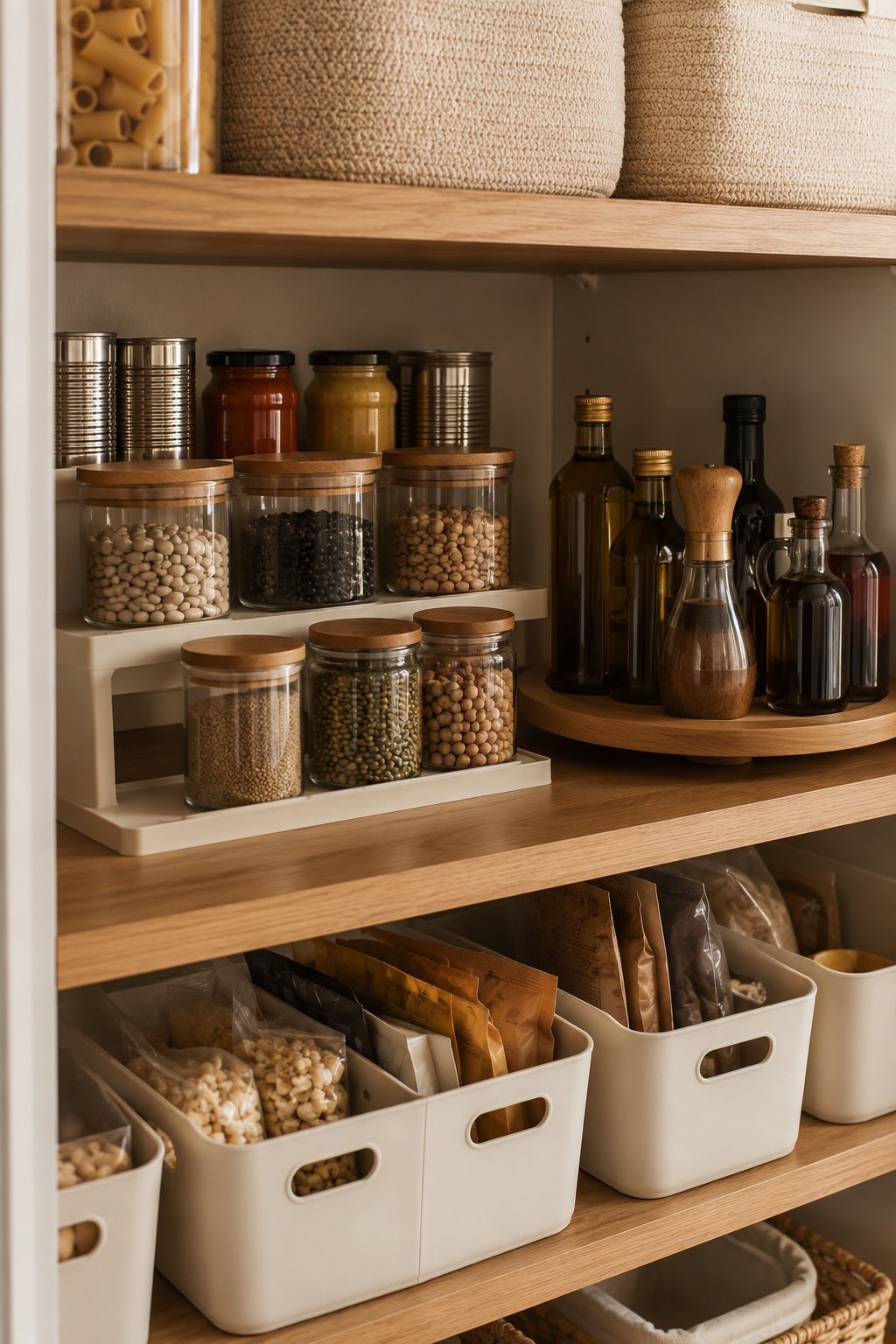
- Shelf risers. Instantly doubles a shelf of cans or short jars. The single highest return item in a pantry.
- A turntable in each corner. Corners are where things go to be forgotten. A lazy susan with oils, vinegars, or sauces makes the back reachable.
- Move the shelves if they are adjustable. Measure your tallest regular item, add an inch, and set the spacing to that. Most people never touch the factory spacing, which was set for nothing in particular.
- A tiered rack for spices if they live in here, so the back row is visible.
- Over the door racks for the flat things: foil, wraps, spice packets, snack bars.
The rule that keeps it organized: first in, front out
Organization does not fail because the system was wrong. It fails because groceries arrive faster than they leave, and new things get put in front of old things.
So make one rule and follow it every time you unpack: new items go behind the old ones. Same category, same spot, back of the line. It takes four extra seconds per item and it means you stop finding two-year-old cans behind the new ones.
It is the same discipline that keeps the counters clear: decide once where a thing lives, then always put it back there. Second rule, just as small: before the grocery run, take a photo of the open pantry with your phone. You will stop buying the fourth jar of cumin.
Small pantry, no pantry
Plenty of kitchens have no pantry at all, just a cabinet or two. The same logic applies with two adjustments.
First, go vertical wherever you can. A narrow rolling cart in a gap beside the fridge, a shelf above the door, a wall rail with hanging baskets. Cabinet organization is mostly a hunt for six inches nobody is using.
Second, split the stock. Keep only what you cook with weekly in the kitchen, and put backup supplies somewhere else entirely: a closet shelf, a bin in the basement, under a bed in a lidded box. Trying to fit a month of food in a kitchen designed for a week is why small kitchens feel chaotic, and moving the overflow out is the cheapest possible renovation.
The ten minute reset
Once a week, ideally right before you shop. Pull anything that migrated to the wrong bin and put it back. Face the labels forward on the front row. Note the two things running low. Toss whatever has clearly turned.
That is the maintenance. A pantry does not need to be beautiful to be calm, and a calm pantry is one where you can see everything you own and put a bag of groceries away without moving anything twice.
Keep Reading
📖 Linen Closet Organization That Survives Real Life
📖 Small Entryway Ideas: Organization That Actually Fits
📖 Coffee Bar Ideas That Fit in Two Feet of Counter